Slevin’s Bunch Grass Lizard
Sceloporus slevini
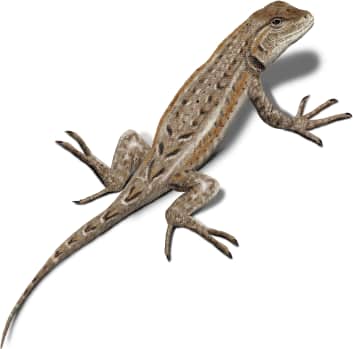
Sceloporus slevini is a small lizard (averagely 2.7 inches in snout-to-vent length). The coloration may range from tan, gray-brown, to yellow-brown lizard. There is a wid…
How to identify
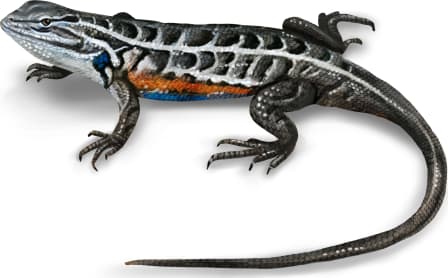
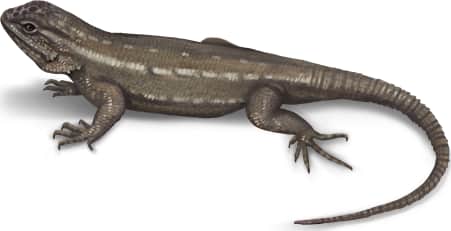
Sceloporus slevini is a small lizard (averagely 2.7 inches in snout-to-vent length). The coloration may range from tan, gray-brown, to yellow-brown lizard. There is a wide gray stripe at the mid-dorsum with a light stripe on either side of its upper back. Nearer to the belly, there is often a tint of orange. Some specimens have a bold pattern while the others are comparatively unpatterned. Bolder colored specimens display dark crescent-shaped blotches, stripes on the back, a dark spot with a middle of light blue on the pair of shoulders. Unpatterned specimens are typically gray-brown with no blotches and indistinct soft-edged stripes. The males have two blue bars on their belly. The lizard has ridged scales that overlap.
Range
Slevin’s bunchgrass lizard is a species native to southwestern Arizona in the United States of America and northern Mexico (northern Durango, eastern Sonora, northeastern Sinaloa, and central and western Chihuahua).
Habitat
These lizards thrive in evergreen woodlands, coniferous forest/woodlands, open plains, and mountains. They are most commonly found in dense bunchgrass on slopes. The lizards are more populous in ungrazed grassland in southeastern Arizona. They shelter in the grass for protection. The lizard’s breeding season is in April and females lay eggs in June, July or August. Hatchlings emerge in August and September. Slevin’s bunchgrass lizards are insectivorous, feeding in true bugs, wasps, beetle, grasshoppers, and even spiders.
Similar species
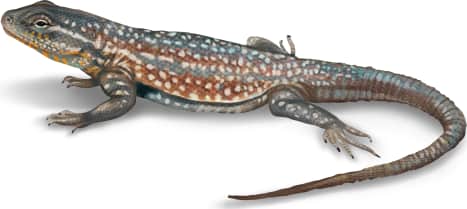
The common side-blotched lizard (Uta stansburiana) is averagely 2.5 inches in length (snout to vent) and has an orange-tan to brown-gray coloration. Each of its lower sides is marked with black blotches just before the forelimb. This lizard may have a variety of markings including stripes, no patterns, and speckles. The side blotches are the most distinguishing feature. The common sagebrush lizard (Sceloporus graciosus) is similar in size and has a brown-gray to orange-brown coloration. It has ridged scales and a similar wide gray mid-dorsal stripe. What distinguishes it from Sceloporus slevini is that the throat on this lizard has a uniform blue-gray or plain pattern. Sceloporus cowlesi is a small lizard (3 inches in snout-to-vent length) with a brown-gray or golden-brown color and ridged overlapping scales. The back of the lizard has two light-colored stripes and the mid-dorsum has a wide gray stripe.
Name and etymology
Genus
Sceloporus
Greek for leg (skelos) pores (porus), referencing femoral pores on back legs.
Origin
Sources
- Wiegmann, 1828. Isis von Oken, Vol. 21, p. 369 ↗
Sceloporus. Wiegmann, 1828 - Isis von Oken, Vol. 21, p. 369
Species epithet
slevini
Honoring Joseph R. Slevin.
Origin
Honors
Sources
- Smith, 1937. Occ. Papers Mus. Zool. Univ. Michigan, No. 361, p. 3 ↗
Sceloporus slevini. Smith, 1937 - Occ. Papers Mus. Zool. Univ. Michigan, No. 361, p. 3
Explore more names in the etymology index.
More illustrations
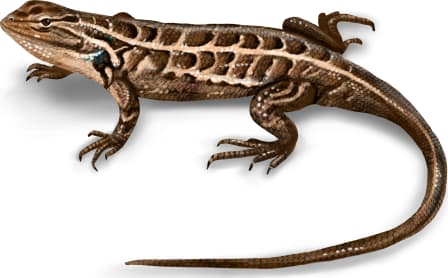
Pale Male
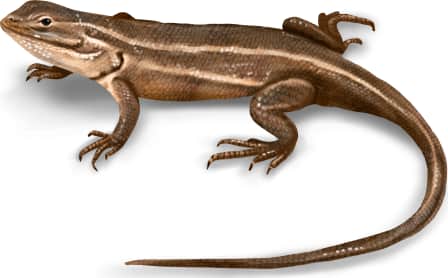
Female
At a glance
Range
Slevin’s bunchgrass lizard is a species native to southwestern Arizona in the United States of America and northern Mexico (n…
Habitat
These lizards thrive in evergreen woodlands, coniferous forest/woodlands, open plains, and mountains. They are most commonly…
Guide
Reptiles and Amphibians of North America
Range map
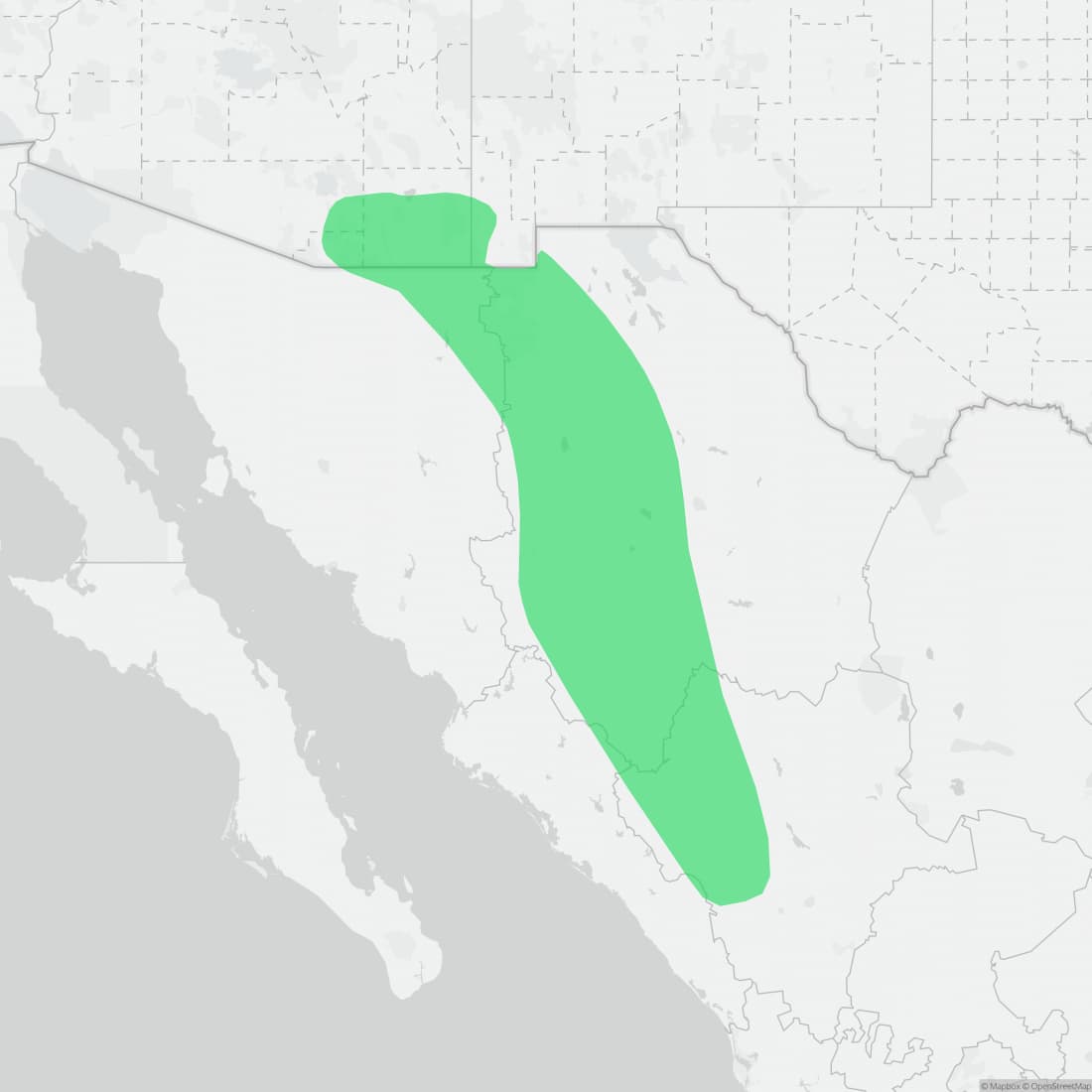
Approximate range. © Mapbox © OpenStreetMap