Yellow-faced Pocket Gopher
Cratogeomys castanops
C. castanops is characterized by its buffy to ochraceous (yellowish-brown) facial markings, which are often described as “chestnut” in color, although this can vary. The…
How to identify
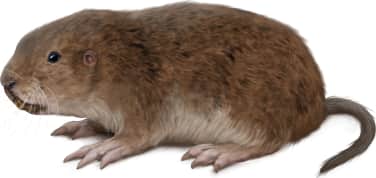
C. castanops is characterized by its buffy to ochraceous (yellowish-brown) facial markings, which are often described as “chestnut” in color, although this can vary. The overall pelage is typically grayish-brown to dark brown dorsally and paler ventrally. This species has grooved upper incisors, a key characteristic of the genus Cratogeomys. Skull morphology, particularly the shape and size of the auditory bullae and incisor grooves, is crucial for definitive identification. Total length can range from 200-300 mm.
Range
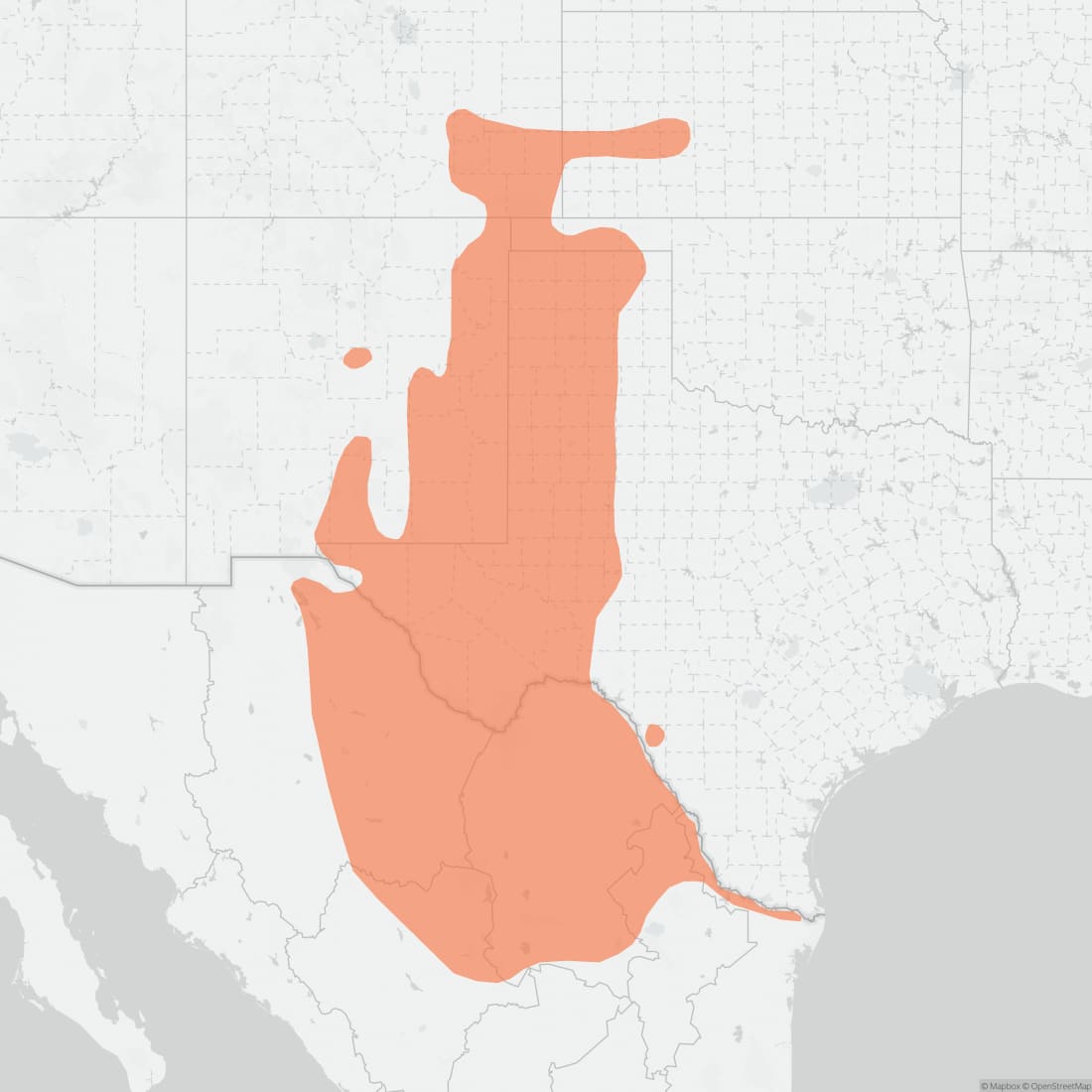
C. castanops is found in southeastern Colorado, eastern New Mexico, western Texas, and into northern Mexico, including portions of Chihuahua, Coahuila, and Durango. This distribution generally corresponds to arid and semi-arid regions of the Chihuahuan Desert and adjacent grasslands.
Habitat
C. castanops prefers arid and semi-arid habitats with loose, well-drained soils suitable for burrowing. These habitats include grasslands, desert scrub, and agricultural areas. They are often found in areas with sandy or gravelly soils. Their extensive burrow systems provide shelter and food storage.
Similar species
C. castanops can be confused with other Cratogeomys species within its range, especially where distributions overlap. Differentiation relies on subtle variations in color, size, and cranial characteristics. In areas where their ranges overlap, careful examination of skull features is often necessary for positive identification.
Name and etymology
Genus
Cratogeomys
Greek for powerful (kratos) earth (geo) mouse (mys)
Origin
Sources
- Palmer, Index Generum Mammalium (1904) ↗
Palmer, T. S. 1904. Index Generum Mammalium: a list of the genera and families of mammals. North American Fauna 23. Government Printing Office, Washington. https://doi.org/10.5962/bhl.title.39809
Species epithet
castanops
Latin for chestnut (castanea) and Greek for face (-ops) referencing the chestnut color in the gopher's face
Origin
Sources
- Wikipedia: Cratogeomys castanops ↗
“Cratogeomys castanops.” Wikipedia. https://en.wikipedia.org/wiki/Yellow-faced_pocket_gopher
Explore more names in the etymology index.
At a glance
Range
C. castanops is found in southeastern Colorado, eastern New Mexico, western Texas, and into northern Mexico, including portio…
Habitat
C. castanops prefers arid and semi-arid habitats with loose, well-drained soils suitable for burrowing. These habitats includ…
Guide
Mammals of North America
Range map
Approximate range. © Mapbox © OpenStreetMap