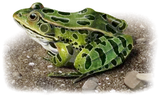
Ocmulgee Slimy Salamander
Plethodon ocmulgee
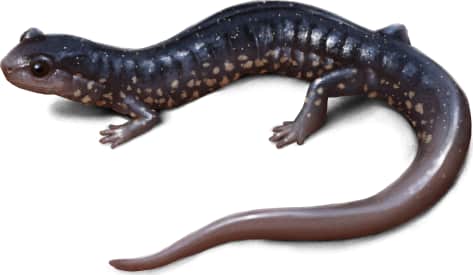
A thick-bodied salamander with well-developed legs, long toes, and a round tail. It averages 5-6 cm in snout to vent length, with an equally long tail. It is dark grey to…
How to identify
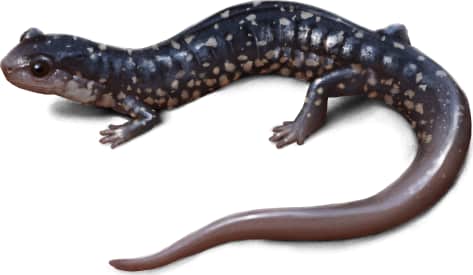
A thick-bodied salamander with well-developed legs, long toes, and a round tail. It averages 5-6 cm in snout to vent length, with an equally long tail. It is dark grey to black with white spots and blotches all over its body, which are more prevalent on its sides.
Range
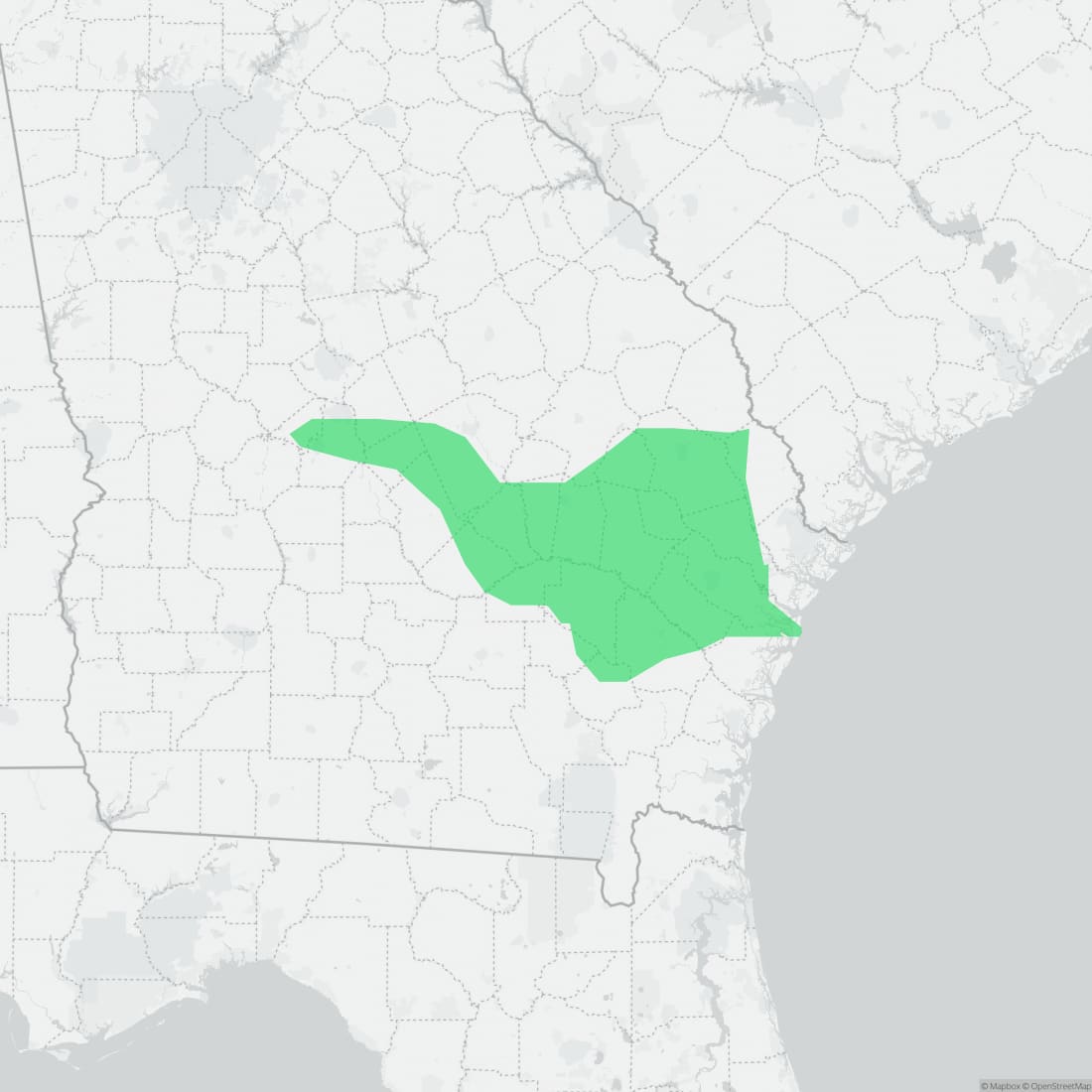
Endemic to central and eastern Georgia, in areas associated with the Ocmulgee River drainage system.
Habitat
This species tends to be nocturnal, and like many salamanders, it prefers hiding under rocks, logs, and leaf litter on the moist forest floor.
Variations
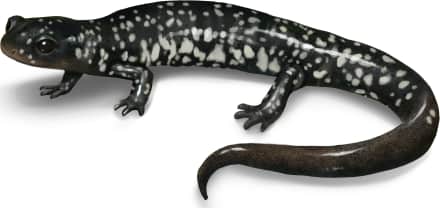
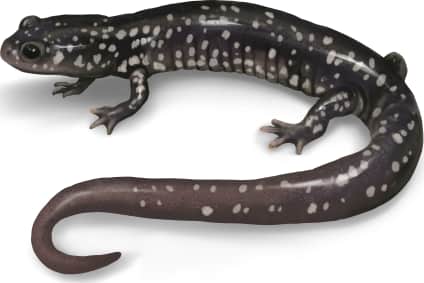
Some are more densely spotted than others.
Similar species
This is one of the many eastern species of salamander that is black with white spots. It may overlap with the similar northern slimy salamander (*Plethodon glutinosus*) or southeastern slimy salamander (*Plethodon grobmani*). It also looks very similar to the white-spotted slimy salamander (*Plethodon cylindraceus*) and Atlantic Coast slimy salamander (*Plethodon chlorobryonis*), among others.
Name and etymology
Genus
Plethodon
Greek for full of (plethore) teeth (odon).
Origin
Sources
- Tschudi, "1838" 1839. reprinted in Classif. Batr., Mem. Soc. Sci. Nat. Neuchatel, p. 92 ↗
Plethodon. Tschudi, "1838" 1839 - reprinted in Classif. Batr., Mem. Soc. Sci. Nat. Neuchatel, p. 92
Species epithet
ocmulgee
Belong to the Ocmulgee, a river in Georgia.
Origin
Sources
- Highton, 1989.
Plethodon sequoyah. Highton, 1989 -
Explore more names in the etymology index.
At a glance
Range
Endemic to central and eastern Georgia, in areas associated with the Ocmulgee River drainage system.
Habitat
This species tends to be nocturnal, and like many salamanders, it prefers hiding under rocks, logs, and leaf litter on the mo…
Guide
Reptiles and Amphibians of North America
Range map
Approximate range. © Mapbox © OpenStreetMap