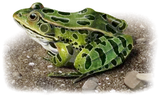
Fowler's Toad
Anaxyrus fowleri
Typically a brown, warty toad with rough dry skin and large elongated parotid glands. Its back is patterned with random irregular dark spots with black borders, which tur…
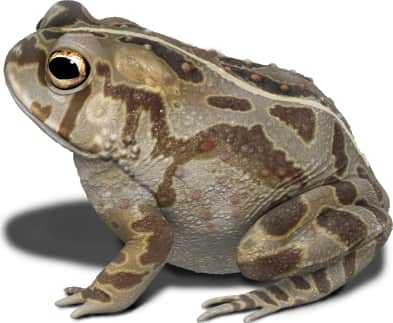
How to identify
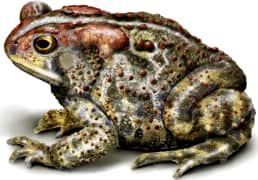
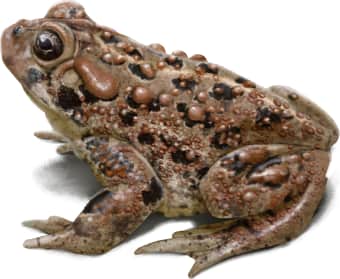
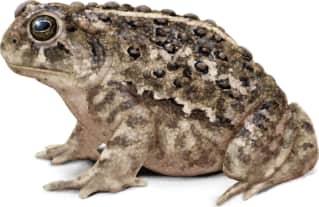
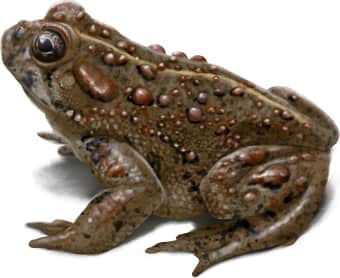
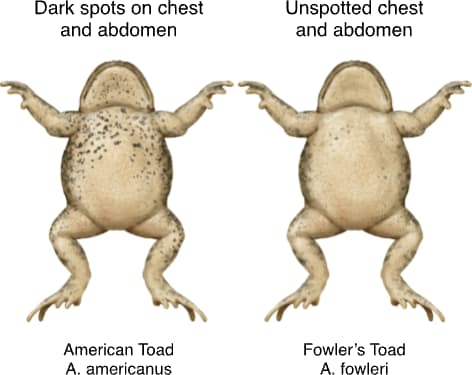
Typically a brown, warty toad with rough dry skin and large elongated parotid glands. Its back is patterned with random irregular dark spots with black borders, which turn into bands on the legs. It has large eyes with horizontal pupils. Adults have a thin light stripe down the center of their back and they reach a length of 2-3.7 inches. Its ventrum is pale and unmarked except for one dark spot on the chest.
Range
Ranges through most of the eastern half of the United States, with the exception of northern New England and the southeast coast through the Florida peninsula. Parts of its northern range cross slightly across the border into Canada.
Habitat
This toad inhabits open woodlands, meadows, prairies, beaches, rocky areas, and suburban gardens. It will burrow underground for the winter or when conditions become too hot and dry.
Variations
Color palette is generally shades of brown, but they can have yellowish, olive green, reddish, or grey hues.
Similar species
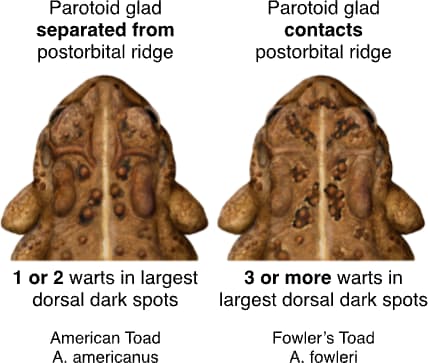
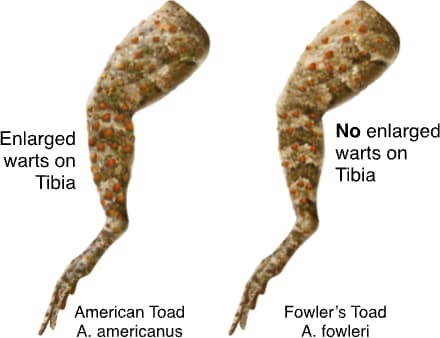
This species could easily be confused with the American toad (*Anaxyrus americanus*), southern toad (*Anaxyrus terrestris*), or Woodhouse's toad (*Anaxyrus woodhousii*), which can all overlap in range, or the western toad (*Anaxyrus boreas*) which would not.
Name and etymology
Genus
Anaxyrus
From Greek meaning a king or chief
Origin
Sources
- Laurenti, 1768. Syn. Rept., p. 25
Bufo. Laurenti, 1768 - Syn. Rept., p. 25
Species epithet
fowleri
Honoring Samuel Fowler who described the toad in 1843
Origin
Honors
Sources
- Hinckley, 1882. Proc. Boston Soc. Nat. Hist., Vol. 21, p. 310 ↗
Bufo fowleri. Hinckley, 1882 - Proc. Boston Soc. Nat. Hist., Vol. 21, p. 310
Explore more names in the etymology index.
More illustrations
At a glance
Range
Ranges through most of the eastern half of the United States, with the exception of northern New England and the southeast co…
Habitat
This toad inhabits open woodlands, meadows, prairies, beaches, rocky areas, and suburban gardens. It will burrow underground…
Guide
Reptiles and Amphibians of North America
Range map
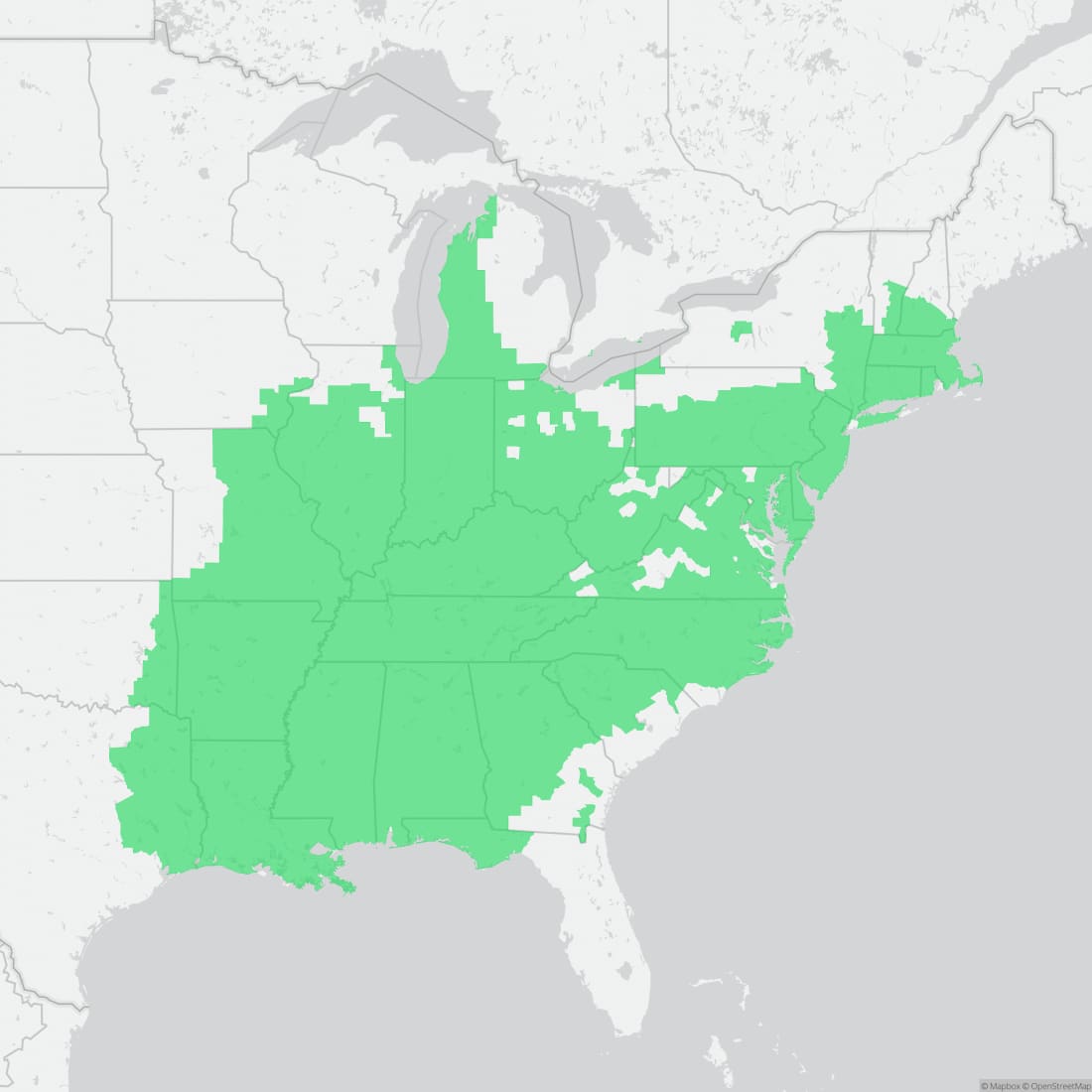
Approximate range. © Mapbox © OpenStreetMap