Kirtland's Snake
Clonophis kirtlandii
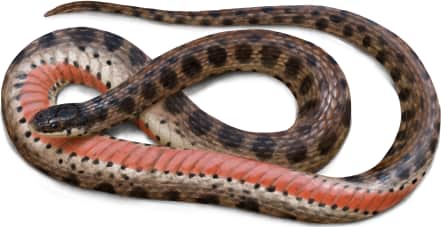
A small unique snake averaging only 14-18 inches in length. It has strongly keeled scales on its slender body. It has a black-capped head, cream-colored scales around its…
How to identify
A small unique snake averaging only 14-18 inches in length. It has strongly keeled scales on its slender body. It has a black-capped head, cream-colored scales around its mouth and throat, alternating rows of dark spots on a lighter background on its dorsum, and a salmon-pink ventrum bordered by 2 rows of black spots. The spots on its sides are usually more distinct than the ones on the center of the back.
Range
Range includes central and eastern Illinois, most of Indiana and Ohio, and small adjacent areas in southern Michigan, western Pennsylvania, northern Kentucky, and northeastern Missouri.
Habitat
Primarily found in areas surrounding swamps, marshes, wet prairies, and forested wetlands, but spends little time in the water. Often hides under ground debris or within burrows. It is sometimes found in open, grassy, urban or metropolitan areas like cemeteries, parks, and vacant lots.
Variations
Dorsal background color is light brown to dark reddish brown, and dorsal spots are dark brown to black. Some are distinctly patterned with contrasting colors, while others are very dark with subtle spotting. Ventral coloration can be light pink to brick red.
Similar species
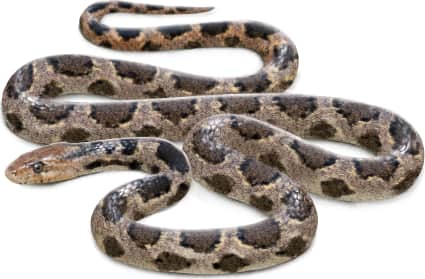
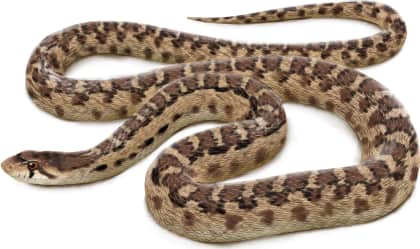
This unique snake is not likely to be misidentified, but it could possibly be confused with the eastern fox snake (*Pantherophis vulpinus*) or gopher snake (*Pituophis catenifer*).
Name and etymology
Genus
Clonophis
Greek for twig (klonion) snake (ophis).
Origin
Sources
- Cope, 1889. Proc. U.S. Natl. Mus., Vol. 11, p. 391 ↗
Clonophis. Cope, 1889 - Proc. U.S. Natl. Mus., Vol. 11, p. 391
Species epithet
kirtlandii
Honoring Jared P. Kirtland.
Origin
Honors
Sources
- (Kennicott, 1856). Proc. Acad. Nat. Sci. Philadelphia, Vol. 8, p. 95 ↗
Clonophis kirtlandii. (Kennicott, 1856) - Proc. Acad. Nat. Sci. Philadelphia, Vol. 8, p. 95
Explore more names in the etymology index.
At a glance
Range
Range includes central and eastern Illinois, most of Indiana and Ohio, and small adjacent areas in southern Michigan, western…
Habitat
Primarily found in areas surrounding swamps, marshes, wet prairies, and forested wetlands, but spends little time in the wate…
Guide
Reptiles and Amphibians of North America
Range map
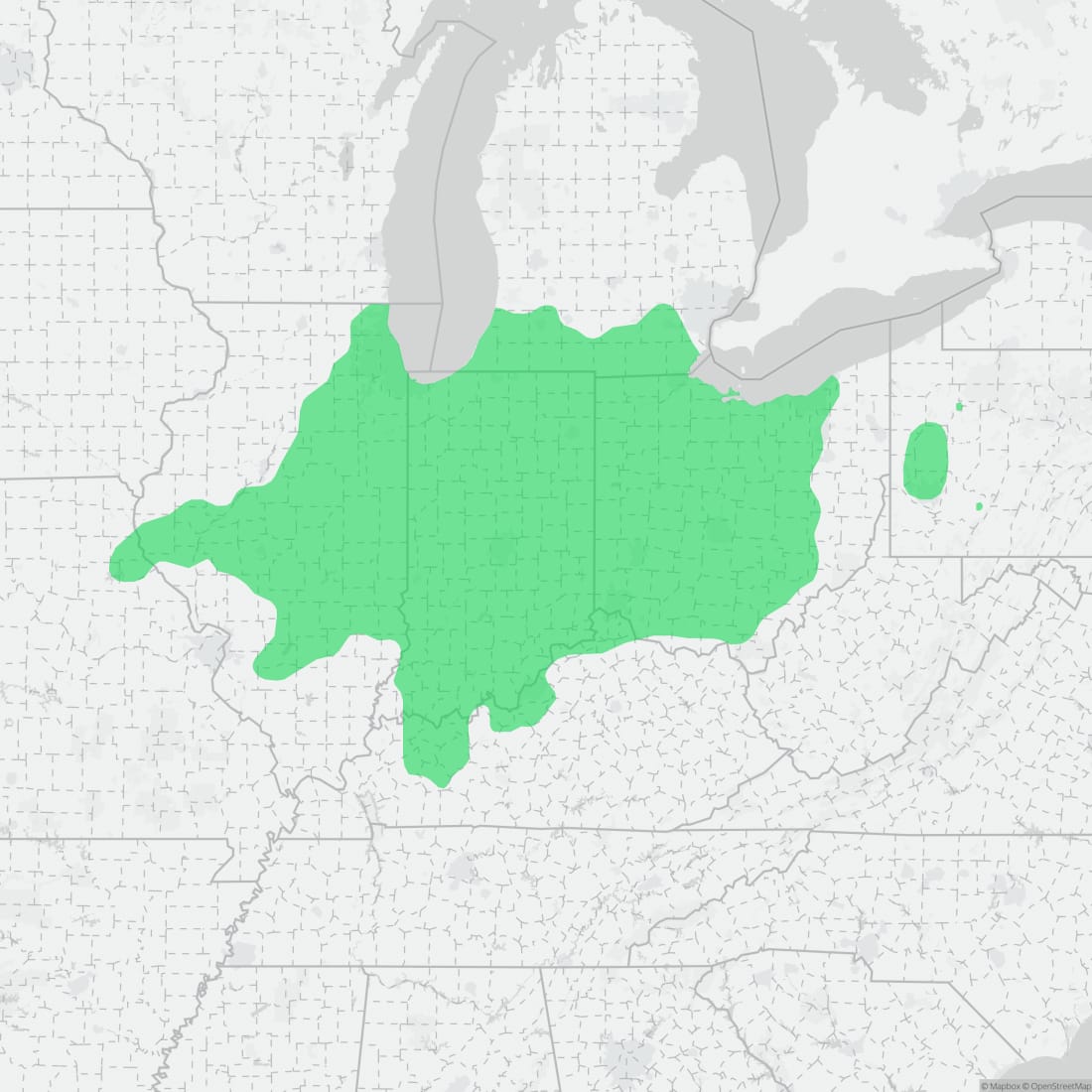
Approximate range. © Mapbox © OpenStreetMap