Cuban Tree Frog
Osteopilus septentrionalis
The Cuban Tree Frog Osteopilus is a large tropical tree frog and the largest frog specie in North America. Its length usually ranges between 28 to 165 millimeters with a…
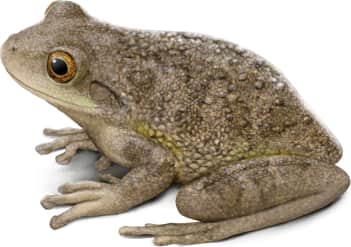
How to identify
The Cuban Tree Frog Osteopilus is a large tropical tree frog and the largest frog specie in North America. Its length usually ranges between 28 to 165 millimeters with a body weight of about 57 gram. This specie of frog has a varying color ranging from olive brown, bronze, gray, whitish gray, green, yellow, dark brown or a combination of any of these colors and these color are subject to changes depending on environmental condition or body temperature. The underside of this species is creamy white in color. The skin which is rough and covered with warts secretes a toxic substance which causes a burning sensation to the eyes and nose making it an animal to not be around. They have big protruding eyes. The skin on the head is usually attached to the skull of the adult frog. The limbs on this species comprises of 2 front limbs which are not webbed and 2 back limbs which are to a small extent webbed. Their limbs are large in size making it easy for them to climb and also making them different from other frogs. The tadpoles are darker in color and have a pointed transparent tail distinguishing them from the frogs.
Range
The Cuban Tree Frog Osteopilus is native to the Caribbean regions of Cuba, The Isle of Pines, The Bahamas, The Cayman Island. They can also be found in Seychelles, North America and The Island of Oahu, Hawaii.
Habitat
The Cuban Tree Frog is a tropical animal and so is usually found in mildly moist Natural or Human-enhanced environment such as swamps, forests, tree canopies, plantations, sandhills, ponds, buildings, urban areas, wetlands, estuaries, lagoons, etc. However, they can sometimes be found in moisture lacking environments like desserts. The Cuban Tree Frogs usually sleeps during the day and hunts for food at night. They are rapacious feeders feeding on both vertebrates and invertebrates. They feed on anything they are able to subdue and fit into their mouth like snails, insects, lizards and even frogs. The Cuban Tree Frog breeds all year round but has a higher breeding rate between May and October. Breeding usually occurs more in isolated areas such as an abandoned pool, ponds, wetlands or human-enhanced environments. Breeding is usually enhanced by rains and storms. Breeding involves the males making loud call that sounds like a squeaking door which attracts the female which is followed by the males competing to mate the female. The female lays eggs which is externally fertilized by the male and hatches within 32 hours.
Similar species
The Squirrel Tree Frog (Dryophytes Squirella) are small sized tropical animals ranging from 0 to 1.5 inches in size. Their major skin color includes green, yellow and brown and can be found to have white or brown spots on their body. The Barking Tree Frog (Dryophytes Gratiosa) is the largest tree frog with a body length ranging between 2 to 3inches. These species are in colors such as green, gray, yellow, brown and any mixture of the colors but are easily identified by the circular, dark spots on their back. The Barking Tree Frog has a skin that is very smooth and tough which changes colors based on its temperature, its environment or timing. They have large bulging eyes which can either black, gold or brown in color. Cope’s Gray Tree Frog (Dryophytes Chrysoscelis) are medium sized frogs that range between 1 to 2.5 inches in size. They have colors varying from light green to molten green like the color of a tree’s bark and their changes based on the environmental conditions or body temperature. Like the Cuban Tree Frog, they have rough, warty skin that releases toxic substances that can be irritable to the human nose and eyes.
Name and etymology
Genus
Osteopilus
From greek meening bone(osteon) cap(pileos) referencing skin on top of head.
Origin
Sources
- Fitzinger, 1843. Syst. Rept. p. 30 ↗
Osteopilus. Fitzinger, 1843 - Syst. Rept. p. 30
Species epithet
septentrionalis
Latin for northern.
Origin
Sources
- Dumeril and Bibron, 1841. Erp. Gen., Vol. 8, p. 538 ↗
Osteopilus septentrionalis. Dumeril and Bibron, 1841 - Erp. Gen., Vol. 8, p. 538
- Baird, 1854. Proc. Acad. Nat. Sci. Philadelphia, Vol. 7, p. 61 ↗
Rana septentrionalis. Baird, 1854 - Proc. Acad. Nat. Sci. Philadelphia, Vol. 7, p. 61
- (Kennicott, 1859).
Leptodeira septentrionalis. (Kennicott, 1859) -
Explore more names in the etymology index.
At a glance
Size
2.5 to 12 cm
Range
The Cuban Tree Frog Osteopilus is native to the Caribbean regions of Cuba, The Isle of Pines, The Bahamas, The Cayman Island.…
Habitat
The Cuban Tree Frog is a tropical animal and so is usually found in mildly moist Natural or Human-enhanced environment such a…
Range map
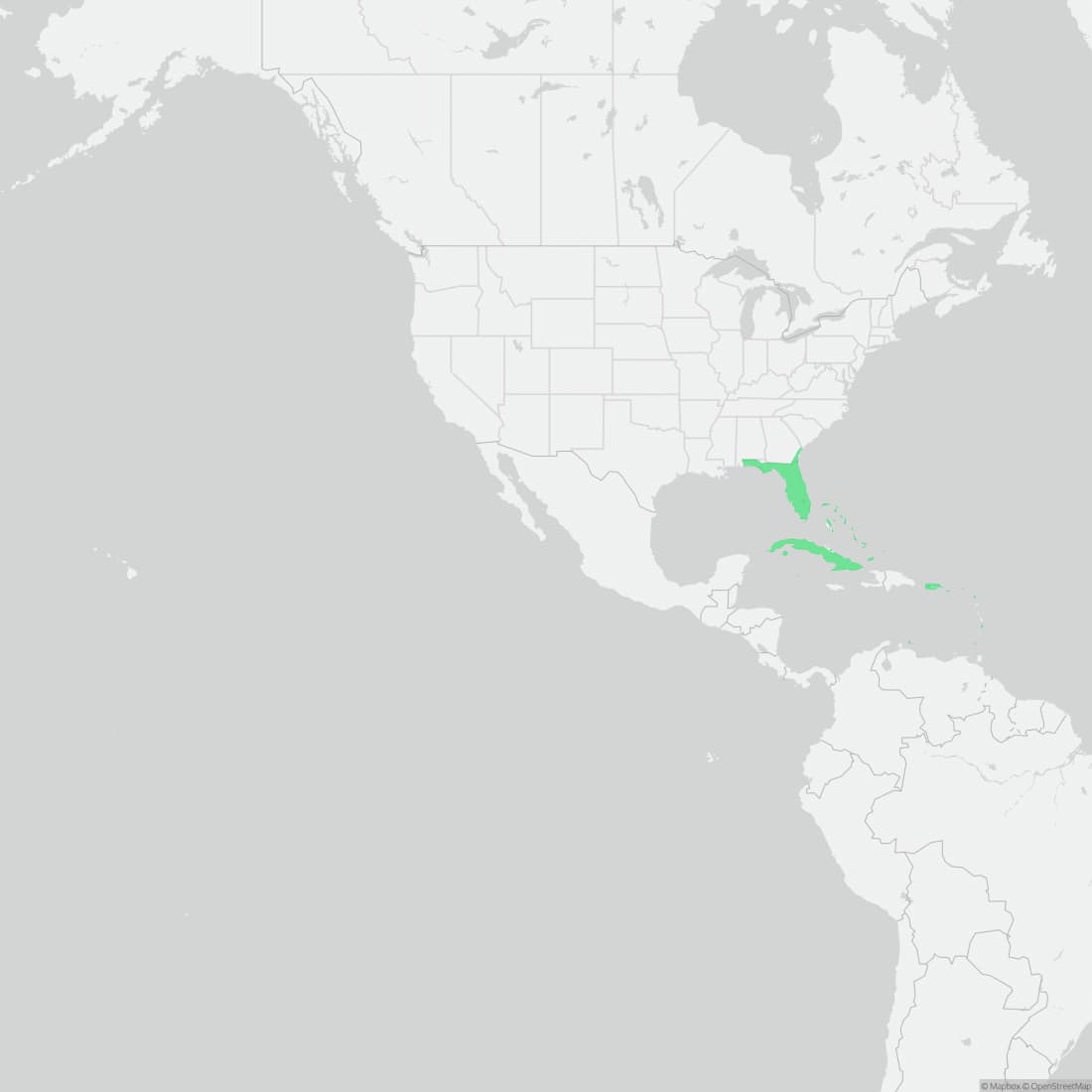
Approximate range. © Mapbox © OpenStreetMap