Red Hills Salamander
Phaeognathus hubrichti
The Red Hills salamanders are large creatures, averaging around 10 inches in length. They belong to the Plethodontidae family and are therefore, lungless salamanders, and…
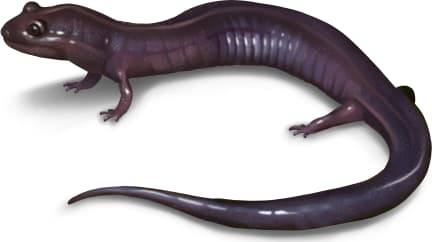
How to identify
The Red Hills salamanders are large creatures, averaging around 10 inches in length. They belong to the Plethodontidae family and are therefore, lungless salamanders, and breathe entirely through their moist skin, which is dark brown to dark gray in color, without markings. They have relatively short limbs with long prehensile tails, being almost 47 percent of its entire body. Males and females typically grow to the same length but differ in body proportions. Males have shorter tails, longer bodies, and thicker heads. They are adapted for their burrowing lifestyle, having a thick skull, modified eyelids, and small nostrils.
Range
The Red Hills salamander (Phaeognathus hubrichti) is a large, terrestrial salamander endemic to Alabama, USA. They have a small range between the state and the Conecuh rivers, spanning just six counties, Butler, Conecuh, Covington, Crenshaw, Monroe, and Wilcox.
Habitat
The Red hills salamanders typically live in burrows, found on steep, reasonably shaded, shrub-covered slopes. They are stealthy predators; they wait and ambush prey as they pass by their burrow entrance. The salamanders either catch prey with their jaws or with their short tongues, hunting only at night and rarely travel far from their burrows. Males generally become reproductively mature in less than a year, while females usually take around 5-6 years to reach maturity. After mating, females carry eggs in their oviducts for 20 days, after which they are then laid. It takes approximately 20 days for young to hatch and emerges.
Similar species
Slender Salamander or (Batrachoseps attenuatus). The lungless salamanders have long slender snake-like bodies with small limbs that appear vestigial. They have frog-like projectile tongues, which they use to catch their prey. They are uniquely distinguished from other salamanders by the four toes they have on each foot. Mushroom Tongued Salamanders or (Bolitoglossa mexicana). These neotropical salamanders make up approximately one-fifth of all known species of salamanders. They are known for their ability to project their tongue at prey at items, as indicated by their name. They also possess webbed feet, having significantly more webbing than other species outside their genus, except thebolitoglossine Chiropterotriton magnipes. Flat foot Salamanders or (Chiropterotriton magnipes). The flat foot salamanders are endemic to Mexico, being widely distributed throughout Northern and Eastern Mexico. They are ecologically diverse and occupy a range of habitats.
Name and etymology
Genus
Phaeognathus
Greek for dark (phalos) jaw (gnathos).
Origin
Sources
- Highton, 1961. Copeia, p. 66 ↗
Phaeognathus. Highton, 1961 - Copeia, p. 66
Species epithet
hubrichti
Honoring Leslie Hubricht.
Origin
Honors
Sources
- Thurow, 1957. Herpetologica, Vol. 13, p. 59
Plethodon hubrichti. Thurow, 1957 - Herpetologica, Vol. 13, p. 59
- Highton, 1961. Copeia, p. 67 ↗
Phaeognathus hubrichti. Highton, 1961 - Copeia, p. 67
Explore more names in the etymology index.
At a glance
Size
160 to 250 mm
Range
The Red Hills salamander (Phaeognathus hubrichti) is a large, terrestrial salamander endemic to Alabama, USA. They have a sm…
Habitat
The Red hills salamanders typically live in burrows, found on steep, reasonably shaded, shrub-covered slopes. They are stealt…
Range map
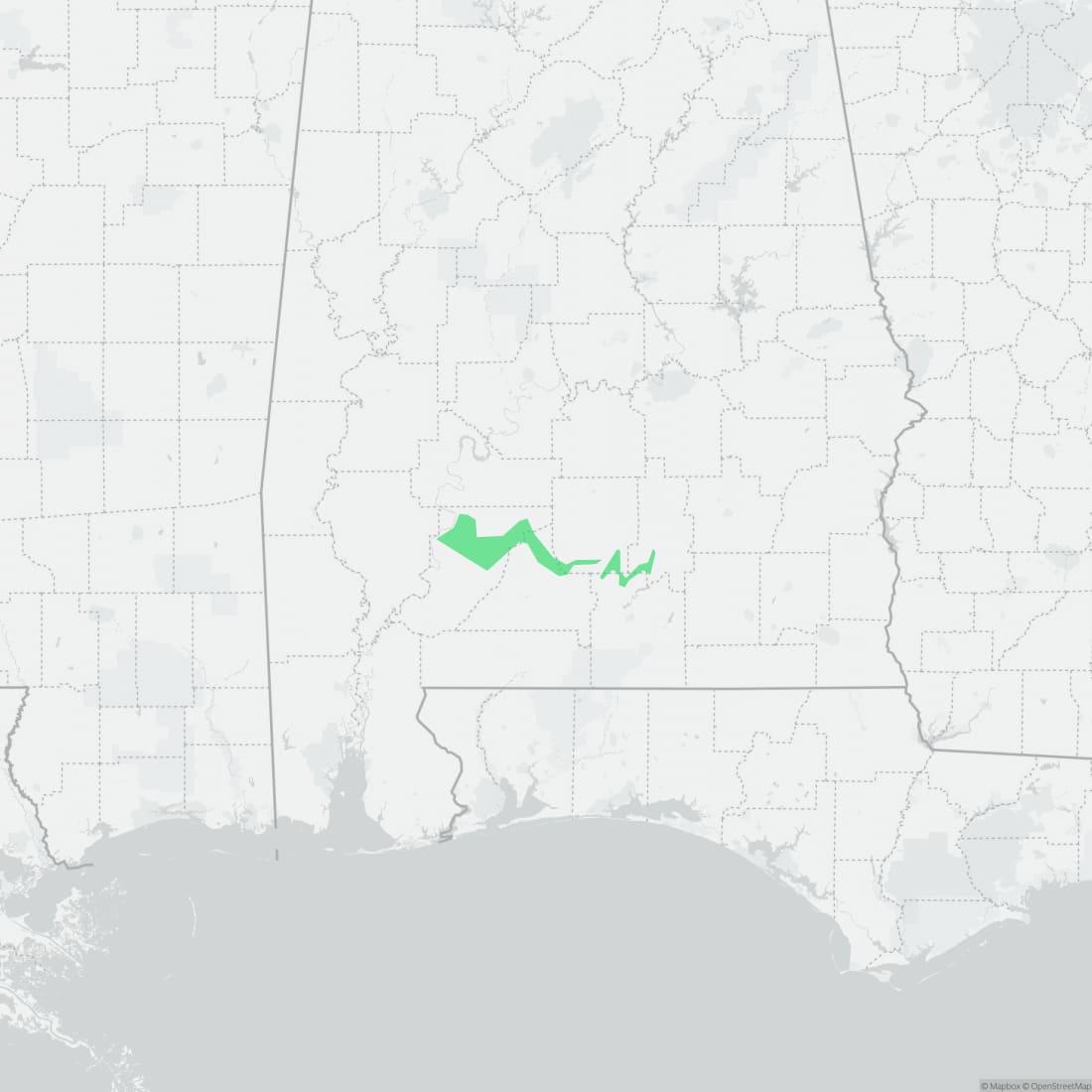
Approximate range. © Mapbox © OpenStreetMap