Pacific Jumping Mouse
Zapus trinotatus
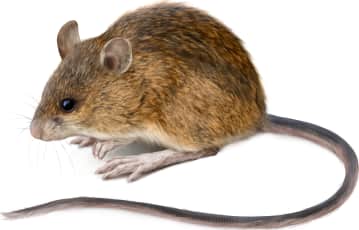
Z. trinotatus is distinguished by its dark brown to blackish dorsal stripe and bright orange or yellowish-orange sides. The tail is very long. The upper incisors are groo…
How to identify
Z. trinotatus is distinguished by its dark brown to blackish dorsal stripe and bright orange or yellowish-orange sides. The tail is very long. The upper incisors are grooved. It is the largest of the Zapus species. Total length can range from 240-290mm.
Range
Z. trinotatus is found in a narrow coastal strip from southwestern British Columbia south to northern California.
Habitat
Z. trinotatus prefers dense, moist vegetation along streams, marshes, and other wet areas in coastal forests.
Similar species
Due to its restricted coastal range, Z. trinotatus is less likely to be confused with other Zapus species.
Name and etymology
Genus
Zapus
Greek for very (za-) foot (pous)
Origin
Sources
- Palmer, Index Generum Mammalium (1904) ↗
Palmer, T. S. 1904. Index Generum Mammalium: a list of the genera and families of mammals. North American Fauna 23. Government Printing Office, Washington. https://doi.org/10.5962/bhl.title.39809
Species epithet
trinotatus
Latin for three (tri-) marks (notatus)
Origin
Sources
- Wikipedia: Zapus trinotatus ↗
“Zapus trinotatus.” Wikipedia. https://en.wikipedia.org/wiki/Pacific_jumping_mouse
Explore more names in the etymology index.
At a glance
Range
Z. trinotatus is found in a narrow coastal strip from southwestern British Columbia south to northern California.
Habitat
Z. trinotatus prefers dense, moist vegetation along streams, marshes, and other wet areas in coastal forests.
Guide
Mammals of North America
Range map
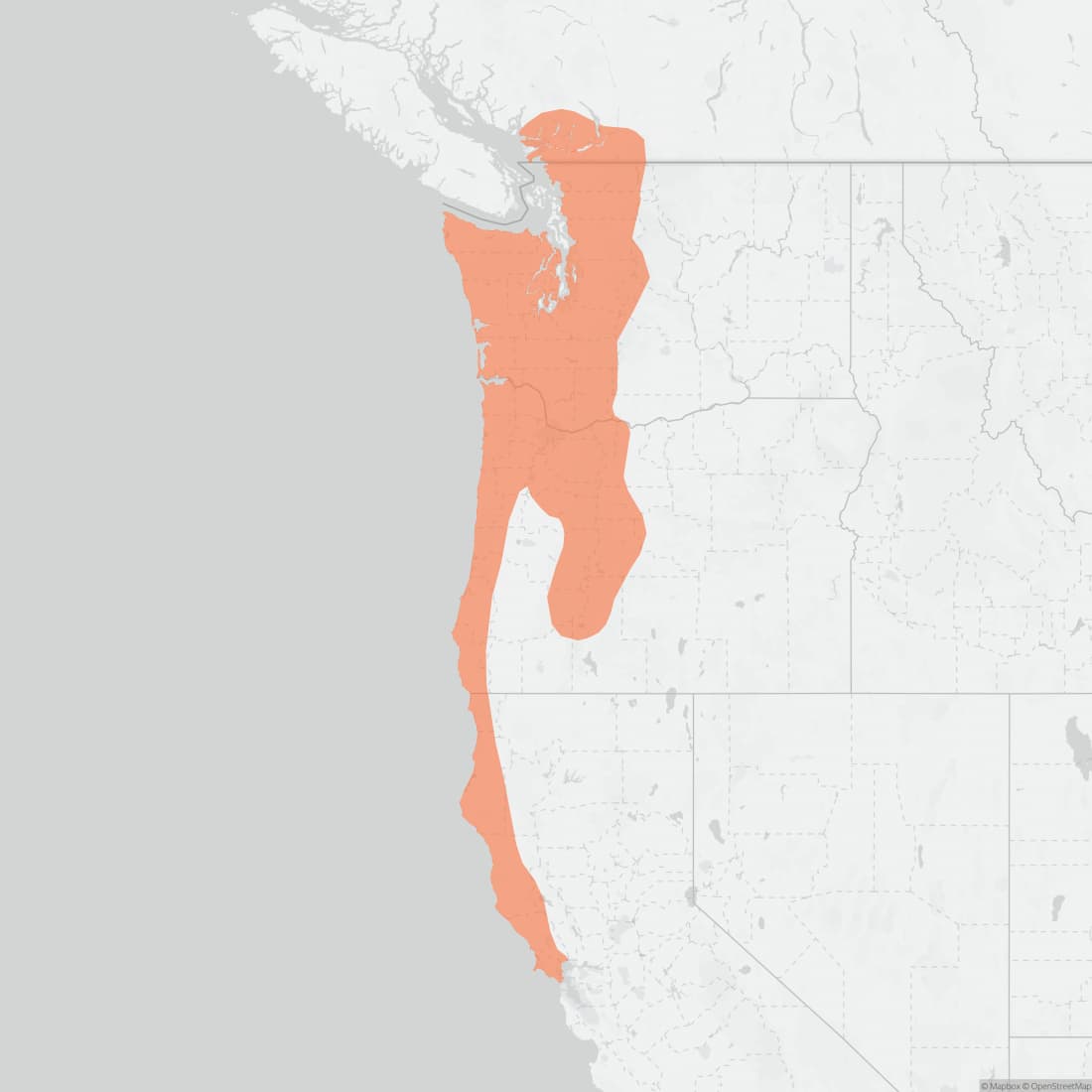
Approximate range. © Mapbox © OpenStreetMap