Alabama Map Turtle
Graptemys pulchra
It might prove difficult to differentiate this turtle from others of the same genus. A black stripe running down the center of its back with knobs extruding from it is on…
How to identify
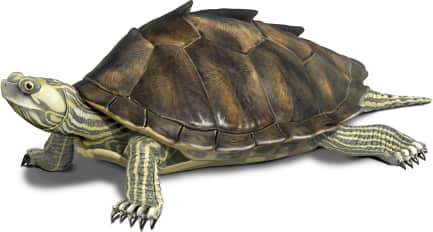
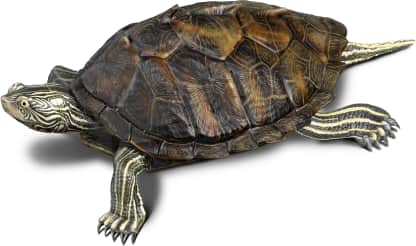
It might prove difficult to differentiate this turtle from others of the same genus. A black stripe running down the center of its back with knobs extruding from it is one of such differentiating features. The shell covering the belly is lightly colored with five horizontal lines that outline the scutes. The neck and legs can range from green with patterns of thin yellow lines. It also has webbed feet and a striped tail. Adult males range from 3.5 inches to 5.0 inches while females are much larger and have huge heads. The females lose a lot of colorations and markings as they age and may appear more somber than males and juveniles. The upper half of the shell color can range from olive to a dull green and much less visible black stripe in adults compared to juveniles. Juveniles have a more olive upper half of the shell and a dark stripe. The outermost edge on the carapace (or upper half of the shell) usually has light reticular marks.
Range
Rare and endangered, the map turtle can only be found at the southwestern corner of America. In eastern Louisiana, across Mississippi, Alabama and Georgia in the Tallapoosa and Coosa rivers.
Habitat
The Alabama Map Turtle can be found in sandy or muddy streams and rivers. Can also be found in streams with rocky bottoms. The males and juveniles can be founding basking in the sun on treetops near the banks. Females are generally found basking on larger trunks instead of limbs and branches. The Alabama map turtles are omnivorous and feed on both small animals (insects, mollusks) (invertebrates) and vegetation. Although the male carry sperm throughout the year mating only occurs in autumn. The females can lay eggs up to 200m away from the ocean.
Variations
The Northern Map Turtle (graptemys geographica) is very similar to the Alabama Map Turtle and often mistaken for one another. And just like the Alabama Map Turtle, it got its name from the markings on the carapace similar to that of a map.
Similar species
Name and etymology
Genus
Graptemys
Greek for written (graptos) turtle (emys).
Origin
Sources
- Agassiz, 1857. Contr. Nat. Hist. U. S., Vol. 1, p. 436 ↗
Graptemys. Agassiz, 1857 - Contr. Nat. Hist. U. S., Vol. 1, p. 436
Species epithet
pulchra
Latin for beautiful
Origin
Sources
- Baur, 1893. Amer. Nat., Zool., Vol. 27, p. 675 ↗
Graptemys pulchra. Baur, 1893 - Amer. Nat., Zool., Vol. 27, p. 675
- Gray, 1852. Ann. Mag. Nat. Hist., Ser. 2, Vol. 10, p. 440 ↗
Anniella. Gray, 1852 - Ann. Mag. Nat. Hist., Ser. 2, Vol. 10, p. 440
Explore more names in the etymology index.
At a glance
Range
Rare and endangered, the map turtle can only be found at the southwestern corner of America. In eastern Louisiana, across Mis…
Habitat
The Alabama Map Turtle can be found in sandy or muddy streams and rivers. Can also be found in streams with rocky bottoms. Th…
Guide
Reptiles and Amphibians of North America
Range map
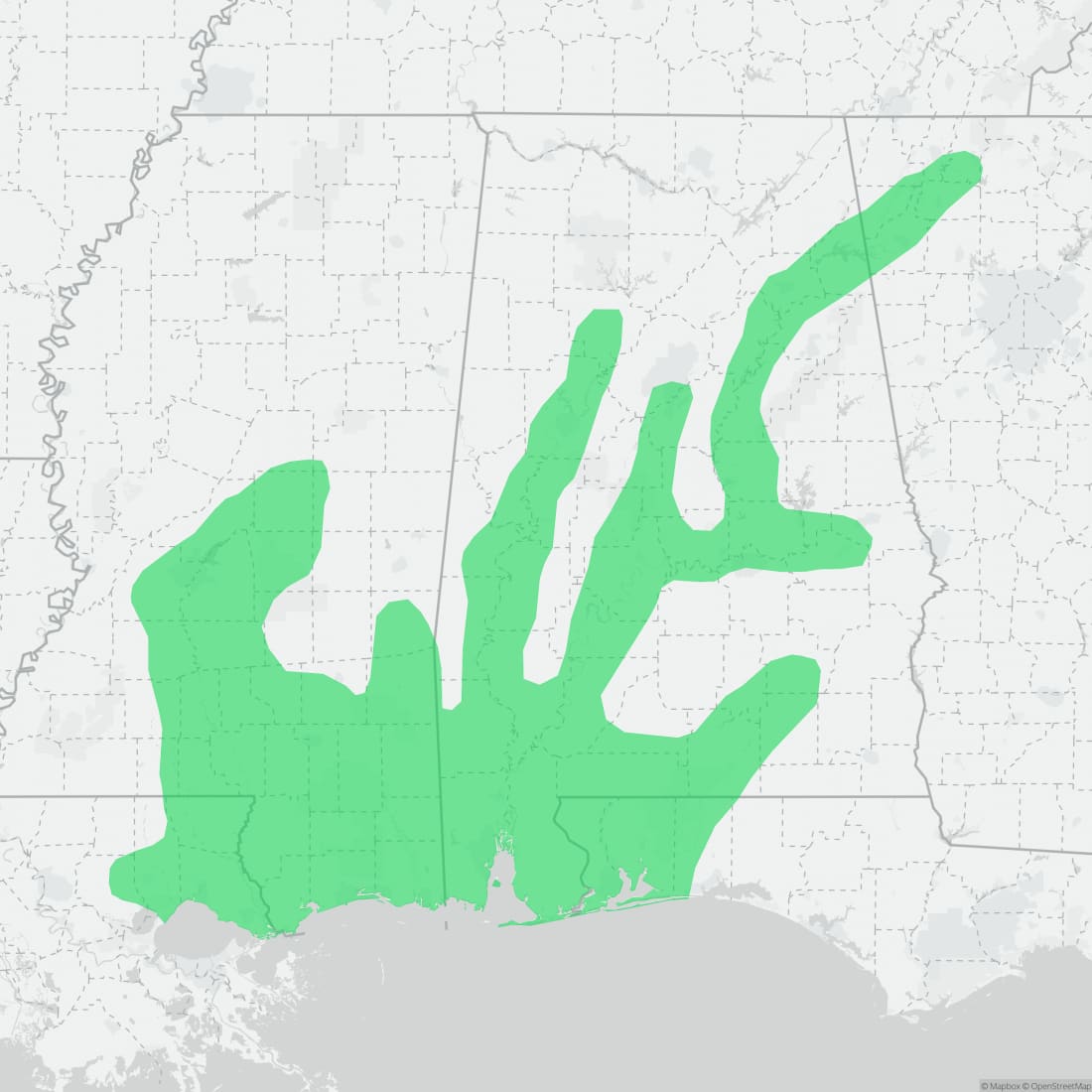
Approximate range. © Mapbox © OpenStreetMap