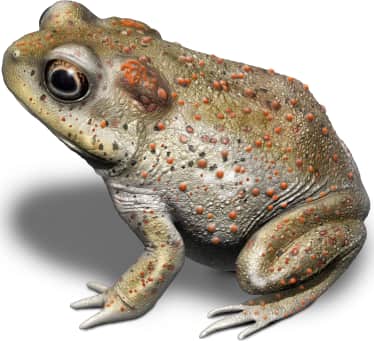
Red-spotted Toad
Anaxyrus punctatus
A pot-bellied toad with a small, flat head and a short snout that is slightly pointed. Its average body length is 1.5-3 inches. Its parotid glands are round to oval and e…
How to identify
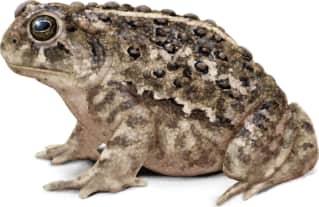
A pot-bellied toad with a small, flat head and a short snout that is slightly pointed. Its average body length is 1.5-3 inches. Its parotid glands are round to oval and equal in size to its eyes. Its cranial crest is subtle or absent. Color is variable, but in general this toad has a light tan to grey background color with reddish-orange warts on its dorsal surfaces. Its ventrum is pale and usually unmarked.
Range
Large range in the southwestern United States and most of northern and central Mexico. Northern boundaries reach central Utah and Colorado, eastern boundaries extend to central Oklahoma and Texas, and western boundaries are just shy of the southern California coast.
Habitat
Stays burrowed underground most of the time in desert habitats, emerging to breed in temporary rain pools and puddles. In non-desert areas of its range, it is often found living alongside rocky streams and rivers. It also occurs in open grasslands and near springs and seepage areas, hiding in rock crevices.
Variations
Background color may have a greenish hue, or may have dark grey to black mottling or patches.
Similar species
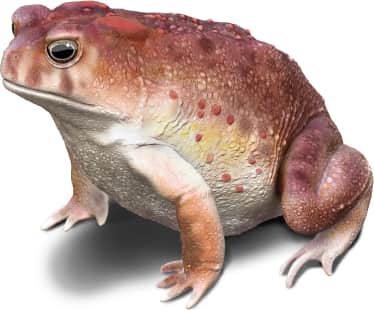
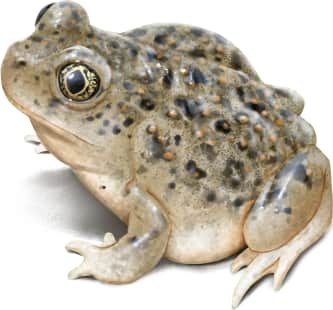
Most likely to be confused with the Arizona toad (*Anaxyrus microscaphus*), Mexican spadefoot (*Spea multiplicata*), or Woodhouse's toad (*Anaxyrus woodhousii*).
Name and etymology
Genus
Anaxyrus
From Greek meaning a king or chief
Origin
Sources
- Laurenti, 1768. Syn. Rept., p. 25
Bufo. Laurenti, 1768 - Syn. Rept., p. 25
Species epithet
punctatus
From latin meaning spotted, referencing its red spots
Origin
Sources
- Baird and Girard, 1852. Proc. Acad. Nat. Sci. Philadelphia, Vol. 6, p. 173 ↗
Bufo punctatus. Baird and Girard, 1852 - Proc. Acad. Nat. Sci. Philadelphia, Vol. 6, p. 173
Explore more names in the etymology index.
At a glance
Range
Large range in the southwestern United States and most of northern and central Mexico. Northern boundaries reach central Utah…
Habitat
Stays burrowed underground most of the time in desert habitats, emerging to breed in temporary rain pools and puddles. In non…
Guide
Reptiles and Amphibians of North America
Range map
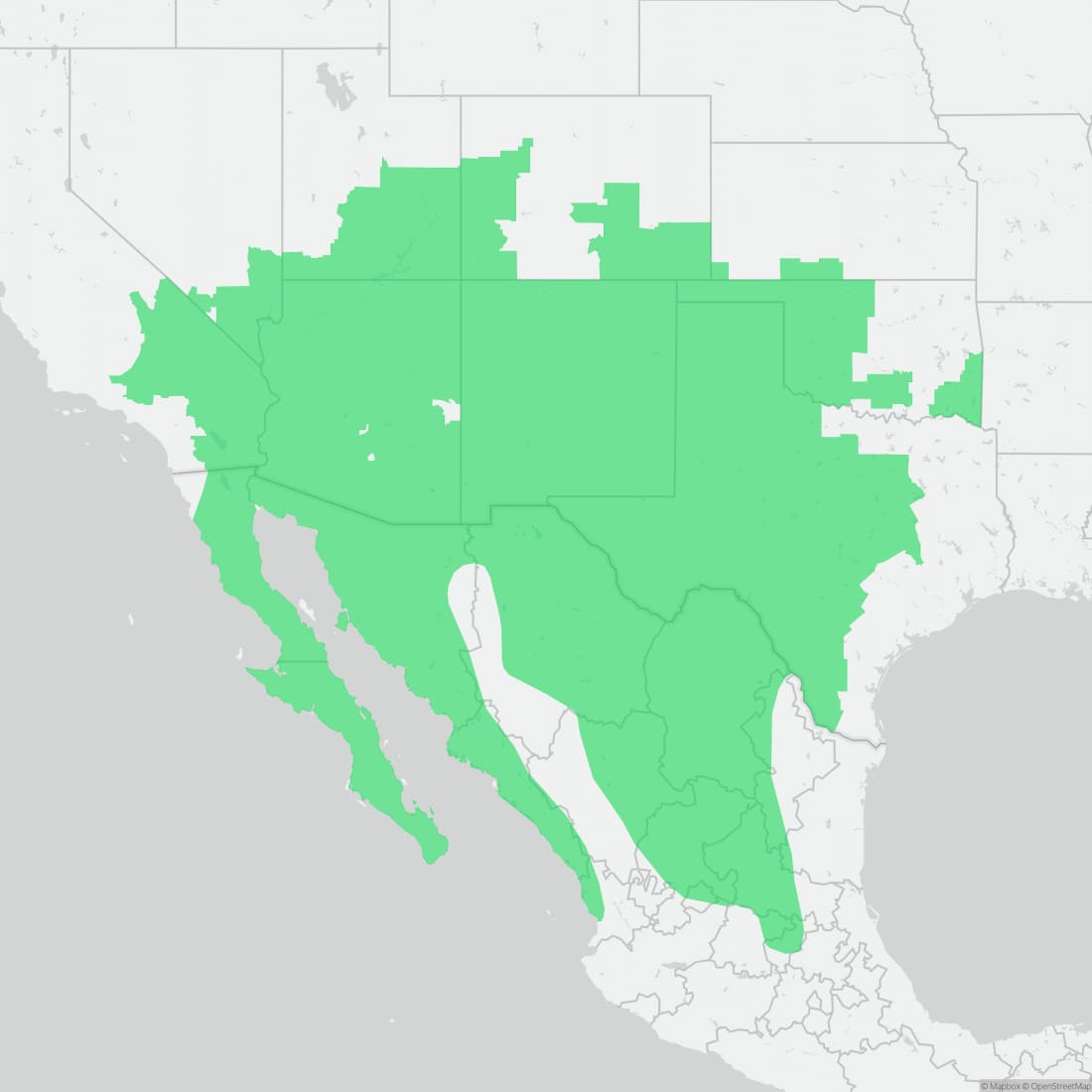
Approximate range. © Mapbox © OpenStreetMap