Brown Basilisk
Basiliscus vittatus
The male gender of this specie may exceed 609.6 mm in total length, but the females are a lot smaller. The adult males have a large flaplike crest which is held up by fle…
How to identify
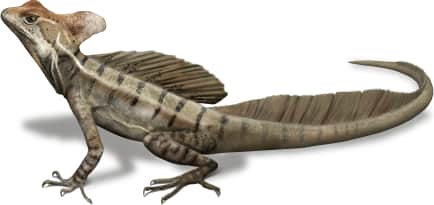
The male gender of this specie may exceed 609.6 mm in total length, but the females are a lot smaller. The adult males have a large flaplike crest which is held up by flexible cartilage. It projects from the back of its head to its back. The specie also has a crest that runs from above their shoulders to around the level of the hind legs. In comparison, the females have a folded “hood” which outlines the back of their head, they also have a lower vertebral crest than the males. Also, the males have a more elongate snout than the females. Its head is large, and its tails and limbs are long and slender. The male and the female of this specie both are dark barred dorsally and have considerable distinct yellowish dorsolateral lines. Lastly, its lips and venter are light.
Range
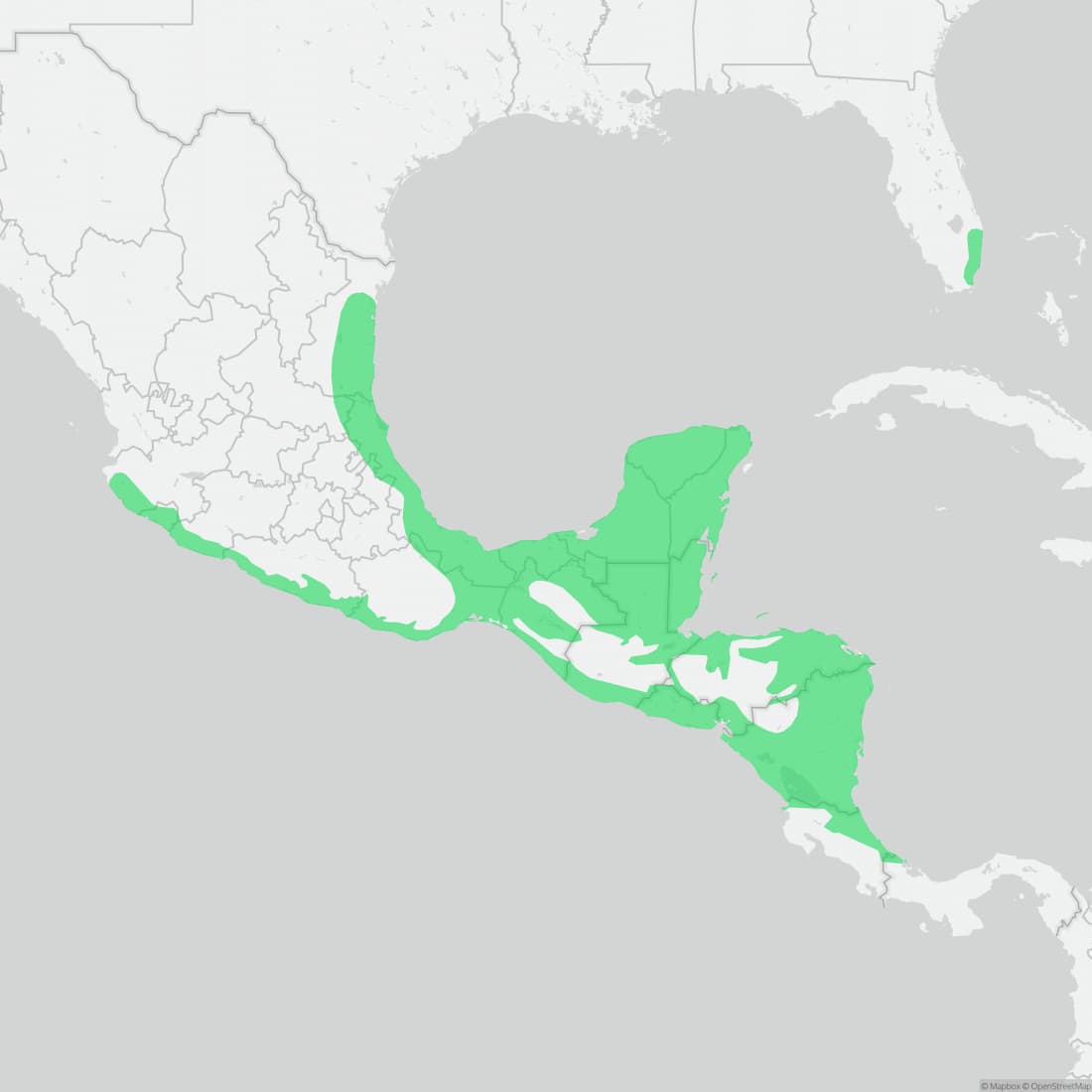
The Brown Basilisk is indigenous to Latin America. It is located from Central Mexico southward to northern Colombia. Recently, it has been found in Florida. This specie is also very widespread in Guatemala, wherever a water source is available.
Habitat
The Brown Basilisk can be found in tropical and subtropical wet, moist and dry forests. It is usually found in dense vegetation along the margin of any body of water. They are arboreal creatures. They also have the wondrous ability to run on water for a few metres when startled. They feed on mostly insects and sometimes fallen berries. The females lay about 3 to 12 eggs from May to August. These eggs hatch from June to September in about 55 to 65 days.
Similar species
Basiliscus basiliscus or the Common basilisk. They are endemic to Central and South America. They grow up to a total length of about 38 – 43 mm. Basiliscus galeritus or the Western basilisk. They are endemic to northwestern South America. The males grow up to 775 mm while the females grow up to 635 mm in total length. Basiliscus plumifrons or the Plumed basilisk. They are native to Central America. They grow up to a total length of 910 mm.
Name and etymology
Genus
Basiliscus
Latin for little king.
Origin
Sources
- Wikipedia: Basiliscus ↗
“Basiliscus.” Wikipedia. https://en.wikipedia.org/wiki/Basiliscus
Species epithet
vittatus
Latin for striped.
Origin
Sources
- Wikipedia: Basiliscus vittatus ↗
“Basiliscus vittatus.” Wikipedia. https://en.wikipedia.org/wiki/Brown_basilisk
Explore more names in the etymology index.
At a glance
Size
60 cm
Range
The Brown Basilisk is indigenous to Latin America. It is located from Central Mexico southward to northern Colombia. Recently…
Habitat
The Brown Basilisk can be found in tropical and subtropical wet, moist and dry forests. It is usually found in dense vegetat…
Range map
Approximate range. © Mapbox © OpenStreetMap