
Abert's Squirrel
Sciurus aberti
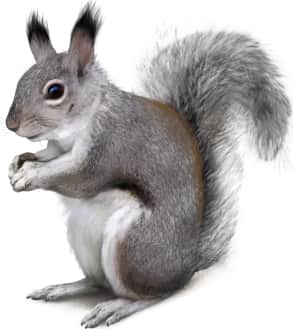
This medium-sized tree squirrel is readily identifiable by its prominent, long ear tufts, often referred to as "tassel-ears." Its coat color varies geographically, with c…
How to identify
This medium-sized tree squirrel is readily identifiable by its prominent, long ear tufts, often referred to as "tassel-ears." Its coat color varies geographically, with common variations including gray with a reddish or dark dorsal stripe, and sometimes melanistic (dark) forms. The underside is typically white or cream-colored. The tail is bushy.
Range
S. aberti is primarily found in the southern Rocky Mountains and the Colorado Plateau. Its distribution includes parts of Arizona, Colorado, New Mexico, Utah, and Wyoming in the United States, extending south into the Sierra Madre Occidental in Mexico. Its range is closely associated with the distribution of ponderosa pine forests.
Habitat
This species is strongly associated with mature ponderosa pine forests. It relies on these forests for food, shelter, and nesting. They can also be found in mixed-conifer forests where ponderosa pines are present.
Similar species
S. aberti is relatively distinctive within its range due to its ear tufts. Other squirrel species in the region, such as Sciurus niger and Sciurus carolinensis, lack these ear tufts and generally have different color patterns. Sciurus arizonensis is found in some overlapping areas, but generally lacks the prominent ear tufts.
Name and etymology
Genus
Sciurus
Greek for shadow (skia) tail (oura)
Origin
Sources
- Palmer, Index Generum Mammalium (1904) ↗
Palmer, T. S. 1904. Index Generum Mammalium: a list of the genera and families of mammals. North American Fauna 23. Government Printing Office, Washington. https://doi.org/10.5962/bhl.title.39809
Species epithet
aberti
Honoring American Naturalist James William Abert
Origin
Honors
Sources
- Wikipedia: Sciurus aberti ↗
“Sciurus aberti.” Wikipedia. https://en.wikipedia.org/wiki/Abert's_squirrel
Explore more names in the etymology index.
At a glance
Range
S. aberti is primarily found in the southern Rocky Mountains and the Colorado Plateau. Its distribution includes parts of Ari…
Habitat
This species is strongly associated with mature ponderosa pine forests. It relies on these forests for food, shelter, and nes…
Guide
Mammals of North America
Range map
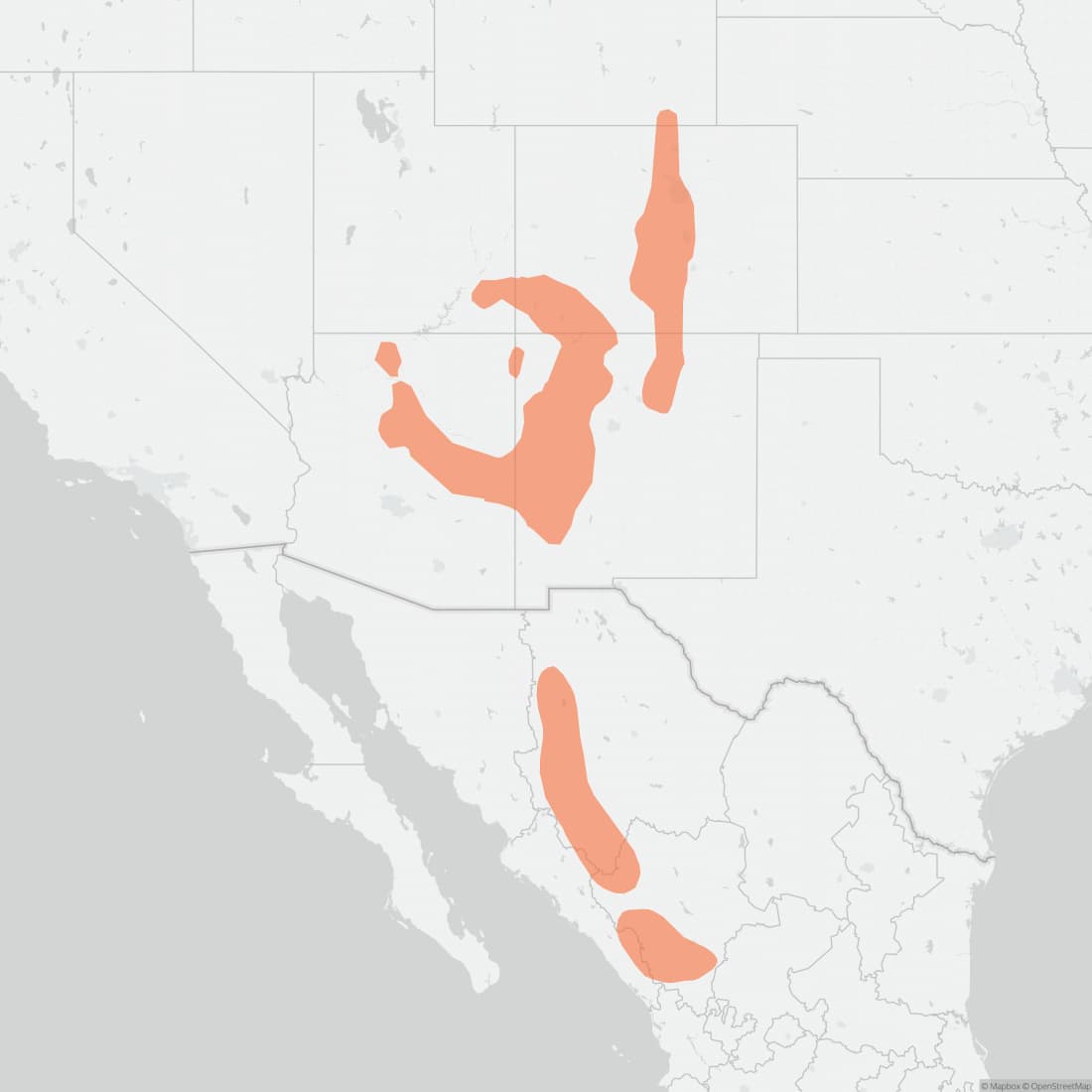
Approximate range. © Mapbox © OpenStreetMap