Yellow-backed Spiny Lizard
Sceloporus uniformis
This is a stocky and robust lizard with adult males growing up to 5.5 inches (snout-to-vent length) and females reaching 4.4 inches from the snout to vent. The base color…
How to identify
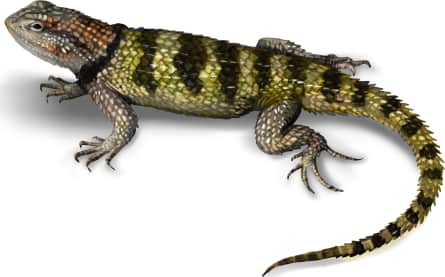
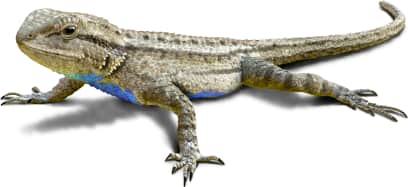
This is a stocky and robust lizard with adult males growing up to 5.5 inches (snout-to-vent length) and females reaching 4.4 inches from the snout to vent. The base color is brown, tan or gray. The back of the lizard has a general yellow color that grades into a dark gray-brown when it reaches the sides. There is a sporadic arrangement of yellow and orange scales on the sides of the body. On each shoulder, there is a black wedge-shaped mark. The males possess two large brightly colored green-blue patches on the underside and a green-blue patch on the throat. Females have indistinct belly and throat patches or lack them entirely. Juveniles do not have the wedge-shaped marks on the shoulders and have light spots on the back.
Range
The yellow-backed spiny lizard is endemic to the deserts of the Mojave and the Great Basin. It is native to the USA and is found in the states of Utah, California, Arizona, and Nevada.
Habitat
They prefer desert flats, semiarid plains, low mountain slopes, riparian woods, areas that grow creosote bush, mesquite trees, yucca, Joshua trees, and grasses. They inhabit rock outcrops and rabbit holes on dry stream bed banks. They breed in spring and beginning of summer. Females lay a clutch between 3-19 eggs. Young emerge in August and September. The lizards feed on many small invertebrates including ants, beetles, grasshoppers, spiders, centipedes, etc. They also feed on smaller lizards, nestling birds, leaves, flowers and berries.
Similar species
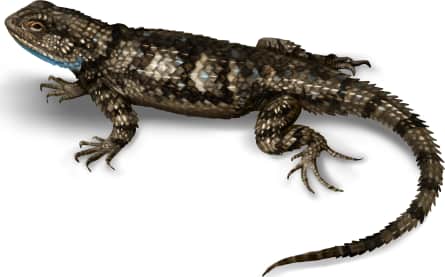
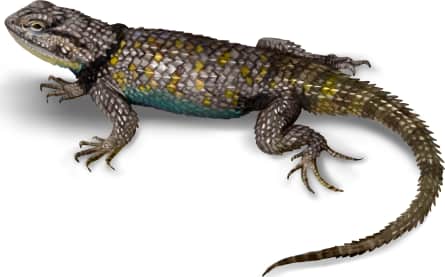
Desert spiny lizard (Sceloporus magister) is very similar in size (about 5.6 inches SVL). It is stocky and has keeled overlapping scales. It has a base gray, tan, or brown coloration. Yellow or orange scales randomly mark the sides. The major distinguishing feature is the yellow or orange head or large purple dorsal bar in the adult males. Clark’s spiny lizard (Sceloporus clarkii) is very similar in size (5.6 inches SVL). It is stocky and has keeled overlapping scales. It has a base coloration of blue-gray, gray, or gray-brown with a blue-green accent of the tail and body. It has dark wedge-shaped marks on each shoulder. The bars on the forelimbs distinguish it from the desert spiny lizard. The Western Fence Lizard (Sceloporus occidentalis) is brown to black and displays black stripes on the back. Their most distinguishing feature is the bright blue belly they have. But this coloration is absent in females and juveniles.
Name and etymology
Genus
Sceloporus
Greek for leg (skelos) pores (porus), referencing femoral pores on back legs.
Origin
Sources
- Wiegmann, 1828. Isis von Oken, Vol. 21, p. 369 ↗
Sceloporus. Wiegmann, 1828 - Isis von Oken, Vol. 21, p. 369
Species epithet
uniformis
Latin for one (uni) shape (formis).
Origin
Sources
- Phelan and Brattstrom, 1955. Herpetologica, Vol. 11, p. 7
Sceloporus magister uniformis. Phelan and Brattstrom, 1955 - Herpetologica, Vol. 11, p. 7
Explore more names in the etymology index.
At a glance
Range
The yellow-backed spiny lizard is endemic to the deserts of the Mojave and the Great Basin. It is native to the USA and is fo…
Habitat
They prefer desert flats, semiarid plains, low mountain slopes, riparian woods, areas that grow creosote bush, mesquite trees…
Guide
Reptiles and Amphibians of North America
Range map
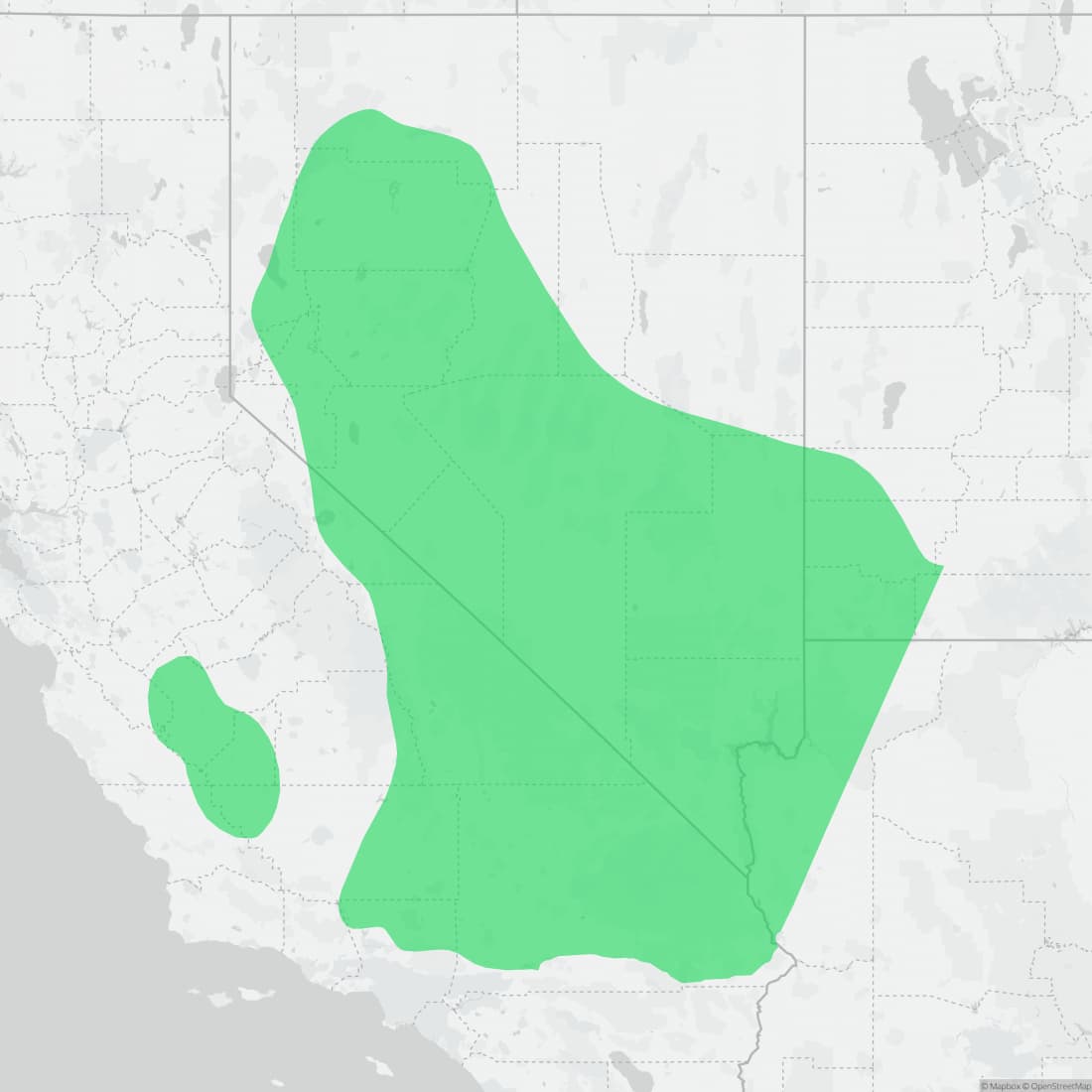
Approximate range. © Mapbox © OpenStreetMap