
Western Diamond-backed Rattlesnake
Crotalus atrox
An adult Western Diamondback rattlesnake is about 120 cm (4ft). Specimens of over 180 cm (6ft) are extremely rare. Males become much larger than the females and it is usu…
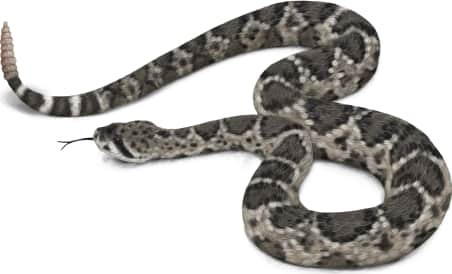
How to identify
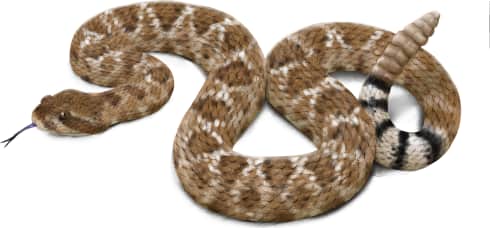
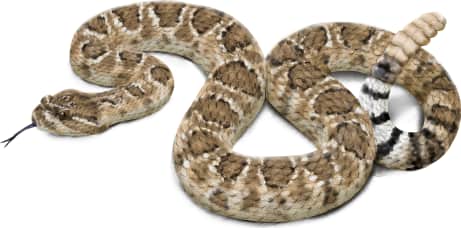
An adult Western Diamondback rattlesnake is about 120 cm (4ft). Specimens of over 180 cm (6ft) are extremely rare. Males become much larger than the females and it is usually noticeable after sexual maturity is attained. They usually weigh on a range of 1.23 kg – 6.7 kg. They generally have a dusty-looking grey-brown ground color. Although it may also be pinkish-brown, brick-red, yellowish and so on. The ground color is overlapped dorsally with an average series of 36 dorsal blotches. These blotches become hexagonal and take on a distinct diamond shape. Their tail has 2 – 8 black bands. These black bands are separated by Ash white or pale grey interspaces. Lastly, it has a postocular stripe which is smoky grey or dark grey-brown. This stripe extends diagonally from the lower edge of the eye and crossed the side of the head.
Range
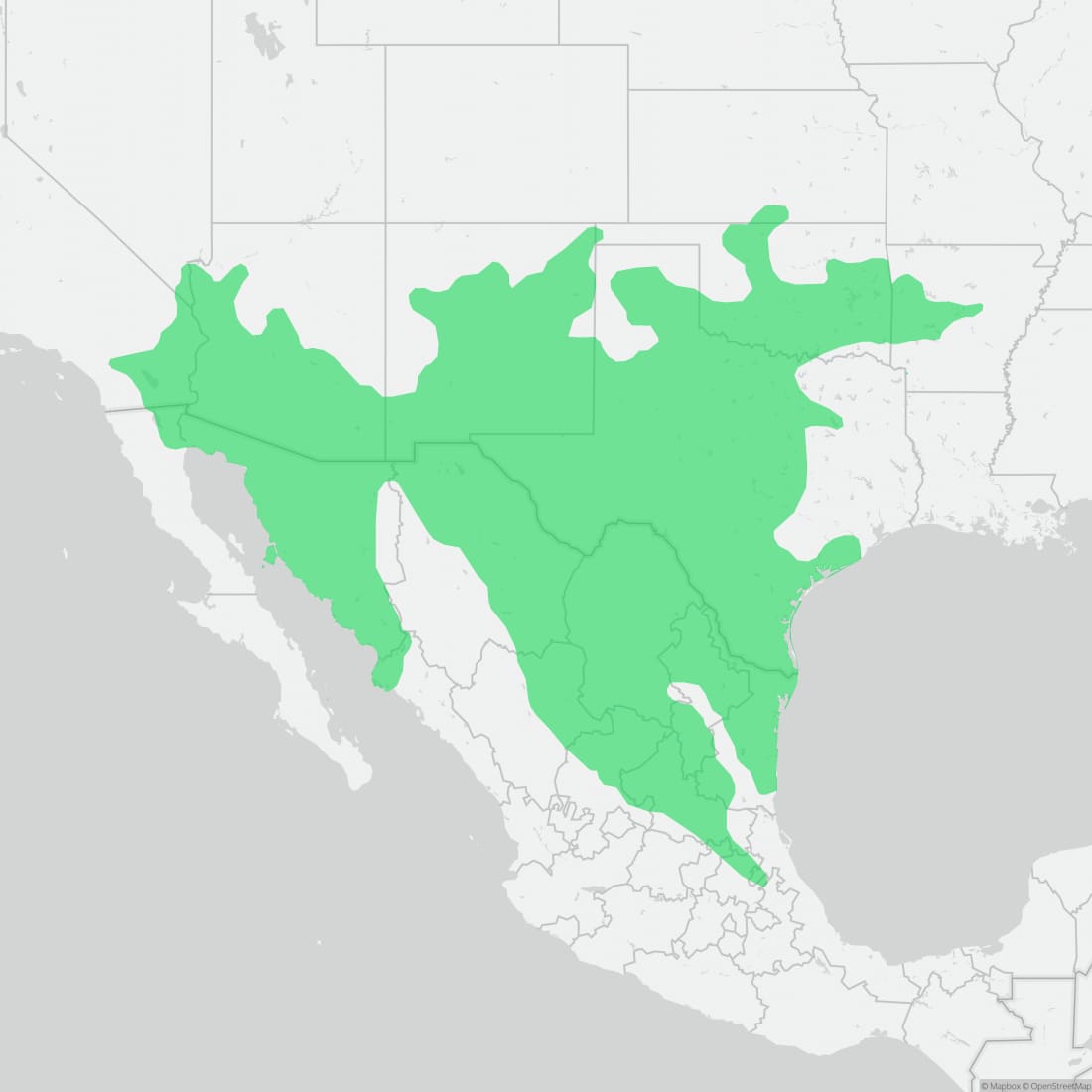
The Western Diamondback Rattlesnake can be found in the United States. This from central Arkansas to southeastern and Central California. Then south into Mexico going as far northern Sinaloa, Hidalgo and northern Veracruz. Separated populations subsist in southern Veracruz and southeastern Oaxaca.
Habitat
This snake’s habitat ranges from flat coastal plains to steep rocky canyons and hillsides. It can also be found in various vegetation types. These including the desert, mesquite grassland, pine-oak forests and so on. They are solitary except during mating season. They are sometimes seen basking in the sun on warm winter days. They feed on prairie dogs, kangaroo rats, voles, woodrats and so on. They mate during fall. The females give birth to about 25 baby snakes. The babies could be as long as 30 cm.
Variations
The Mojave Rattlesnake (Crotalus scutulatus): They have tail rings. Although the black rings are comparably narrower than the pale ones. The Black-tailed Rattlesnake (Crotalus molossus): Its tail is a uniform black and indistinct. The Tiger Rattlesnake (Crotalus tigris): This species has a comparably small head. Also, it has a large rattle with a dorsal pattern. This rattle comprises of more of crossbands.
Similar species
The Diamondback Water Snake are heavy-bodied snakes which range from 76 – 160 cm in length. They are usually greenish-brown to brown colored.
Name and etymology
Genus
Crotalus
Greek for rattle (krotalon).
Origin
Sources
- Linnaeus, 1758. Syst. Nat., 10th ed., Vol. 1, p. 214 ↗
Crotalus. Linnaeus, 1758 - Syst. Nat., 10th ed., Vol. 1, p. 214
Species epithet
atrox
Latin for savage or fierce.
Origin
Sources
- Baird and Girard, 1853. Cat. N. Amer. Rept., Pt. 1, p. 5 ↗
Crotalus atrox. Baird and Girard, 1853 - Cat. N. Amer. Rept., Pt. 1, p. 5
Explore more names in the etymology index.
More illustrations
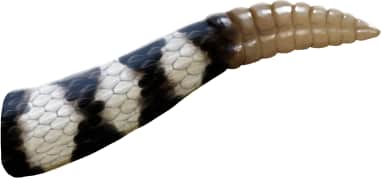
Tail
At a glance
Range
The Western Diamondback Rattlesnake can be found in the United States. This from central Arkansas to southeastern and Central…
Habitat
This snake’s habitat ranges from flat coastal plains to steep rocky canyons and hillsides. It can also be found in various ve…
Guide
Reptiles and Amphibians of North America
Range map
Approximate range. © Mapbox © OpenStreetMap