Common Chuckwalla
Sauromalus ater
This thick-bodied prehistoric looking lizard has a flat, wide abdomen, often with some loose wrinkly skin on its sides and neck. It has slightly rough skin on its body, w…
How to identify
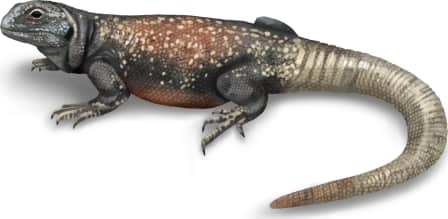
This thick-bodied prehistoric looking lizard has a flat, wide abdomen, often with some loose wrinkly skin on its sides and neck. It has slightly rough skin on its body, with much rougher scales on its blunt-tipped tail. Its earthy coloration is sexually dimorphic and varies to match its rocky surroundings. It can reach 20 inches in length and weigh up to 2 pounds. Adults do not have any distinct patterning.
Range
Southeastern California, southern Nevada and Utah, and western Arizona. Its range also stretches south down both coasts of the Gulf of California.
Habitat
This species prefers rocky desert terrain with lots of crevices for hiding.
Variations
Adult males are mostly black on their heads, shoulders, legs, and pelvic regions. They display lighter coloration on their midsections and tails, ranging from tan to red with some brown or black speckling. Adult females are more uniform brown with some lighter speckling or shading. Juveniles have wide dark bands across their bodies and tails, which fade with age.
Similar species
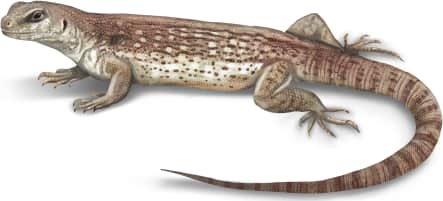
There are 5 other species of chuckwalla, all found in Mexico. The common chuckwalla looks most like the spotted chuckwalla (*Sauromalus klauberi*). This species could possibly be confused with the desert iguana (*Dipsosaurus dorsalis*) which shares its US range.
Name and etymology
Genus
Sauromalus
Greek for flat (homalos) lizard (sauros).
Origin
Sources
- Dumeril, 1856. Arch. Mus. Hist. Nat. Paris, Vol. 8, p. 535
Sauromalus. Dumeril, 1856 - Arch. Mus. Hist. Nat. Paris, Vol. 8, p. 535
Species epithet
ater
Latin for dark or black.
Origin
Sources
- Wikipedia: Sauromalus ater ↗
“Sauromalus ater.” Wikipedia. https://en.wikipedia.org/wiki/Sauromalus_ater
Explore more names in the etymology index.
At a glance
Size
80 to 197 mm
Range
Southeastern California, southern Nevada and Utah, and western Arizona. Its range also stretches south down both coasts of th…
Habitat
This species prefers rocky desert terrain with lots of crevices for hiding.
Range map
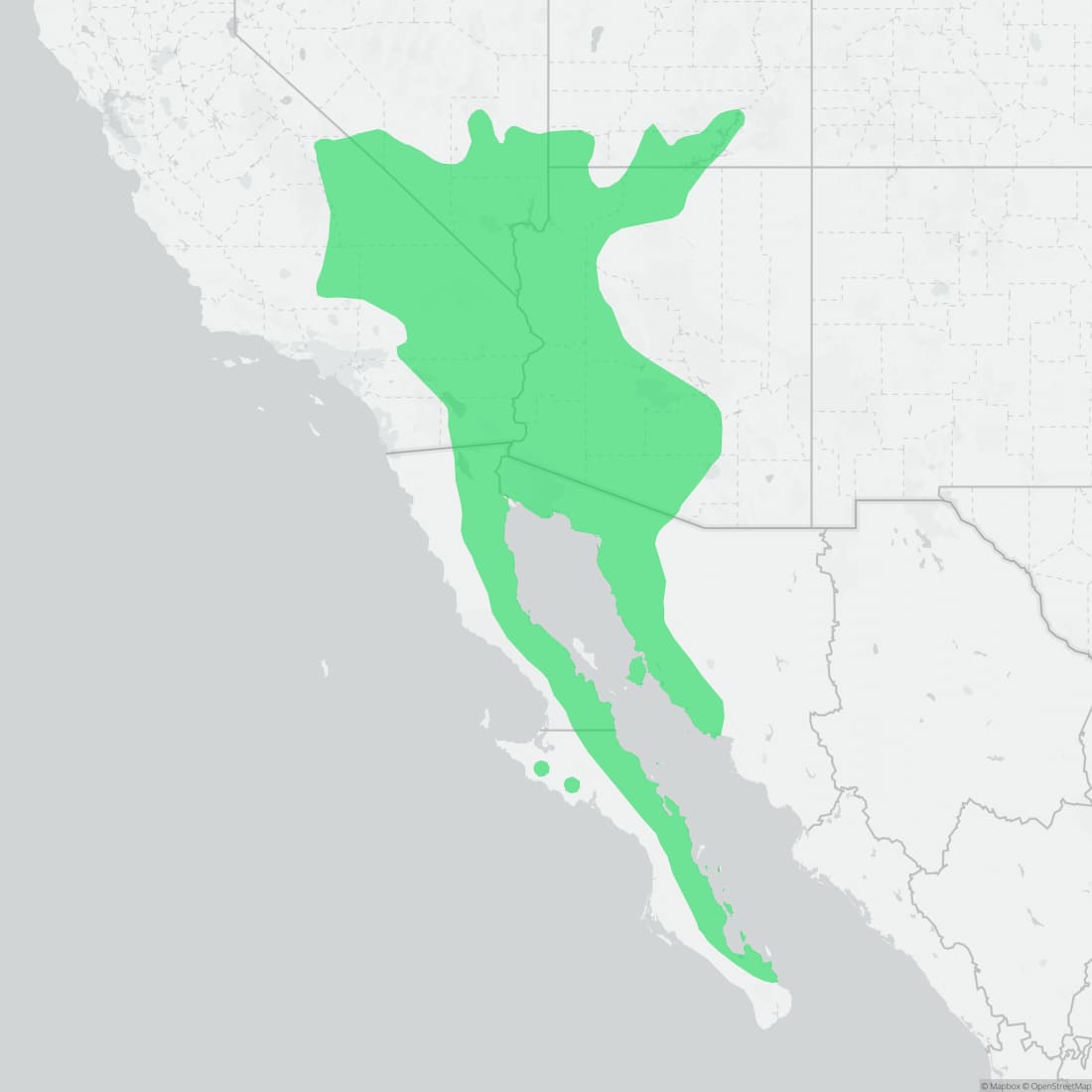
Approximate range. © Mapbox © OpenStreetMap