
Mazatlan Narrow-mouthed Toad
Gastrophryne mazatlanensis
The Mazatlan Narrow-mouthed Toad has a smooth, wartless skin, a plump shape with short limbs, a narrow pointed head, and a fold of loose skin behind the eyes. Its skin co…
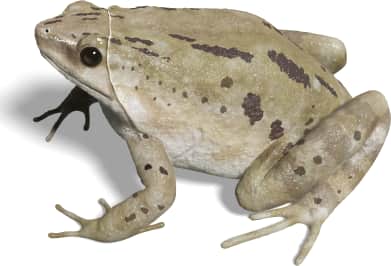
How to identify
The Mazatlan Narrow-mouthed Toad has a smooth, wartless skin, a plump shape with short limbs, a narrow pointed head, and a fold of loose skin behind the eyes. Its skin color ranges from light grey to light brown, with black blotching and white mottling along the legs of some species. The adult male has a dark throat patch and vocal sac but the females do not. It has a maximum body length of 4 cm.
Range
The Mazatlan narrow-mouthed toad can be found from Santa Cruz county, north to Mariposa County and west to near Ajo in western Pima County, Arizona.
Habitat
It is found in the Madrean evergreen woodland, semi-desert grassland, and Sonoran desert scrub. They are primarily active at night, hence, very difficult to locate them, even during the largest breeding choruses. It rarely strays from its cover, such that it calls from deep within the snags and snarls of mesquite bosques. This act provides an impenetrable protective armor against most predators during the breeding season. They feed primarily on ants.
Similar species
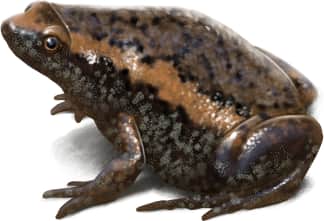
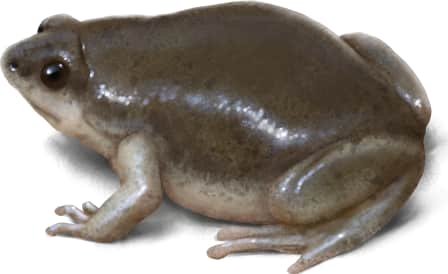
The western narrow-mouthed toad (gastrophryne olivacea) is a flat-bodied species with a sharply pointed snout and olive green or grey-brown skin pigmentation. The eastern narrow-mouthed toad (gastrophryne carolinensis) is a relatively small species, growing to a maximum length of 53mm. it has a very tough skin, although, without warts or ridges. The elegant narrow-mouthed toad (gastrophryne elegans) has a flattened, dorsoventrally triangular head, with a snout-to-vent length of about 27mm. its dorsal surface has a broad, dark-brown, central stripe.
Name and etymology
Genus
Gastrophryne
Greek for belly (gastros) toad (phryne).
Origin
Sources
- Fitzinger, 1843. Syst. Rept., p. 33 ↗
Gastrophryne. Fitzinger, 1843 - Syst. Rept., p. 33
Species epithet
mazatlanensis
Belong to Mazatlan.
Origin
Sources
- The Reptile Database: Gastrophryne mazatlanensis ↗
Uetz, P., et al. The Reptile Database. s.v. “Gastrophryne mazatlanensis.” https://reptile-database.reptarium.cz/species?genus=Gastrophryne&species=mazatlanensis
Explore more names in the etymology index.
At a glance
Range
The Mazatlan narrow-mouthed toad can be found from Santa Cruz county, north to Mariposa County and west to near Ajo in wester…
Habitat
It is found in the Madrean evergreen woodland, semi-desert grassland, and Sonoran desert scrub. They are primarily active at…
Guide
Reptiles and Amphibians of North America
Range map
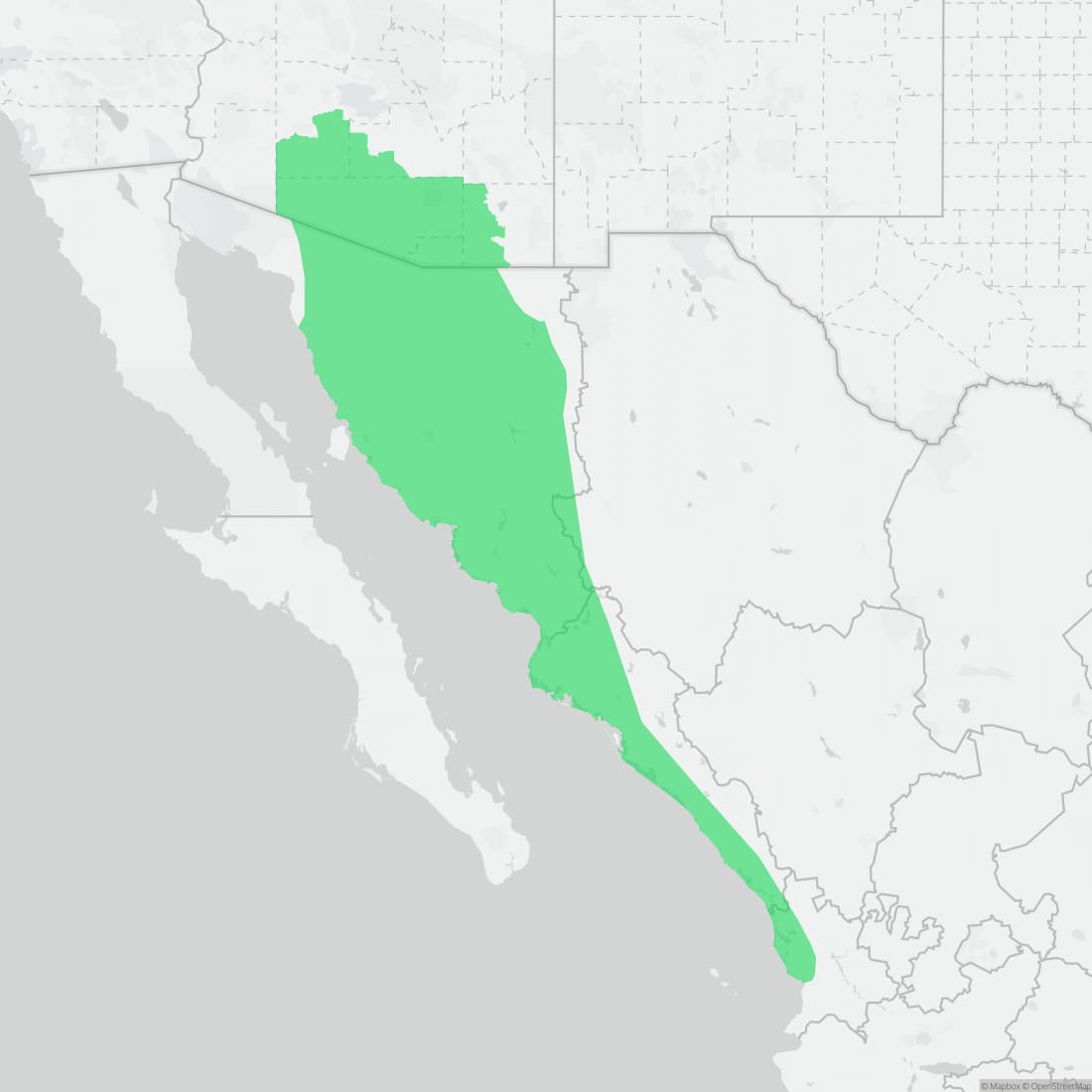
Approximate range. © Mapbox © OpenStreetMap