Escambia Map Turtle
Graptemys ernsti
An aquatic turtle with webbed feet that has distinctive patterning on its face. Males only grow to 4-5 inches and are considerably smaller than females which reach 9-11 i…
How to identify
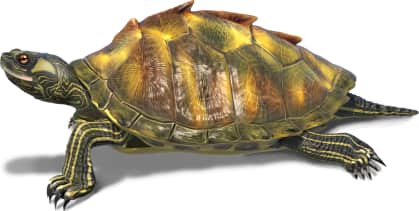
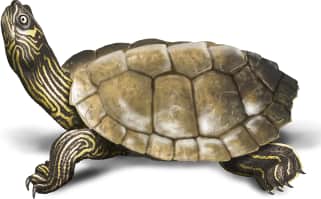
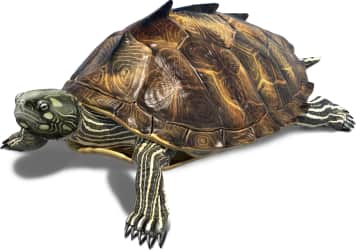
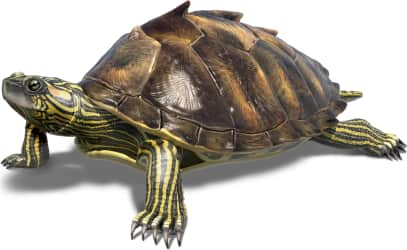
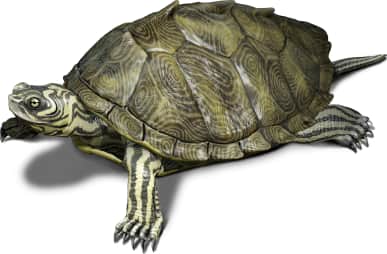
An aquatic turtle with webbed feet that has distinctive patterning on its face. Males only grow to 4-5 inches and are considerably smaller than females which reach 9-11 inches in length. Females' heads also grow proportionately larger with age. Both sexes have 3 light patches on the face; 2 larger patches on the temples, and 1 smaller patch between the eyes. Their neck and legs are covered with closely adjacent pairs of dark stripes on a light background. Their central carapace scutes have prominent keels that are pointed on juveniles and become duller with age. The perimeter scutes on the edge of the carapace are smooth at the front of the shell, mildly serrated at the back of the shell, and have more patterning than the central scutes. Their plastron is yellow and unmarked.
Range
Limited range in the Florida panhandle and south central Alabama.
Habitat
Lives in and around waterways that drain into the Escambia Bay. Often seen basking on rocks and floating logs. Prefers streams with sandy or gravely bottoms.
Variations
Juveniles have more vibrant shell patterning than adults. The light background color of their skin can be yellow to pale olive green.
Similar species
Most similar to the false map turtle (*Graptemys pseudogeographica*) which overlaps in range, or the Ouachita map turtle (*Graptemys ouachitensis*), Cagle's map turtle (*Graptemys caglei*), or Texas map turtle (*Graptemys versa*) which do not.
Name and etymology
Genus
Graptemys
Greek for written (graptos) turtle (emys).
Origin
Sources
- Agassiz, 1857. Contr. Nat. Hist. U. S., Vol. 1, p. 436 ↗
Graptemys. Agassiz, 1857 - Contr. Nat. Hist. U. S., Vol. 1, p. 436
Species epithet
ernsti
Honoring Carl Ernst
Origin
Honors
Sources
- Lovich and McCoy, 1992. Ann. Carnegie Mus., Vol. 61, pages 293-315 (293) ↗
Graptemys ernsti. Lovich and McCoy, 1992 - Ann. Carnegie Mus., Vol. 61, pages 293-315 (293)
Explore more names in the etymology index.
At a glance
Size
7 cm CL (males) to 28.5 cm (females) cm
Range
Limited range in the Florida panhandle and south central Alabama.
Habitat
Lives in and around waterways that drain into the Escambia Bay. Often seen basking on rocks and floating logs. Prefers stream…
Range map
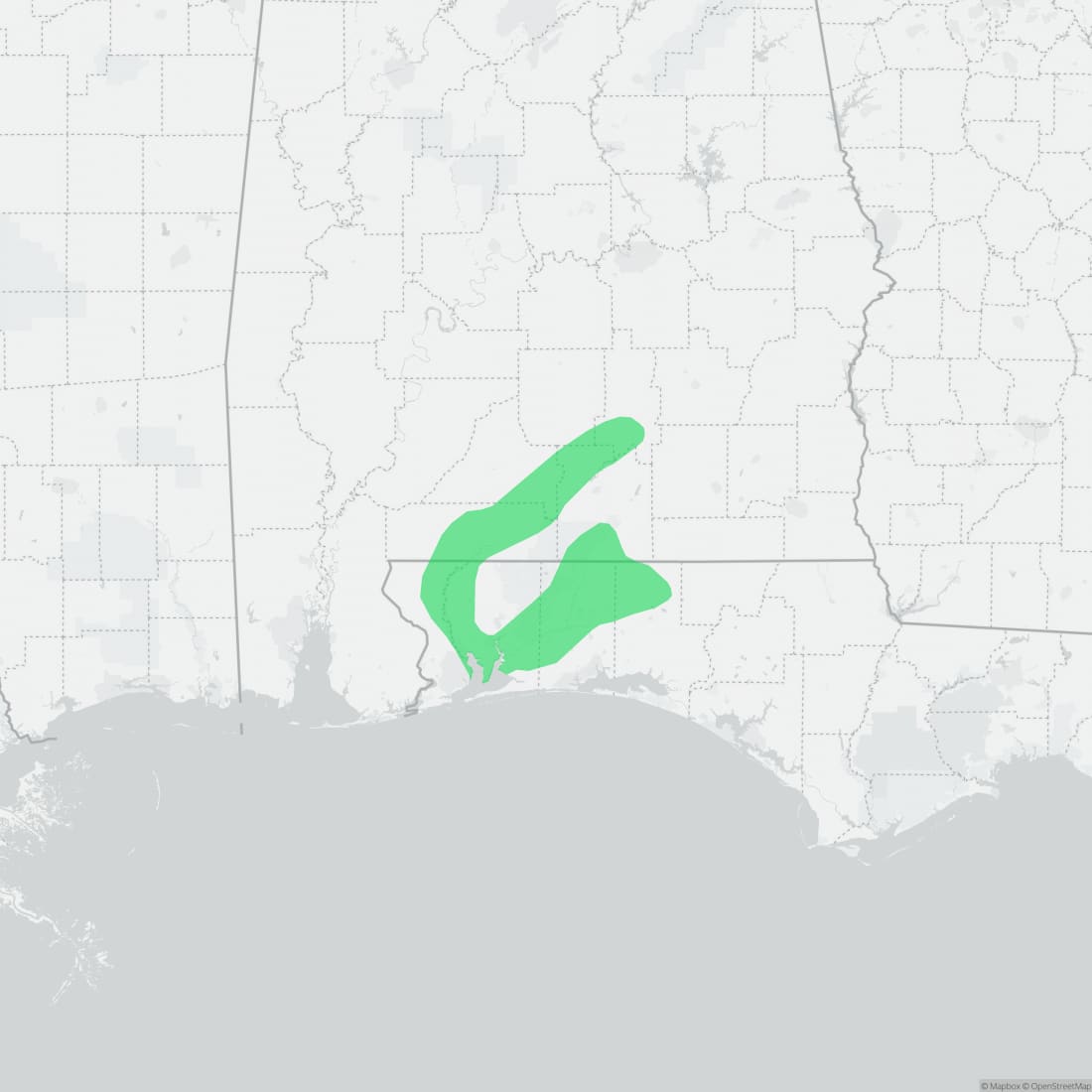
Approximate range. © Mapbox © OpenStreetMap