Desert Pocket Gopher
Geomys arenarius
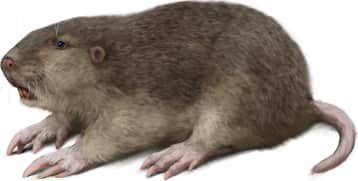
G. arenarius is characterized by its relatively small size and pale coloration, typically ranging from buffy-gray to pale brown. The upper incisors have two distinct groo…
How to identify
G. arenarius is characterized by its relatively small size and pale coloration, typically ranging from buffy-gray to pale brown. The upper incisors have two distinct grooves. Skull morphology, particularly the shape of the incisors and auditory bullae, is important for distinguishing this species from others. Total length ranges from 180-250 mm.
Range
G. arenarius is primarily found in the Mesilla Valley of southern New Mexico and adjacent areas of western Texas and northern Chihuahua, Mexico. Its distribution is closely associated with sandy soils.
Habitat
G. arenarius prefers sandy soils in desert and semi-desert environments, including alluvial valleys, dunes, and sandy plains. Their burrow systems are typically shallower than those of some other pocket gophers due to the nature of the sandy substrate.
Similar species
G. arenarius can be confused with other Geomys species in areas of potential range overlap. Differentiation often relies on subtle differences in size, color, and cranial characteristics. In particular, it can be confused with Geomys bursarius in areas where their ranges meet.
Name and etymology
Genus
Geomys
Greek for earth (geo) mouse (mus)
Origin
Sources
- Palmer, Index Generum Mammalium (1904) ↗
Palmer, T. S. 1904. Index Generum Mammalium: a list of the genera and families of mammals. North American Fauna 23. Government Printing Office, Washington. https://doi.org/10.5962/bhl.title.39809
Species epithet
arenarius
Latin for pertaining to (-arius) sand (arena)
Origin
Sources
- Wikipedia: Geomys arenarius ↗
“Geomys arenarius.” Wikipedia. https://en.wikipedia.org/wiki/Desert_pocket_gopher
Explore more names in the etymology index.
At a glance
Range
G. arenarius is primarily found in the Mesilla Valley of southern New Mexico and adjacent areas of western Texas and northern…
Habitat
G. arenarius prefers sandy soils in desert and semi-desert environments, including alluvial valleys, dunes, and sandy plains.…
Guide
Mammals of North America
Range map
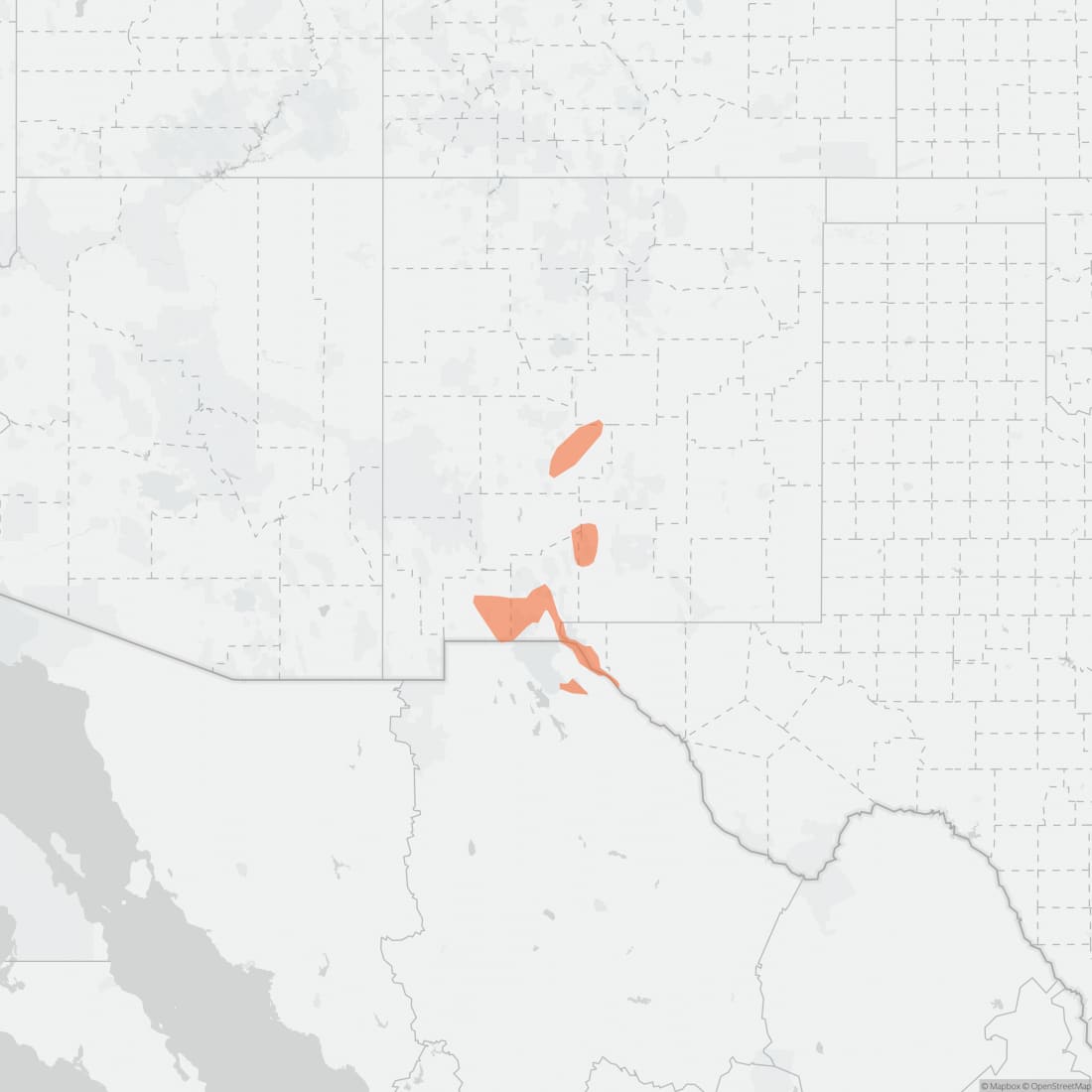
Approximate range. © Mapbox © OpenStreetMap