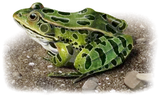
Lowland Burrowing Tree Frog
Smilisca fodiens
A round-bodied frog with a relatively small head compared to body size. The edge of its cranium at the back of its head is easily discernible, creating the appearance of…
How to identify
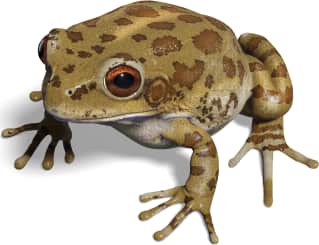
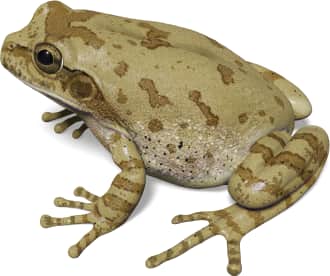
A round-bodied frog with a relatively small head compared to body size. The edge of its cranium at the back of its head is easily discernible, creating the appearance of a distinct neckline. It has large bulging eyes with horizontal pupils, and a bony internasal ridge. It has a rounded snout when viewed from above, and averages 5-6 cm in body length. Its dorsum is a lighter background color with distinct dark spots that sometimes converge to form elongated blotches. Its throat sac is double-lobed and lightly speckled. Its ventrum is pale and unmarked. Most individuals have a dark horizontal band behind each eye.
Range
South central Arizona and along the west coast of Mexico.
Habitat
This species occupies open mesquite grasslands and tropical scrub forests. It spends most of its time burrowed underground, then emerges to breed in temporary rain pools.
Variations
Can be shades of brown or green, or both colors combined.
Similar species
Most similar to the upland burrowing treefrog (*Smilisca dentata*), which is only found in central Mexico. In the US, it could be mistaken for the common Mexican tree frog (*Smilisca baudinii*), which would only be found in south Texas.
Name and etymology
Genus
Smilisca
From greek, meaing little knife, referencing their pointed frontoparietal processes.
Origin
Sources
- Cope, 1865. Proc. Acad. Nat. Sci. Philadelphia, Vol. 17, p. 194 ↗
Smilisca. Cope, 1865 - Proc. Acad. Nat. Sci. Philadelphia, Vol. 17, p. 194
Species epithet
fodiens
Latin for digging.
Origin
Sources
- Wikipedia: Smilisca fodiens ↗
“Smilisca fodiens.” Wikipedia. https://en.wikipedia.org/wiki/Lowland_burrowing_tree_frog
Explore more names in the etymology index.
At a glance
Range
South central Arizona and along the west coast of Mexico.
Habitat
This species occupies open mesquite grasslands and tropical scrub forests. It spends most of its time burrowed underground, t…
Guide
Reptiles and Amphibians of North America
Range map
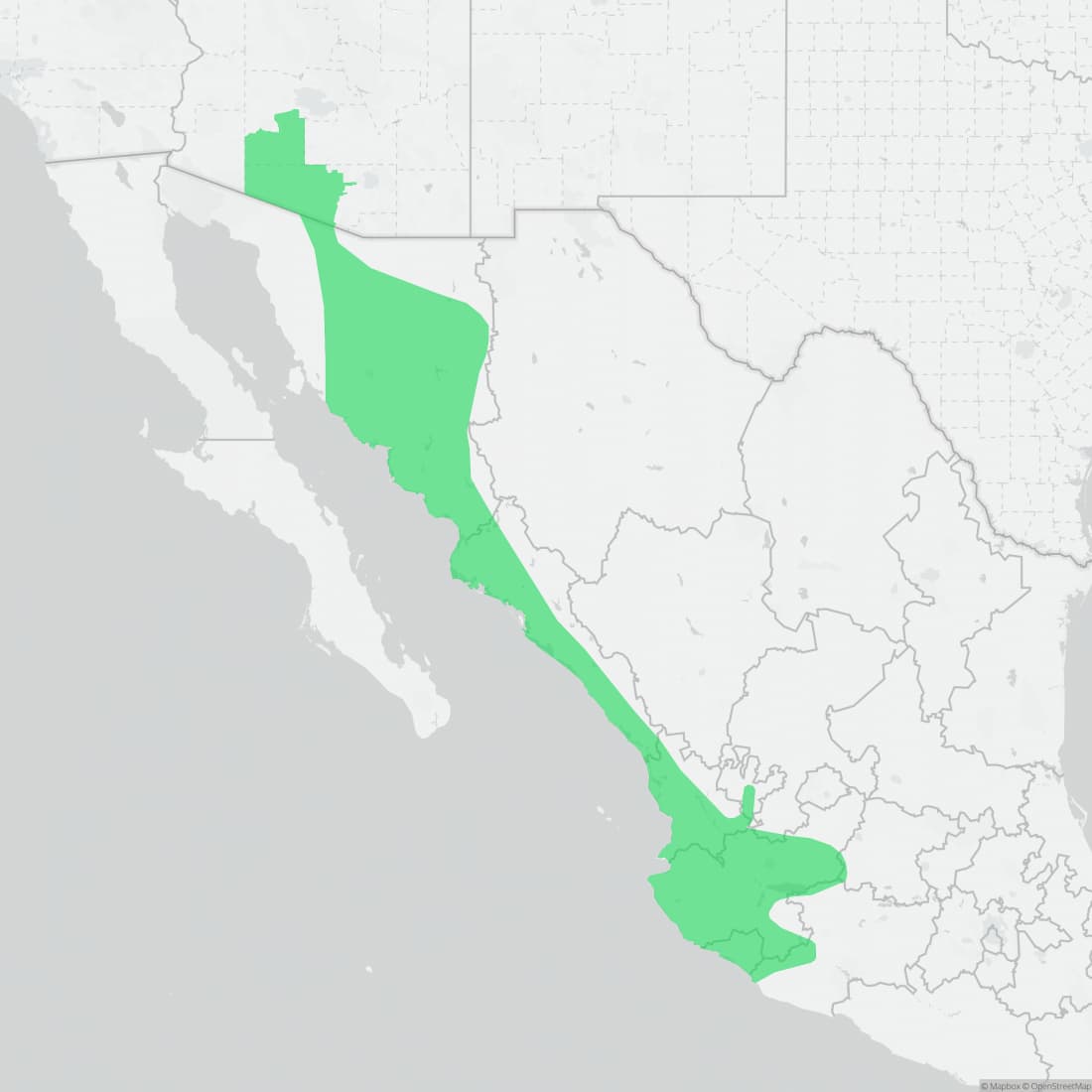
Approximate range. © Mapbox © OpenStreetMap