Italian Wall Lizard
Podarcis siculus
The Italian Wall Lizard is small with an adult sizing between 3.5 to 4 inches from snout to vent. Its tail is usually about twice the size of the body giving it a length…
How to identify
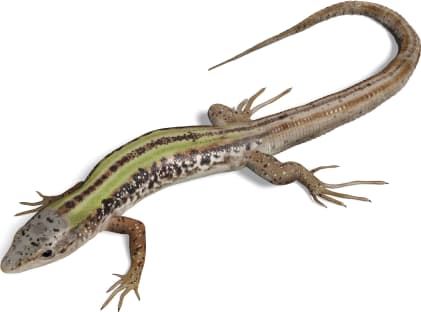
The Italian Wall Lizard is small with an adult sizing between 3.5 to 4 inches from snout to vent. Its tail is usually about twice the size of the body giving it a length of 5.5 to 9 inches. The tail of the male lizard is usually swollen at the base. It has varying colors such as green, olive-green, yellow-green and light brown but these colors are often subjected to change during hot climates. They have a naturally robust physical appearance with very strong limbs and a large, long head. This however does not apply to the females who are often smaller in size and length. This species has a spotless belly which can be in any of creamy white, grey, light yellow or green colors.
Range
The Italian Wall Lizard is endemic in The North Adriatic Coast, The Italian Peninsula, Corsica and Sicily. But it can also be found in the Mediterranean Island, North Africa, Turkey and The United Kingdom.
Habitat
The Italian Wall Lizard is a very strong climber. It can be found in a series of habitats such as grassy areas, plantations, gardens, trees, buildings, rocky areas, roadsides, walls, etc. This species is usually seen during the day and it hunts for food on the ground. Based on the conditions affecting this species varying from location, seasonal changes to environmental factors, this lizard feeds on insects, millipedes, plants and small reptiles. This species communicates through head bobbing, hissing and tail flicking. For this species, mating occurs between March and July and fertilization also occurs within this period. This lizard is oviparous. The average female lays up to 6 batches each containing an average of 7 eggs but this is different for a female who is just breeding for the first time and can only lay about 3 or 4 batches. Eggs are hatched within 5 to 7 weeks.
Variations
Podarcis Siculus Gallensis Podarcis Siculus Laganjensis Podarcis Siculus Lanzai Podarcis Siculus Astorgae Podarcis Siculus Premudanus
Similar species
The Common Wall Lizard (Podarcis Muralis) is a brown or grey colored lizard which is very small in size with spots running along its back and dark spots along its sides. This specie appears scaled on the underside with colors that can be pink, red or orange like the Sicilian wall lizard. Its scales which is a combination of at least 2 colors are its distinguishing character. It has a tail which often times appears brown, bronze or grey in color. The Sicilian Wall Lizard (Podarcis Wagleriana) is a slim, long specie with big, slightly compressed head with a snout to vent length of 3 inches in an adult lizard with the male lizards a little bigger than the females. They usually appear stripped and dotted with a variety of colors such as brown, white and yellow, although the females are usually in just one color. The breeding males can be identified with undersides that are white colored with spotting around the neck that are usually bright colors like pink, red and orange. The Bocage’s Wall Lizard (Podarcis Bocagei) is 3 inches in length with its tail twice the size of its snout to vent length making it very similar to the Italian wall lizard. However, this specie is more flattened and usually appears in brown, grey, green or yellow colors. The underside of this lizard varies in color from yellow, creamy-white, white to orange.
Name and etymology
Genus
Podarcis
Greek for agile feet.
Origin
Sources
- Wikipedia: Podarcis ↗
“Podarcis.” Wikipedia. https://en.wikipedia.org/wiki/Podarcis
Species epithet
siculus
Latin for of Sicily.
Origin
Sources
- Wikipedia: Podarcis siculus ↗
“Podarcis siculus.” Wikipedia. https://en.wikipedia.org/wiki/Italian_wall_lizard
Explore more names in the etymology index.
At a glance
Range
The Italian Wall Lizard is endemic in The North Adriatic Coast, The Italian Peninsula, Corsica and Sicily. But it can also be…
Habitat
The Italian Wall Lizard is a very strong climber. It can be found in a series of habitats such as grassy areas, plantations,…
Guide
Reptiles and Amphibians of North America
Range map
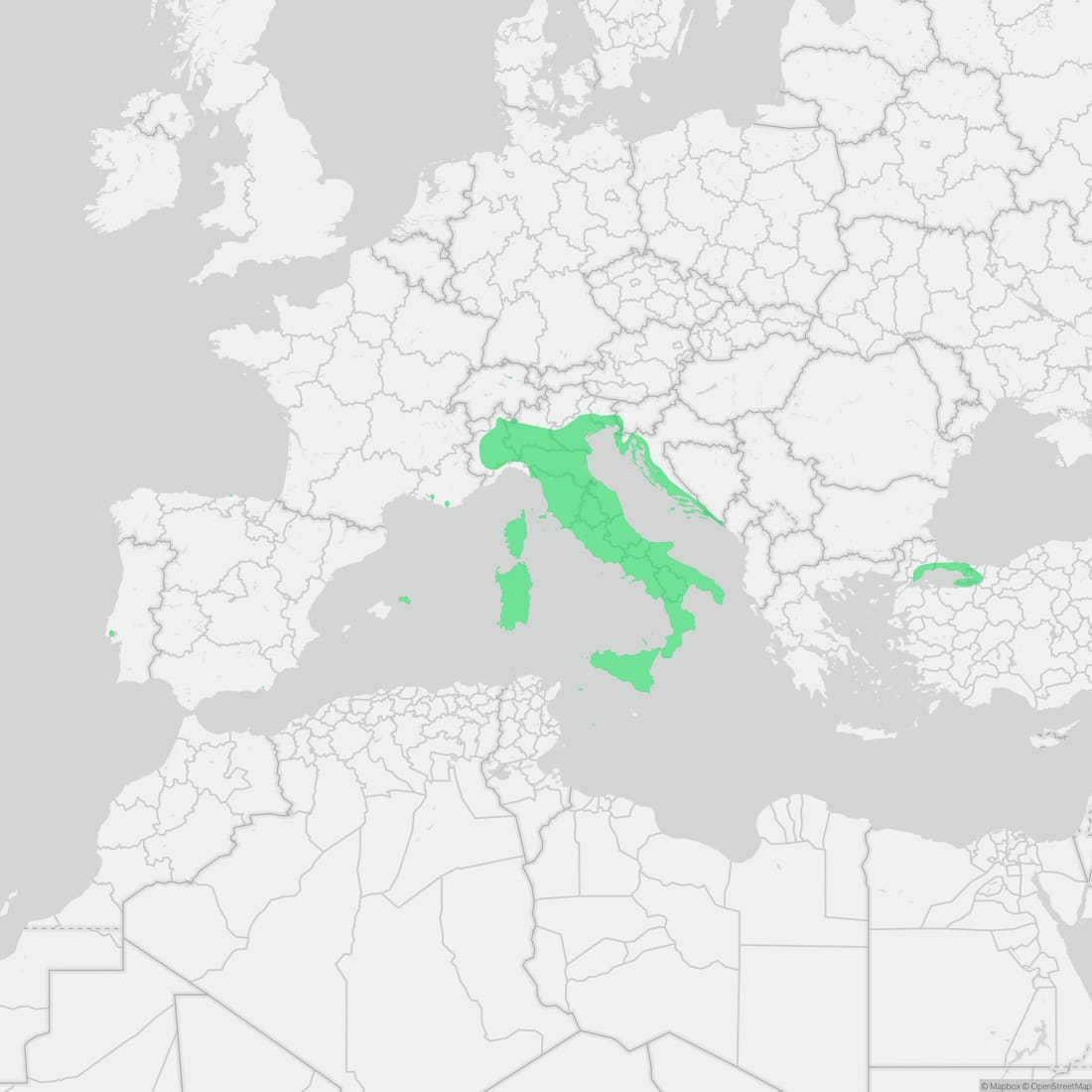
Approximate range. © Mapbox © OpenStreetMap