Botta's Pocket Gopher
Thomomys bottae
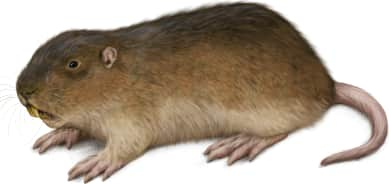
T. bottae is highly variable in size and coloration, ranging from small to medium-sized and from light brown to dark brown or blackish. The upper incisors are smooth, lac…
How to identify
T. bottae is highly variable in size and coloration, ranging from small to medium-sized and from light brown to dark brown or blackish. The upper incisors are smooth, lacking grooves. Due to its variability, identification often relies on a combination of morphological characteristics, geographic location, and habitat.
Range
T. bottae has a broad distribution, extending from southern Oregon and California east to Utah, Nevada, and Arizona, and south into Baja California, Mexico.
Habitat
T. bottae occupies a wide variety of habitats, including deserts, grasslands, woodlands, and mountains, wherever suitable soil conditions exist.
Similar species
T. bottae can be confused with many other Thomomys species due to its wide range and variability. Careful comparison of cranial characteristics and geographic location is crucial for accurate identification.
Name and etymology
Genus
Thomomys
Greek for mound (thomos) mouse (mys)
Origin
Sources
- Palmer, Index Generum Mammalium (1904) ↗
Palmer, T. S. 1904. Index Generum Mammalium: a list of the genera and families of mammals. North American Fauna 23. Government Printing Office, Washington. https://doi.org/10.5962/bhl.title.39809
Species epithet
bottae
Honoring French naturalist and explorer Paul-Émile Botta.
Origin
Honors
Sources
- Wikipedia: Thomomys bottae ↗
“Thomomys bottae.” Wikipedia. https://en.wikipedia.org/wiki/Botta's_pocket_gopher
Explore more names in the etymology index.
At a glance
Range
T. bottae has a broad distribution, extending from southern Oregon and California east to Utah, Nevada, and Arizona, and sout…
Habitat
T. bottae occupies a wide variety of habitats, including deserts, grasslands, woodlands, and mountains, wherever suitable soi…
Guide
Mammals of North America
Range map
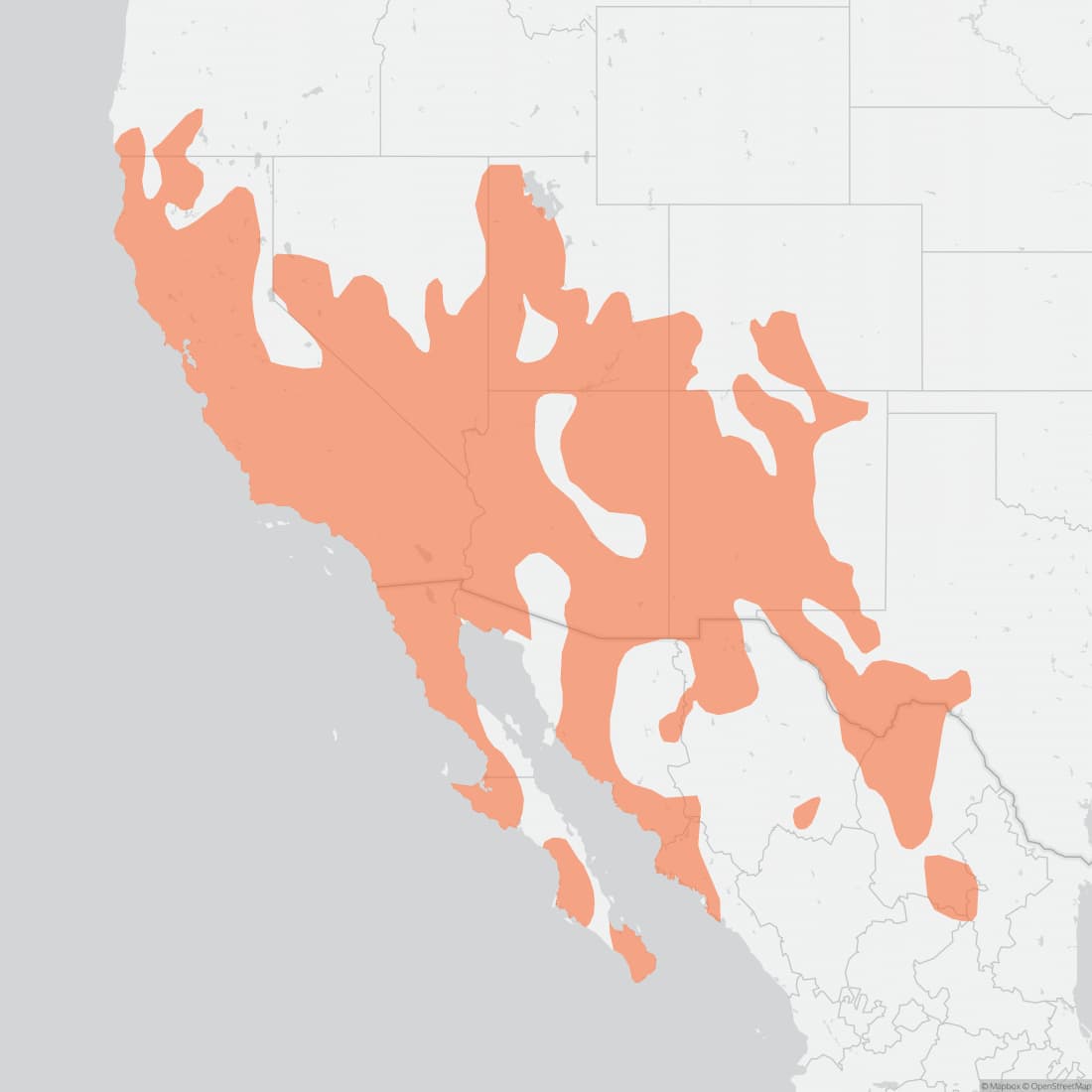
Approximate range. © Mapbox © OpenStreetMap