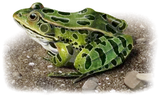
Mexican White-lipped Frog
Leptodactylus fragilis
A small species of frog, averaging only 1-2 inches in body length. It is named for a distinct white stripe on each side of the face and neck, just above the upper lip. It…
How to identify
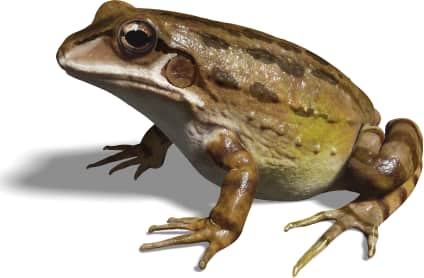
A small species of frog, averaging only 1-2 inches in body length. It is named for a distinct white stripe on each side of the face and neck, just above the upper lip. Its skin is mildly bumpy and it typically has a noticeable dorsolateral skin fold. It has a moderately prominent hip bone hump on its lower back, and a pointed snout. Its dorsum is grey, olive, or brown with a mottled pattern or distinct darker spots, and dark bands on the hind legs. Its ventrum is pale and unmarked.
Range
From the southern tip of Texas, down the east and southwest coasts of Mexico, throughout Central America, and into northern South America.
Habitat
This species is most often found near water, but will inhabit a wide variety of moist habitats. These include savannah, grassland, semi-arid regions, as well as tropical forests, both upland and lowland. It will often hide in burrows during the day.
Variations
Coloration varies between shades of brown, olive green, and grey. Sometimes they are a combination of these colors, and some even have dark red coloration mixed in. Some individuals develop yellow tinting on their sides.
Similar species
It is most similar to the Sabinal frog (*Leptodactylus melanonotus*) or Caribbean white-lipped frog (*Leptodactylus albilabris*), which are not found in the United States.
Name and etymology
Genus
Leptodactylus
Greek for slender (leptos) fingers (daktylos).
Origin
Sources
- Fitzinger, 1826. Neue Classif. der Rept., p. 38
Leptodactylus. Fitzinger, 1826 - Neue Classif. der Rept., p. 38
Species epithet
fragilis
Latin for fragile.
Origin
Sources
- (Brocchi, 1877). Bull. Soc. Philom. Paris, Ser. 7, Vol. 1, p. 182
Leptodactylus fragilis. (Brocchi, 1877) - Bull. Soc. Philom. Paris, Ser. 7, Vol. 1, p. 182
Explore more names in the etymology index.
At a glance
Range
From the southern tip of Texas, down the east and southwest coasts of Mexico, throughout Central America, and into northern S…
Habitat
This species is most often found near water, but will inhabit a wide variety of moist habitats. These include savannah, grass…
Guide
Reptiles and Amphibians of North America
Range map
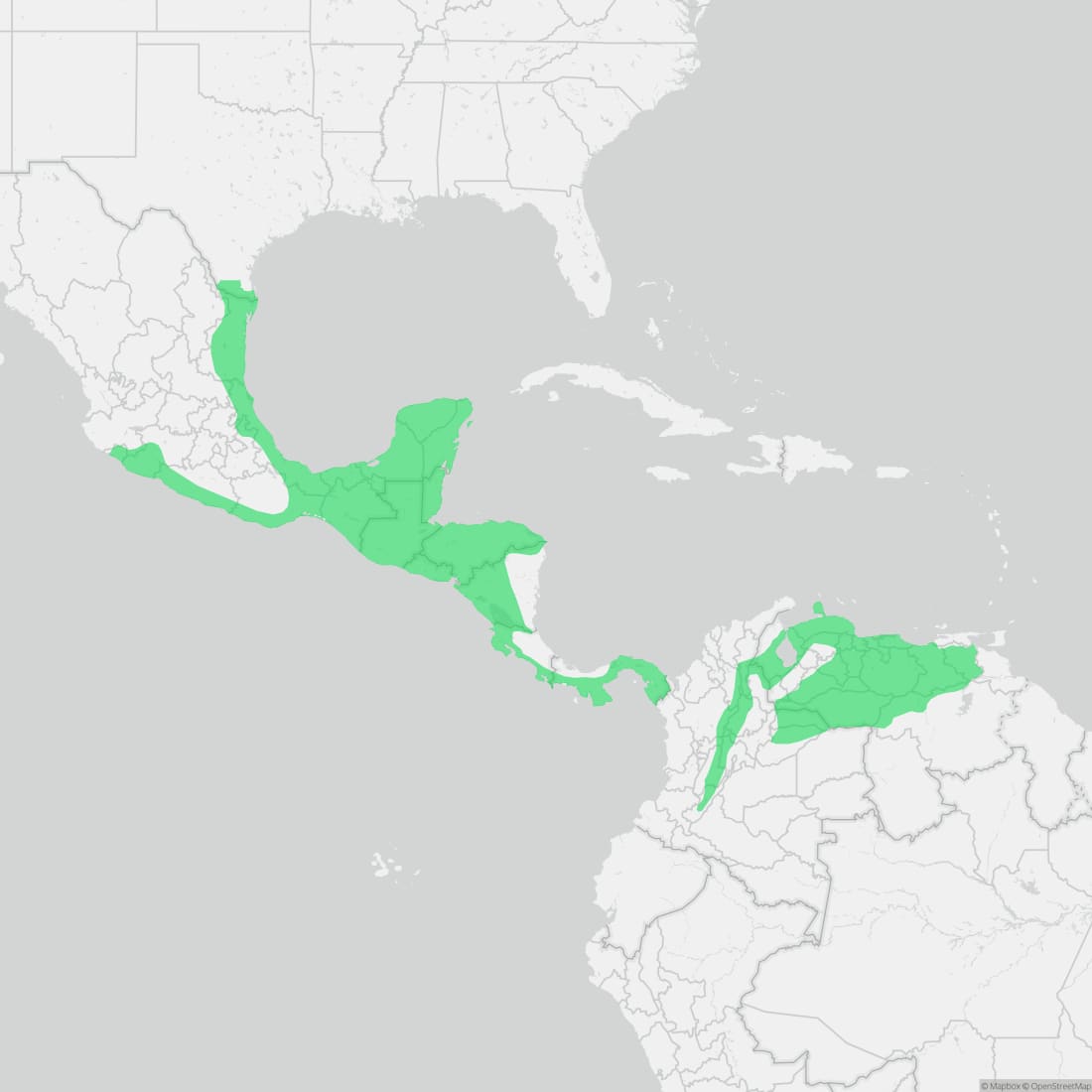
Approximate range. © Mapbox © OpenStreetMap