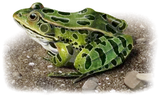
Crawfish Frog
Lithobates areolatus
This medium-sized frog has a striking pattern of irregular-shaped brown spots all over its body on a cream background. There is a clear distinction at the dorsolateral sk…
How to identify
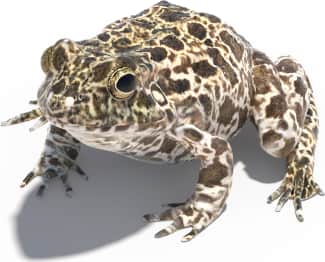
This medium-sized frog has a striking pattern of irregular-shaped brown spots all over its body on a cream background. There is a clear distinction at the dorsolateral skin fold, where the spots change from more oval or rounded on the frog's back to more irregular and jagged on the frog's sides. The spots on the hind legs form a banded appearance. They grow to a length of 2-3 inches, and have a prominent hip bone hump when sitting.
Range
East-central United States; from southern Iowa down through eastern Texas, east to central Indiana and west to central Oklahoma.
Habitat
Inhabits prairies, grasslands, and woodlands, spending most of its time sheltered inside crayfish burrows near bodies of water. Found in and around ponds, lakes, and floodplains during breeding season.
Variations
Cream and brown colors can have a green or yellow hue.
Similar species
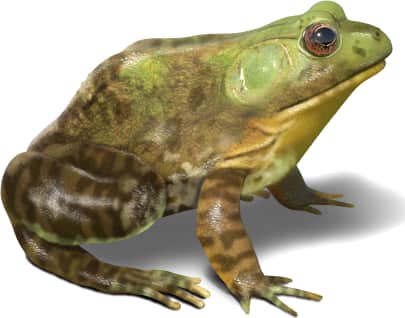
Its unique spotted pattern is unlike most other species of spotted frog, however it could be confused with the highly variable American bullfrog (*Lithobates catesbeianus*).
Name and etymology
Genus
Lithobates
Greek for rock (litho-) climber (bates).
Origin
Sources
- Linnaeus, 1758. Syst. Nat., 10th ed., Vol. 1, p. 210 ↗
Rana. Linnaeus, 1758 - Syst. Nat., 10th ed., Vol. 1, p. 210
Species epithet
areolatus
Latin for courtyard, seed bed.
Origin
Sources
- Wikipedia: Lithobates areolatus ↗
“Lithobates areolatus.” Wikipedia. https://en.wikipedia.org/wiki/Crawfish_frog
Explore more names in the etymology index.
At a glance
Range
East-central United States; from southern Iowa down through eastern Texas, east to central Indiana and west to central Oklaho…
Habitat
Inhabits prairies, grasslands, and woodlands, spending most of its time sheltered inside crayfish burrows near bodies of wate…
Guide
Reptiles and Amphibians of North America
Range map
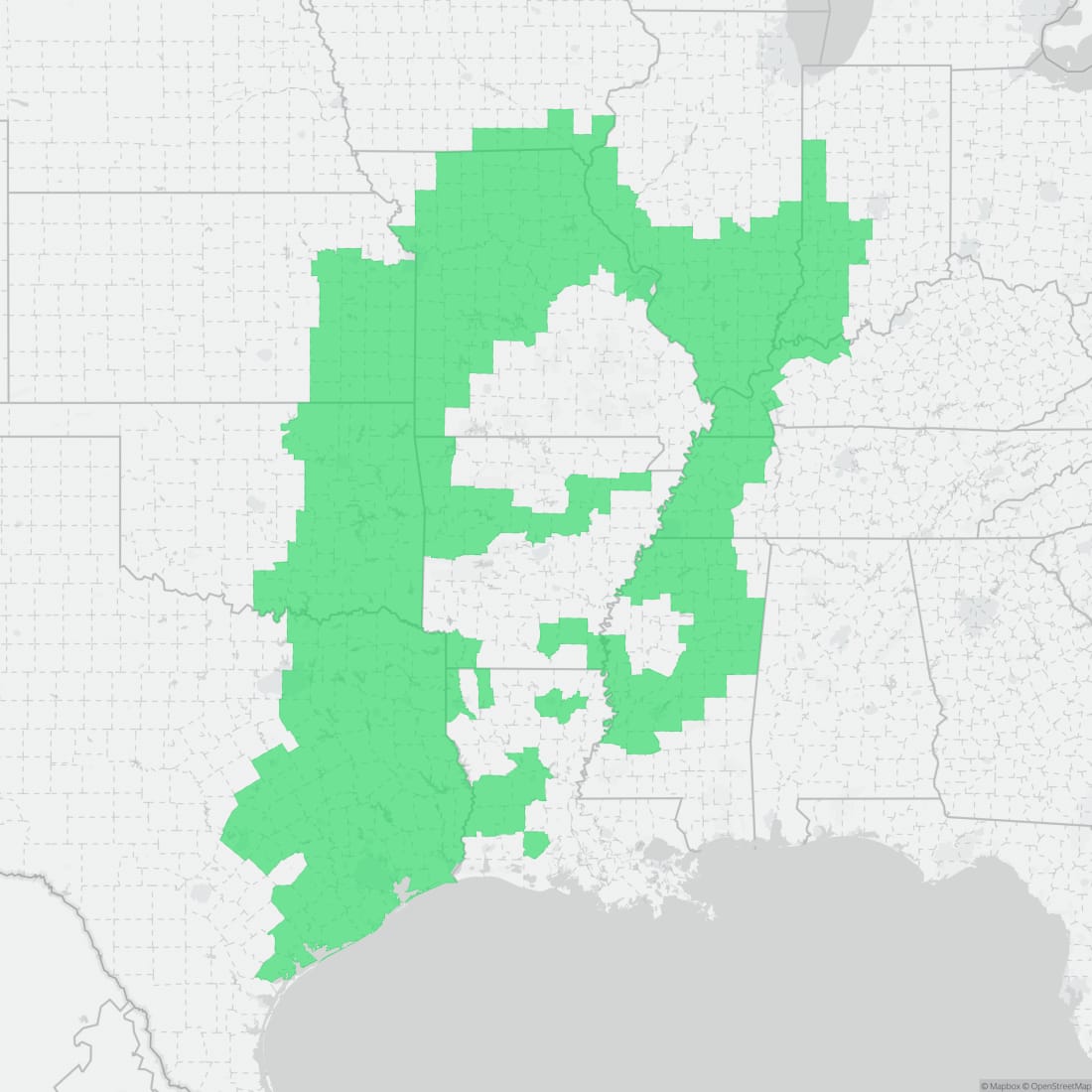
Approximate range. © Mapbox © OpenStreetMap