Greater Short-horned Lizard
Phrynosoma hernandesi
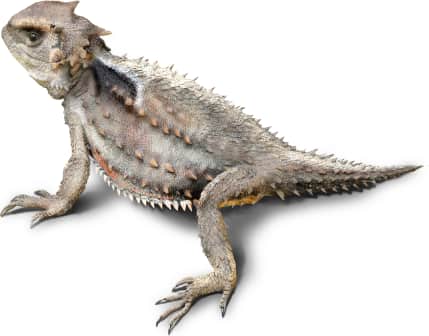
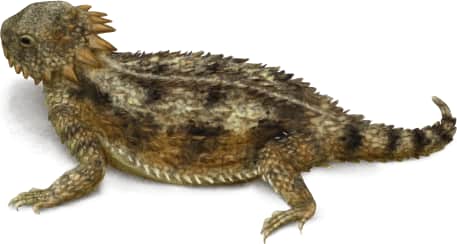
Camouflage well into surroundings with either grayish, yellowish, reddish, or brownish dorsum. Displays numerous horns on head and pointed scales across back. Body is fla…
How to identify
Camouflage well into surroundings with either grayish, yellowish, reddish, or brownish dorsum. Displays numerous horns on head and pointed scales across back. Body is flat and legs are short. Adult snout to vent length ranges from 2 to 5 inches (5.1 to 12.7 cm). Males and females mate in spring from May to June; females give live birth. Young do not have horns and are self-reliant a few hours after birth.
Range
Western United States, Canada, and Mexico from southern Alberta and southern Saskatchewan southward to New Mexico, Arizona, mountains of western Texas, and southern Durango, Mexico.
Habitat
Generally found in open areas which can range from wooded terrain to semiarid plains. Inhabits both rocky and sandy soil; burrows in rodent burrows.
Variations
Mature females grow larger than mature males with the former having an average snout to vent length of 7 cm (about 2.75 inches) and the latter averaging about 5 cm (2 inches).
Similar species
Name and etymology
Genus
Phrynosoma
Greek for toad (phrynos) body (soma).
Origin
Sources
- Wiegmann, 1828. Isis von Oken, Vol. 21, p. 367 ↗
Phrynosoma. Wiegmann, 1828 - Isis von Oken, Vol. 21, p. 367
Species epithet
hernandesi
Honoring Francisco Hernandez.
Origin
Honors
Sources
- (Girard, 1858). U.S. Expl. Exp., Herp. p. 395
Phrynosoma douglasi hernandesi. (Girard, 1858) - U.S. Expl. Exp., Herp. p. 395
Explore more names in the etymology index.
At a glance
Range
Western United States, Canada, and Mexico from southern Alberta and southern Saskatchewan southward to New Mexico, Arizona, m…
Habitat
Generally found in open areas which can range from wooded terrain to semiarid plains. Inhabits both rocky and sandy soil; bur…
Guide
Reptiles and Amphibians of North America
Range map
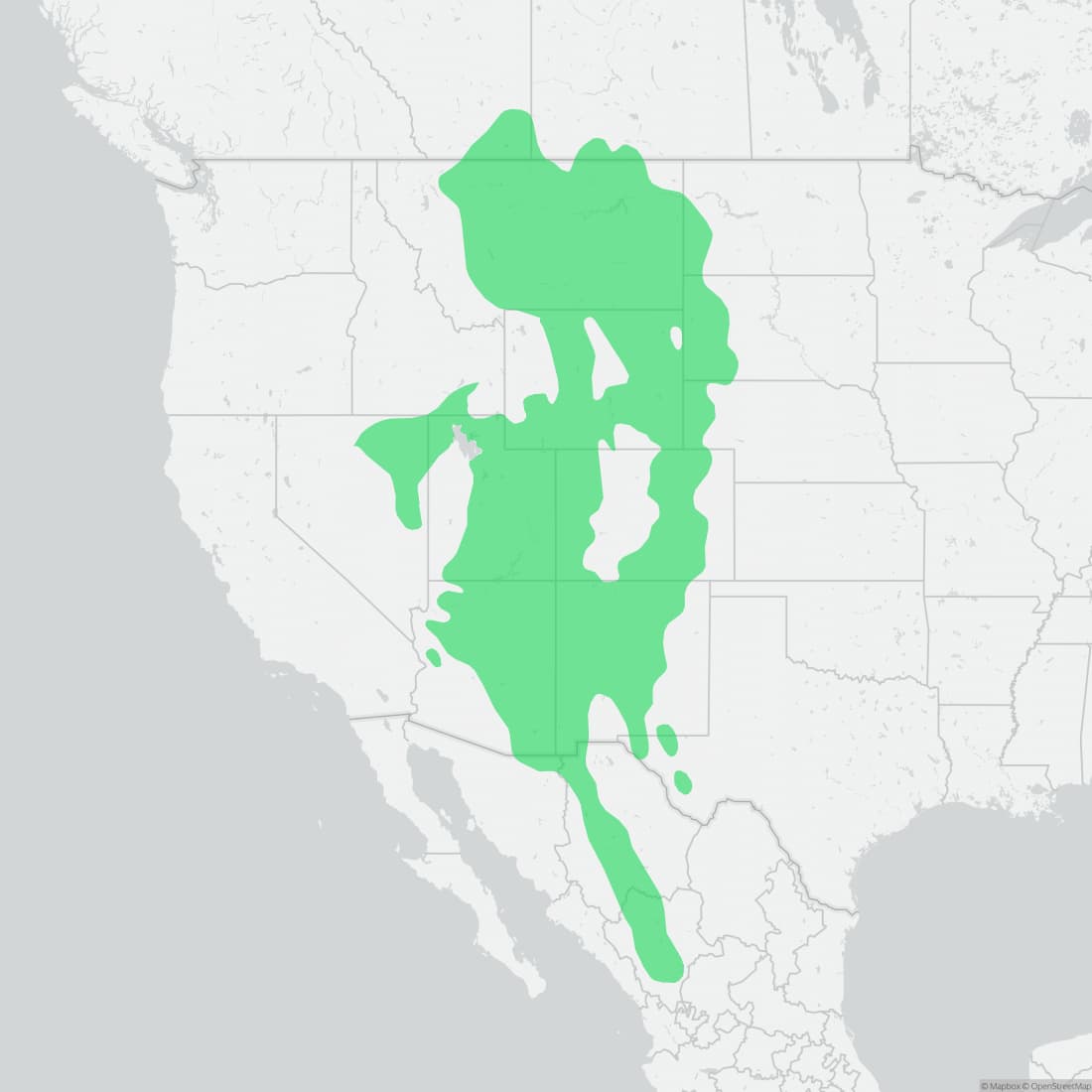
Approximate range. © Mapbox © OpenStreetMap