Mabee's Salamander
Ambystoma mabeei
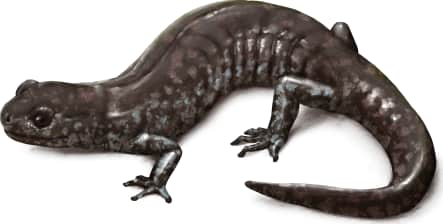
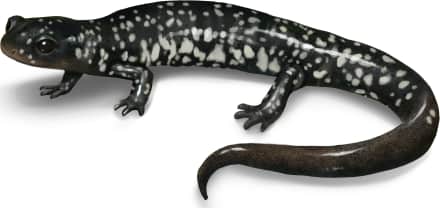
Dorsum either brown or black with a gray or brown venter. White spots displayed on sides of body. When larvae hatch, they display yellow stripes on lateral flanks and bro…
How to identify
Dorsum either brown or black with a gray or brown venter. White spots displayed on sides of body. When larvae hatch, they display yellow stripes on lateral flanks and brown color is more uniform than it is on adults. Males and females mate from late fall to early spring; females lay eggs in vegetation or shallow water. Eggs can be laid single or in chains of up to six.
Range
Lower elevations of Virginia, North Carolina, and South Carolina.
Habitat
Pine woods, forests, open fields, wet woods, and swamps. Generally stays in burrows near breeding ponds.
Variations
In North Carolina, can be found in savanna pine barrens in the eastern coastal plain. Some individuals leave breeding habitats to forests or meadows while others never leave breeding grounds.
Similar species
Name and etymology
Genus
Ambystoma
Greek phrase meaning "to cram into the mouth".
Origin
Sources
- Tschudi, "1838" 1839. Classif. Batr., Mem. Soc. Sci. Nat. Neuchatel, p. 92 ↗
Ambystoma. Tschudi, "1838" 1839 - Classif. Batr., Mem. Soc. Sci. Nat. Neuchatel, p. 92
Species epithet
mabeei
Honoring William Bruce Mabee.
Origin
Honors
Sources
- Bishop, 1928. Journ. Elisha Mitchell Sci. Soc., Vol. 43, No. 3-4, p. 157
Ambystoma mabeei. Bishop, 1928 - Journ. Elisha Mitchell Sci. Soc., Vol. 43, No. 3-4, p. 157
Explore more names in the etymology index.
At a glance
Range
Lower elevations of Virginia, North Carolina, and South Carolina.
Habitat
Pine woods, forests, open fields, wet woods, and swamps. Generally stays in burrows near breeding ponds.
Guide
Reptiles and Amphibians of North America
Range map
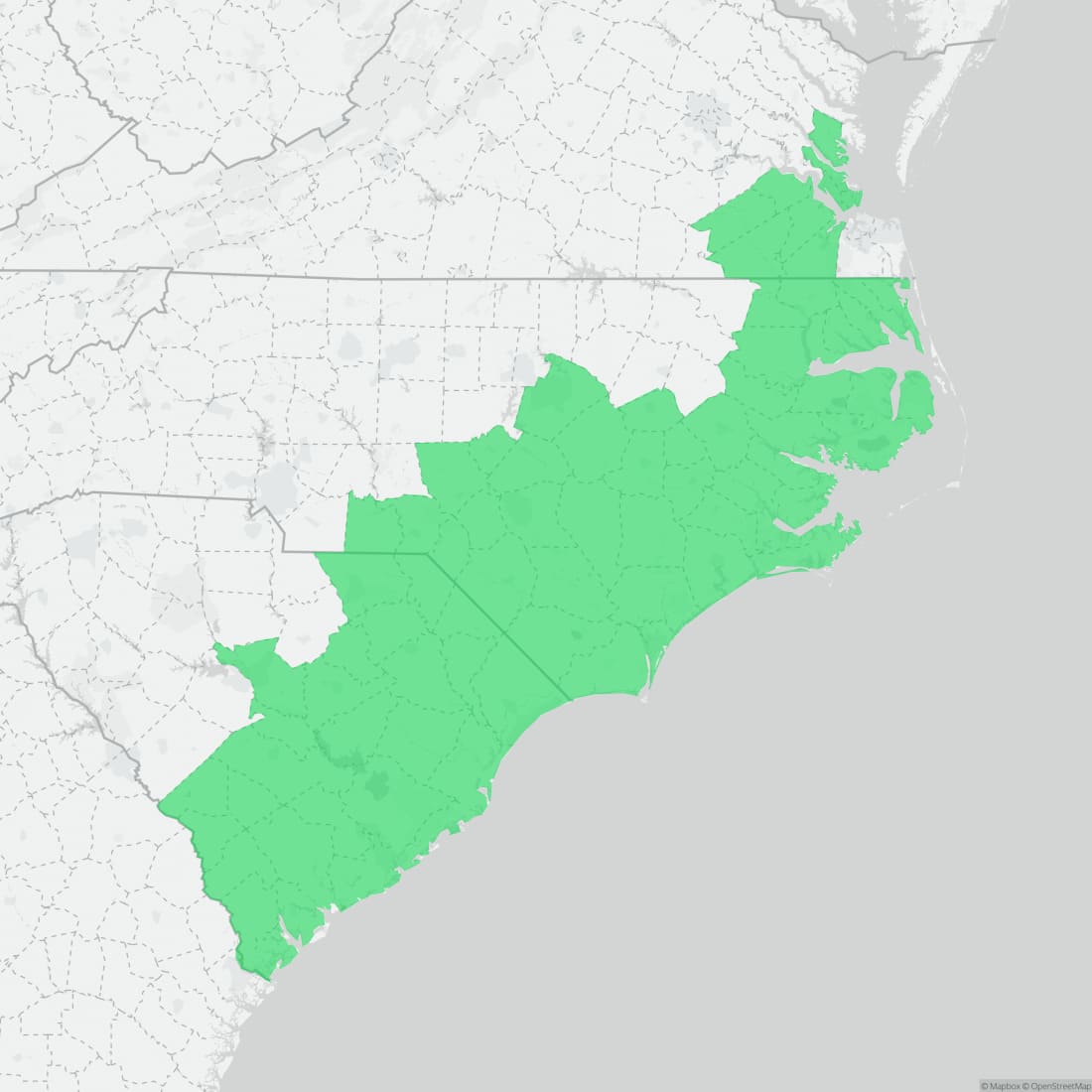
Approximate range. © Mapbox © OpenStreetMap