
Texas Alligator Lizard
Gerrhonotus infernalis
The maximum size they reach is 24-25 inches including the tail making them the largest lizard in Texas. The body is checkered with a brown and white pattern over a brown…
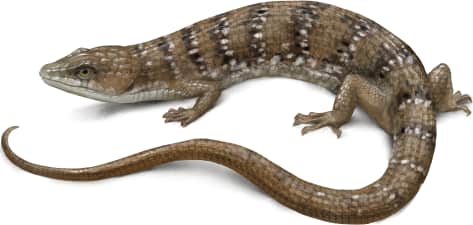
How to identify
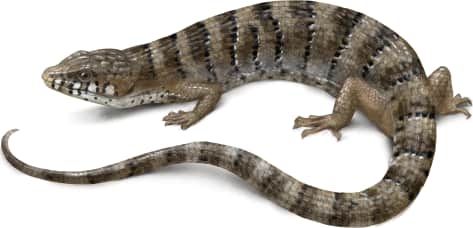
The maximum size they reach is 24-25 inches including the tail making them the largest lizard in Texas. The body is checkered with a brown and white pattern over a brown-yellow base color. Also possessing a long, flat, triangular shaped head and almond shaped eyes. Their legs are quite short keeping them close to the ground.
Range
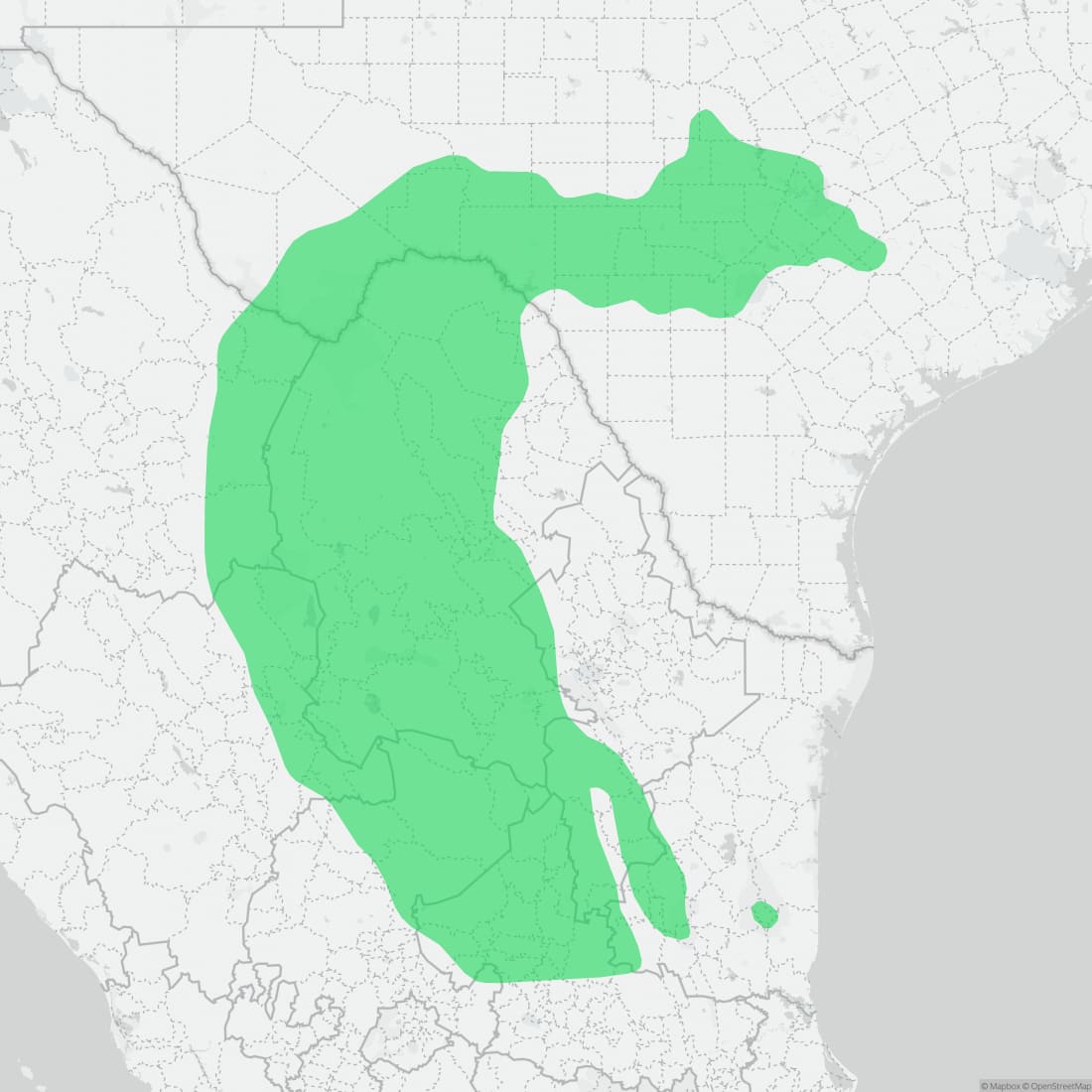
Spanning from central to southwest Texas, and northern Mexico.
Habitat
Finding refuge in an assortment of habitats, they prefer rockier landscapes on hillsides, canyons, as well as along streams and rivers.
Variations
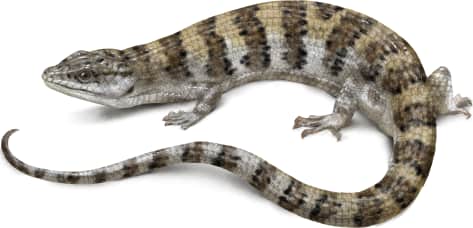
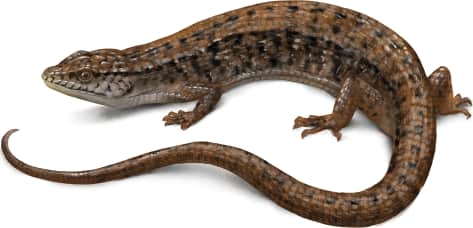
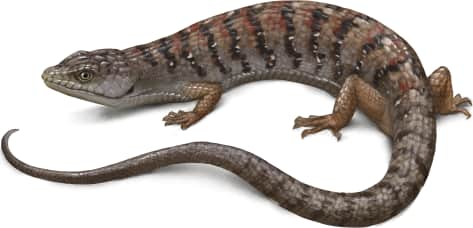
There are other variations of the Alligator lizard, such as the Southern alligator lizard common to the Pacific Coast ranging from Baja California to Washington State. They are significantly smaller than their Southwest cousins ranging in size from 3- 7 inches. Varying in color from brown to green to yellow, depending on habitat.
Similar species
Name and etymology
Genus
Gerrhonotus
Greek back (notos) of wicker (gerrhon).
Origin
Sources
- Wiegmann, 1828. Isis von Oken, Vol. 21, p. 379 ↗
Gerrhonotus. Wiegmann, 1828 - Isis von Oken, Vol. 21, p. 379
Species epithet
infernalis
Latin for of hell or hellish.
Origin
Sources
- Baird, 1858. Proc. Acad. Nat. Sci. Philadelphia, Vol. 10, p. 255 ↗
Xantusia. Baird, 1858 - Proc. Acad. Nat. Sci. Philadelphia, Vol. 10, p. 255
Explore more names in the etymology index.
At a glance
Range
Spanning from central to southwest Texas, and northern Mexico.
Habitat
Finding refuge in an assortment of habitats, they prefer rockier landscapes on hillsides, canyons, as well as along streams a…
Guide
Reptiles and Amphibians of North America
Range map
Approximate range. © Mapbox © OpenStreetMap