Kemp's Ridley Sea Turtle
Lepidochelys kempii
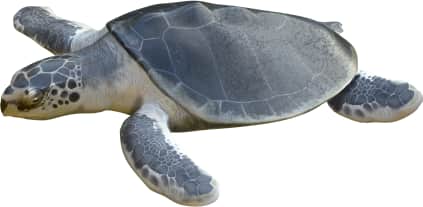
Adults display a greyish green carapace and a white or yellow plastron; bony, rounded carapace and 5 lateral scutes. One claw on each front flipper and back flippers can…
How to identify
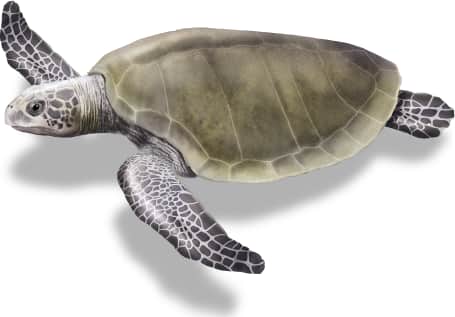
Adults display a greyish green carapace and a white or yellow plastron; bony, rounded carapace and 5 lateral scutes. One claw on each front flipper and back flippers can have either one or two claws. Hatchlings display black color. Mature individuals range from 2 feet, or 58 – 66 cm, in overall carapace length.
Range
Ranges different for mature versus young individuals; mature individuals stay in the Gulf of Mexico and young can be found in the Gulf of Mexico and up the east coast of the United States as far north as Nova Scotia.
Habitat
Adult habitat can be shallow water on coast. Prefers areas with muddy or sandy bottoms in which crabs are plentiful. After young hatch, they spend up to four years in ocean current weedlines. Use powerful jaws to crush and ingest clams, crabs, and shrimp. Also eats fish and jellyfish.
Variations
Adult carapace color sometimes can be olive green.
Similar species
Name and etymology
Genus
Lepidochelys
Greek for scaled (lepido) turtle (chelys).
Origin
Sources
- Fitzinger, 1843. Syst. Rept., p. 30 ↗
Lepidochelys. Fitzinger, 1843 - Syst. Rept., p. 30
Species epithet
kempii
Honoring Richard M. Kemp
Origin
Honors
Sources
- (Garman, 1880). Bull. Mus. Comp. Zool. Harvard, Vol. 6, p. 123
Lepidochelys kempii. (Garman, 1880) - Bull. Mus. Comp. Zool. Harvard, Vol. 6, p. 123
Explore more names in the etymology index.
At a glance
Size
55 to 75 cm
Range
Ranges different for mature versus young individuals; mature individuals stay in the Gulf of Mexico and young can be found in…
Habitat
Adult habitat can be shallow water on coast. Prefers areas with muddy or sandy bottoms in which crabs are plentiful. After yo…
Range map
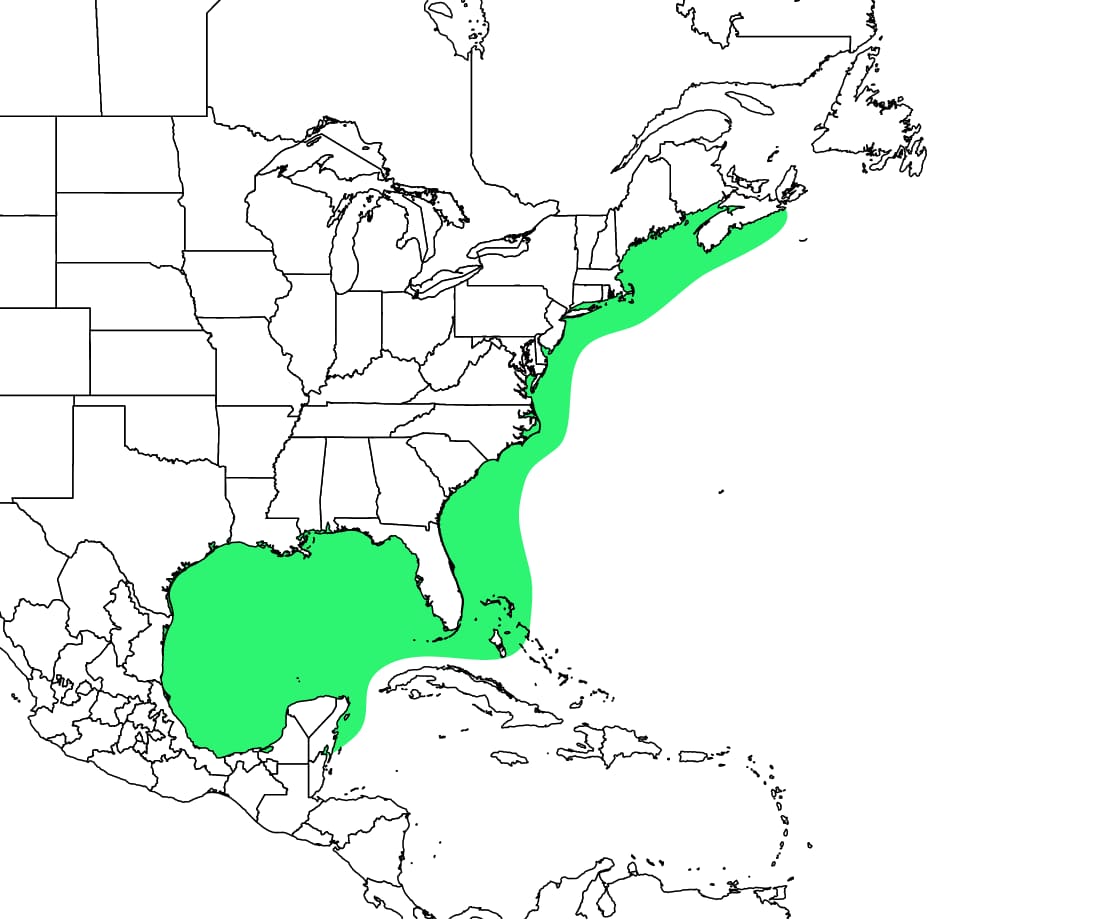
Approximate range. © Mapbox © OpenStreetMap