
Concho Watersnake
Nerodia paucimaculata
A mostly aquatic medium-sized snake, reaching 16-32 inches in length. It is light tan to grey with faded rows of overlapping dark spots, creating an uneven banded appeara…
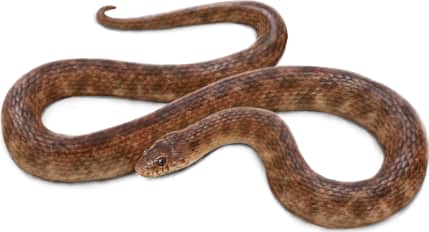
How to identify
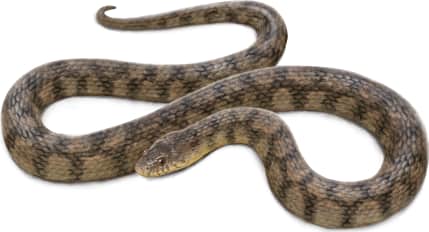
A mostly aquatic medium-sized snake, reaching 16-32 inches in length. It is light tan to grey with faded rows of overlapping dark spots, creating an uneven banded appearance. It has mildly keeled scales. Its head is solid tan or brown, and its eyes are large with round pupils. Its ventral side is unmarked.
Range
Small range in central Texas along the Colorado and Concho rivers.
Habitat
Lives in and around freshwater streams with lots of rocks for cover.
Variations
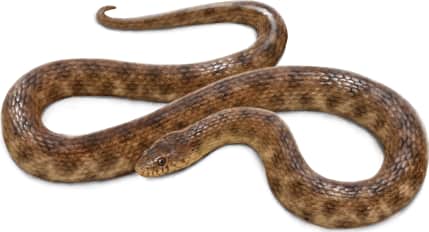
Color can have a slightly reddish hue.
Similar species
Very similar to the Brazos River watersnake (*Nerodia harteri*), which is found nearby. *N. harteri* tends to have a greener hue, and has dark spots down either side of its ventrum. Also resembles the diamondback watersnake (*Nerodia rhombifer*) or the plain-bellied watersnake (*Nerodia erythrogaster*).
Name and etymology
Genus
Nerodia
From Nereis the sea nymphs of Greek mythology.
Origin
Sources
- Baird and Girard, 1853. Cat. N. Amer. Rept., Pt. 1, p. 47 ↗
Nerodia. Baird and Girard, 1853 - Cat. N. Amer. Rept., Pt. 1, p. 47
Species epithet
paucimaculata
Latin for few (paucis) spots (maculata) referencing light spotting on its venter
Origin
Sources
- (Tinkle and Conant, 1961). Southwest. Natur., Vol. 6, No. 1, p. 34
Nerodia paucimaculata. (Tinkle and Conant, 1961) - Southwest. Natur., Vol. 6, No. 1, p. 34
Explore more names in the etymology index.
At a glance
Range
Small range in central Texas along the Colorado and Concho rivers.
Habitat
Lives in and around freshwater streams with lots of rocks for cover.
Guide
Reptiles and Amphibians of North America
Range map
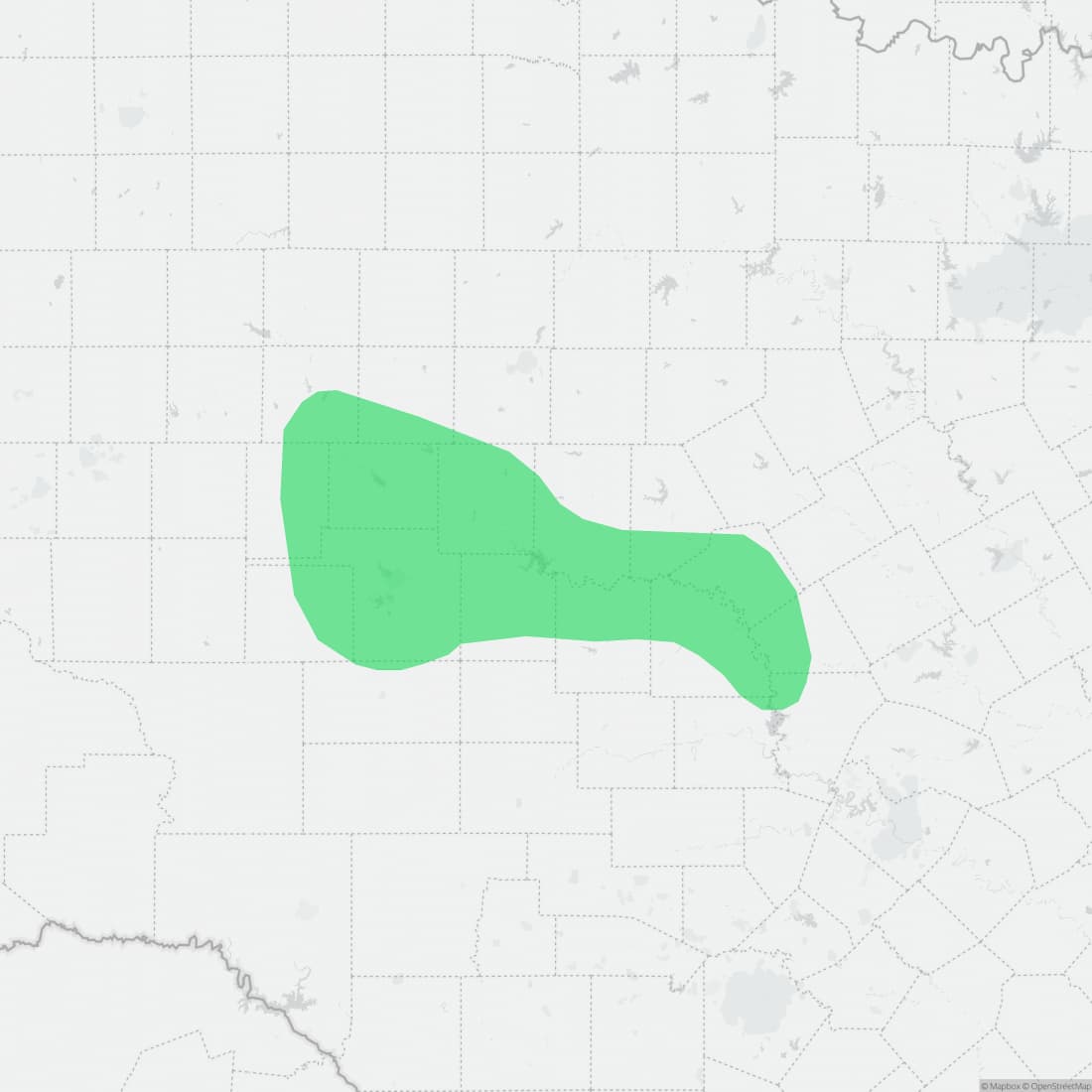
Approximate range. © Mapbox © OpenStreetMap