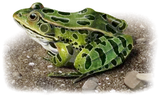
Long-toed Salamander
Ambystoma macrodactylum
This salamander is typically 1 to 3.5 inches long. It’s dark-skinned, with a tan, yellow or olive stripe down the spine and a light (white or pale blue) flecked belly and…
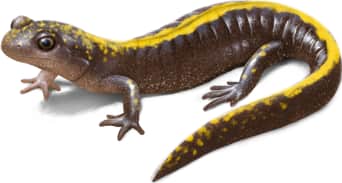
How to identify
This salamander is typically 1 to 3.5 inches long. It’s dark-skinned, with a tan, yellow or olive stripe down the spine and a light (white or pale blue) flecked belly and sides. A long fourth toe on each back foot gives the species its name.
Range
Long-toed salamanders are found along the western continent. Their range runs from British Columbia and Montana to Northern California.
Habitat
For living spaces, the Long-Toed Salamander prefers moist vegetation near water sources in forests, prairies or mountain meadows. They usually wind up occupying old or abandoned rodent burrows. At higher elevation(s), Long-Toed Salamanders hibernate in groups of up to 14 individuals. At lower elevations, though, they sometimes don’t hibernate at all!
Similar species
Name and etymology
Genus
Ambystoma
Greek phrase meaning "to cram into the mouth".
Origin
Sources
- Tschudi, "1838" 1839. Classif. Batr., Mem. Soc. Sci. Nat. Neuchatel, p. 92 ↗
Ambystoma. Tschudi, "1838" 1839 - Classif. Batr., Mem. Soc. Sci. Nat. Neuchatel, p. 92
Species epithet
macrodactylum
Greek for long (makros) toes (dakylos).
Origin
Sources
- Baird, 1849. Journ. Acad. Nat. Sci. Philadelphia, Ser. 2, Vol. 1, p. 292 ↗
Ambystoma macrodactylum. Baird, 1849 - Journ. Acad. Nat. Sci. Philadelphia, Ser. 2, Vol. 1, p. 292
Explore more names in the etymology index.
More illustrations
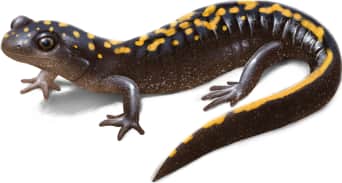
Santa cruz long-toed salamander
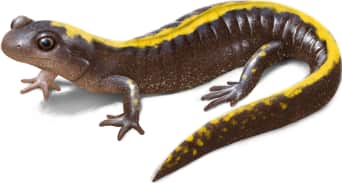
Eastern long-toed salamander
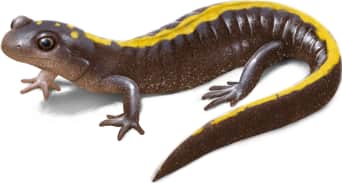
Central long-toed salamander
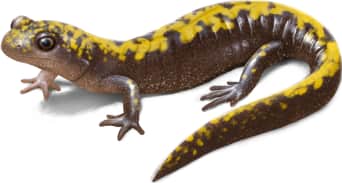
Southern long-toed salamander
At a glance
Range
Long-toed salamanders are found along the western continent. Their range runs from British Columbia and Montana to Northern C…
Habitat
For living spaces, the Long-Toed Salamander prefers moist vegetation near water sources in forests, prairies or mountain mead…
Guide
Reptiles and Amphibians of North America
Range map
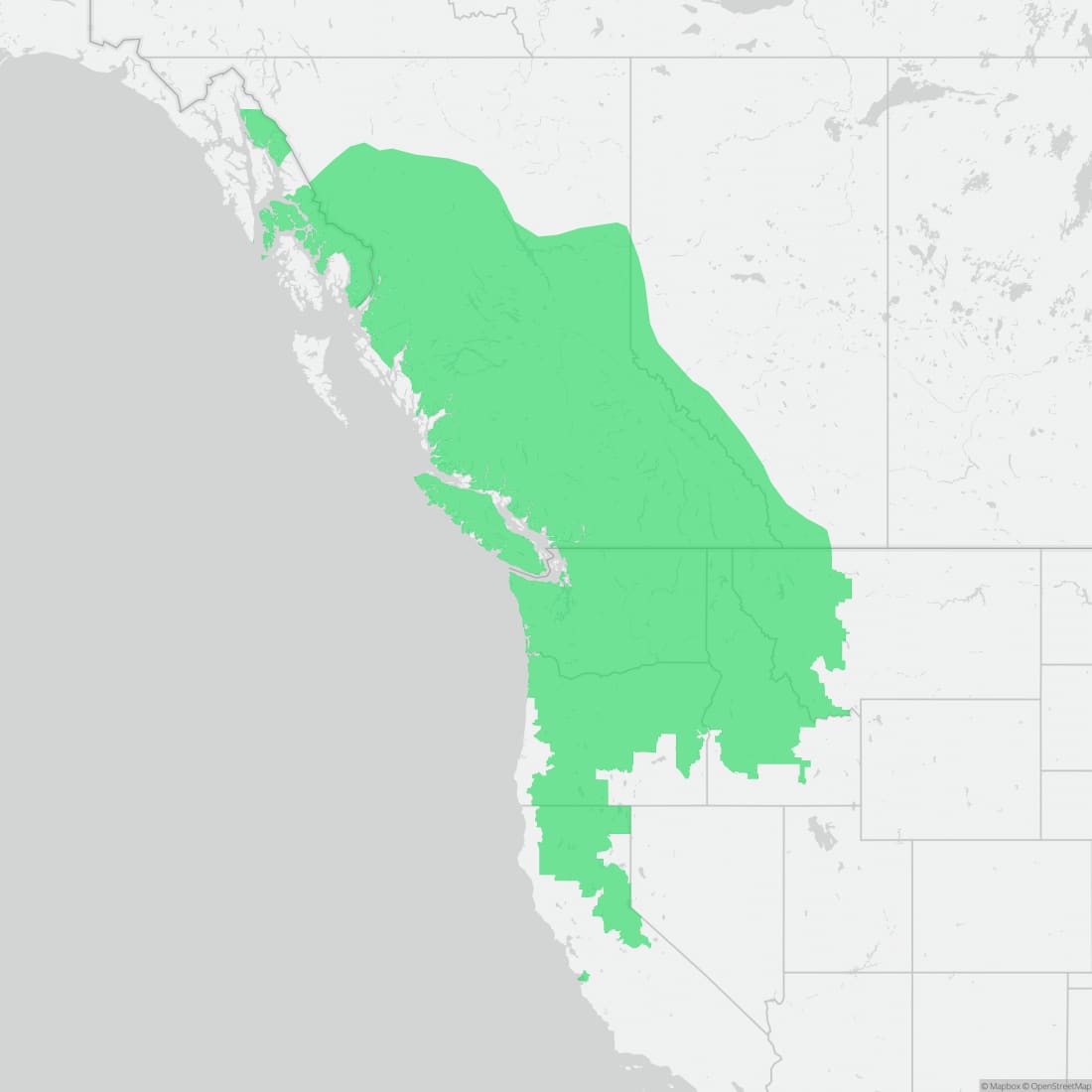
Approximate range. © Mapbox © OpenStreetMap