Chihuahuan Mud Turtle
Kinosternon hirtipes
An oval-shaped turtle with a bland olive brown carapace and yellow-tan plastron with dark seams. The carapace has smooth, non-serrated edges, a defined medial keel, and 2…
How to identify
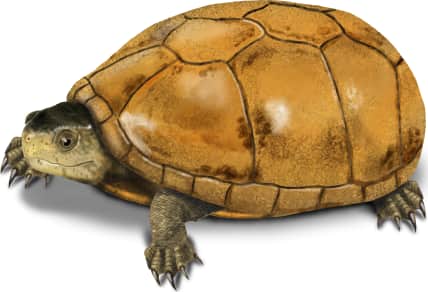
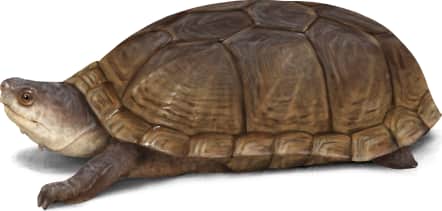
An oval-shaped turtle with a bland olive brown carapace and yellow-tan plastron with dark seams. The carapace has smooth, non-serrated edges, a defined medial keel, and 2 less-defined lateral keels. The plastron has eleven scutes and is double-hinged. Skin is yellowish green with a dense intricate mottled pattern. It can grow to 7.5 inches in carapace length.
Range
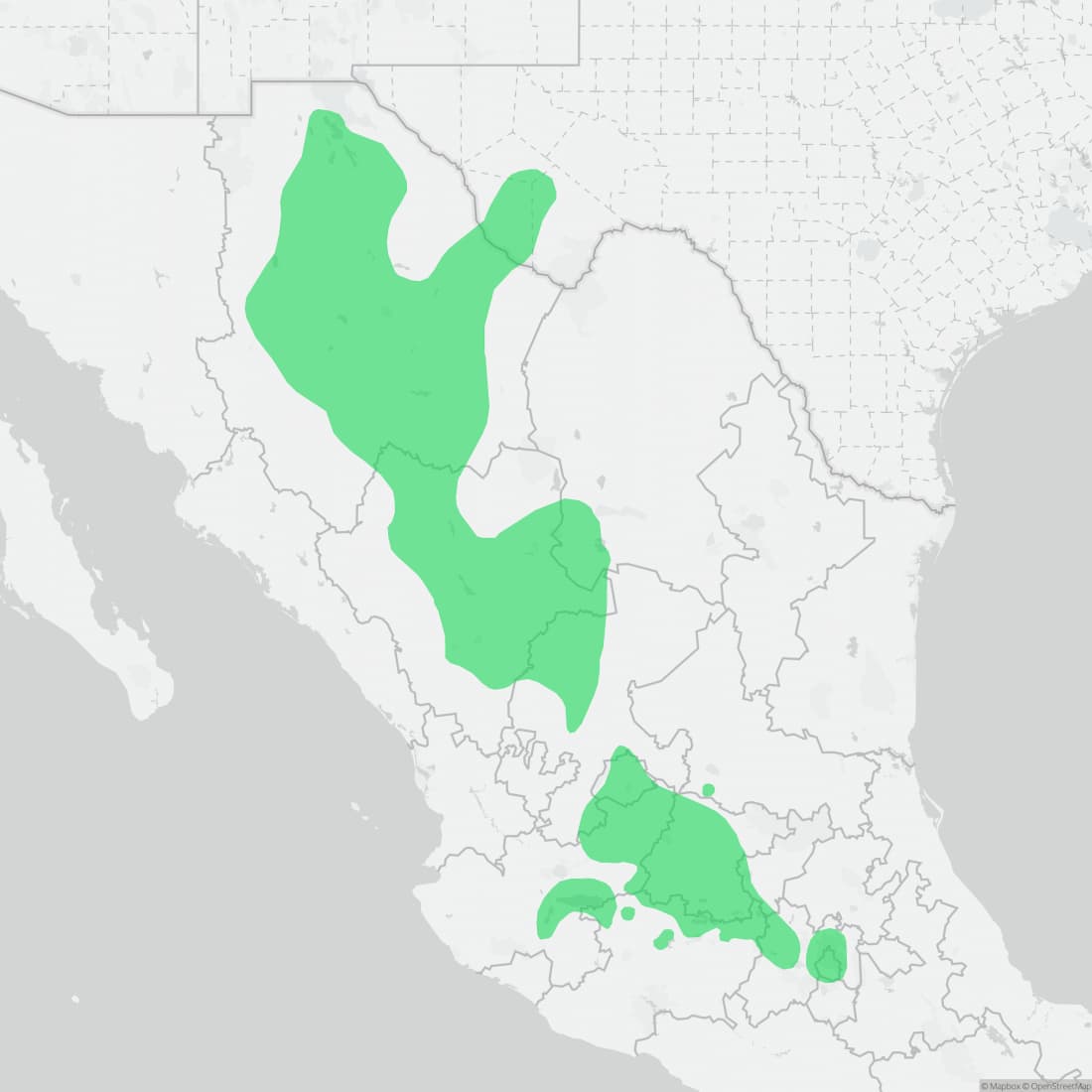
Ranges through central Mexico into a small area of the Texas panhandle.
Habitat
Highly aquatic species that lives in and around permanent sources of fresh water in Mexico, but in Texas it is only found in spring-fed cattle tanks. Often found near mesquite grasslands.
Variations
Plastron is sometimes striated with brown.
Similar species
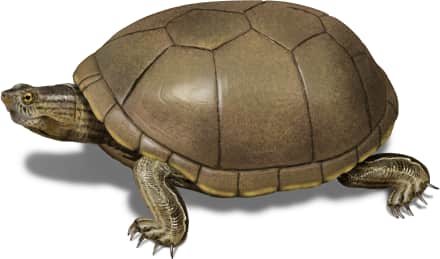
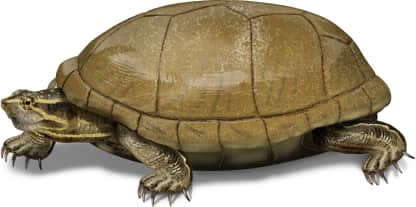
There are 5 subspecies of *Kinosternon hirtipes*. It could also be confused with the Sonoran mud turtle (*Kinosternon sonoriense*), yellow mud turtle (*Kinosternon flavescens*), or eastern mud turtle (*Kinosternon subrubrum*).
Name and etymology
Genus
Kinosternon
Greek for moving (kineo) breast (sternon), referencing ability to move lower shell.
Origin
Sources
- Spix, 1824. Testud. Brasil, p. 17
Kinosternon. Spix, 1824 - Testud. Brasil, p. 17
Species epithet
hirtipes
Latin for rough (hirtus) foot (pes).
Origin
Sources
- (Wagler, 1833). Nat. Syst. Amph., Vol. 3, Tab 30, p. 137, fig. 1-2 and 3
Kinosternon hirtipes. (Wagler, 1833) - Nat. Syst. Amph., Vol. 3, Tab 30, p. 137, fig. 1-2 and 3
Explore more names in the etymology index.
At a glance
Range
Ranges through central Mexico into a small area of the Texas panhandle.
Habitat
Highly aquatic species that lives in and around permanent sources of fresh water in Mexico, but in Texas it is only found in…
Guide
Reptiles and Amphibians of North America
Range map
Approximate range. © Mapbox © OpenStreetMap