Desert Grassland Whiptail
Aspidoscelis uniparens
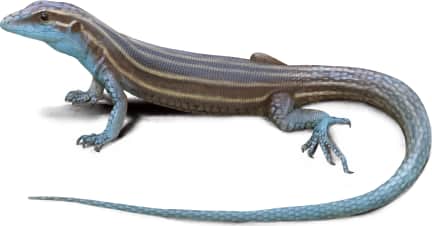
A long, slender lizard with a long tail and pointed snout. They are mainly dark brown to black with 6 distinct white or yellowish lines running the length of their body a…
How to identify
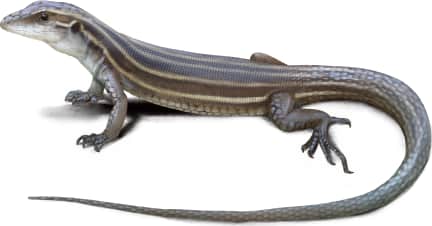
A long, slender lizard with a long tail and pointed snout. They are mainly dark brown to black with 6 distinct white or yellowish lines running the length of their body and fading into a solid tan or olive tail. The top of their head is solid tan and their ventrum is pale and unmarked. They reach an average total length of 3-5.25 inches. Their tail scales are keeled.
Range
Ranges from central to southeastern Arizona, southwestern to central New Mexico, the tip of the Texas panhandle, and south into north central Mexico.
Habitat
Prefers semidesert grassland habitats, but can also be found in chaparral and woodland areas or riparian mesquite valleys and floodplains.
Variations
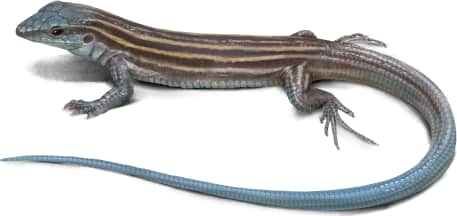
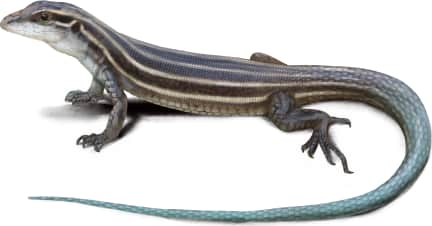
Juveniles display a blue tail, and some adults have blue tint on the throat and face. Some adults have a partial seventh stripe at the start of their neck.
Similar species
It is very similar to the plateau striped whiptail (*Aspidoscelis velox*) and little striped whiptail (*Aspidoscelis inornatus*). It has less blue coloration than the pai striped whiptail (*Aspidoscelis pai*) and Arizona striped whiptail (*Aspidoscelis arizonae*).
Name and etymology
Genus
Aspidoscelis
Greek for shield (aspido) leg (skelos).
Origin
Sources
- Wagler, 1830. Nat. Syst. Amph., p. 154
Cnemidophorus. Wagler, 1830 - Nat. Syst. Amph., p. 154
Species epithet
uniparens
Latin for one (uni) parent (parens), referencing unisexual reproductive habits.
Origin
Sources
- Wright and Lowe, 1965. Journ. Arizona Acad. Sci., Vol. 3, p. 167
Cnemidophorus uniparens. Wright and Lowe, 1965 - Journ. Arizona Acad. Sci., Vol. 3, p. 167
Explore more names in the etymology index.
At a glance
Range
Ranges from central to southeastern Arizona, southwestern to central New Mexico, the tip of the Texas panhandle, and south in…
Habitat
Prefers semidesert grassland habitats, but can also be found in chaparral and woodland areas or riparian mesquite valleys and…
Guide
Reptiles and Amphibians of North America
Range map
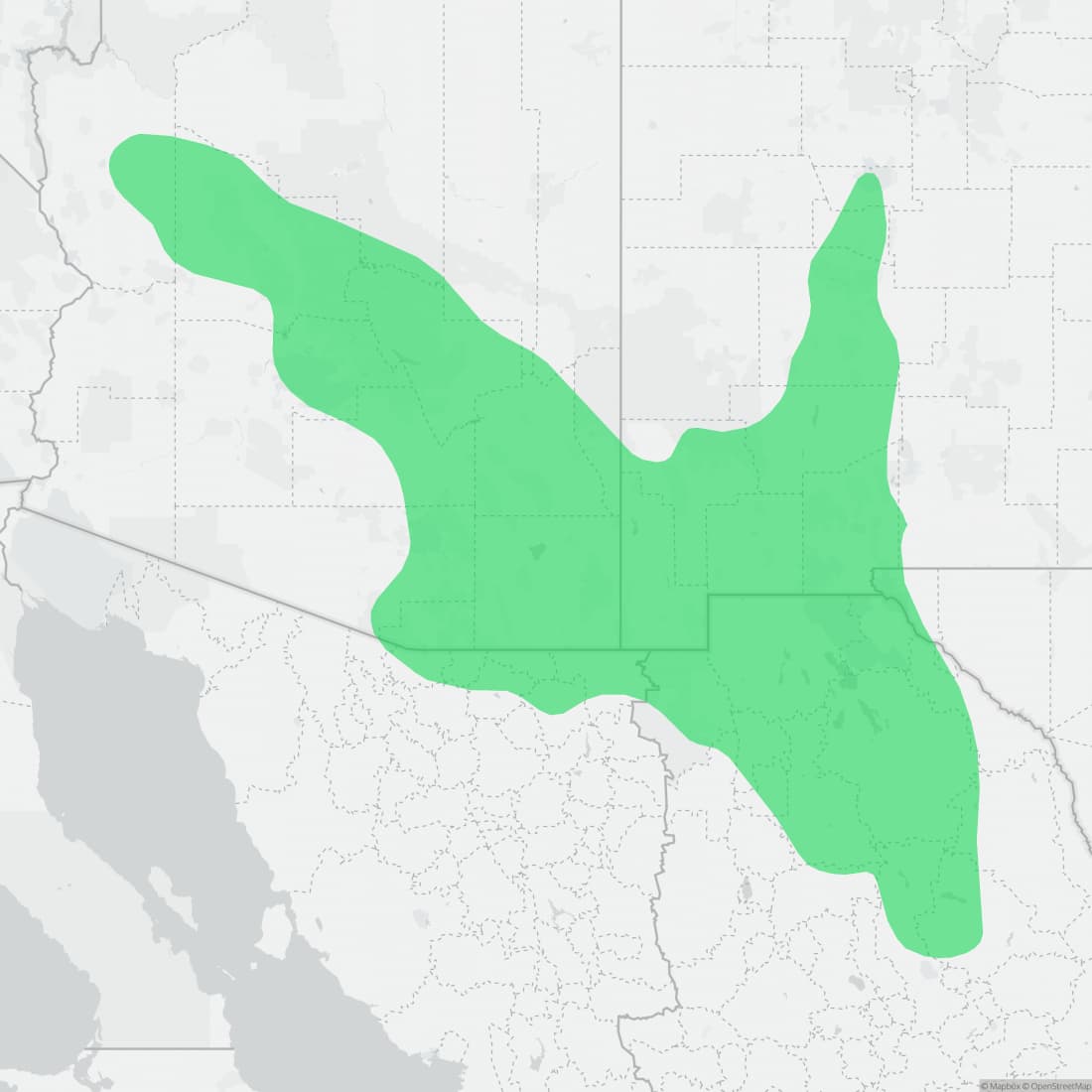
Approximate range. © Mapbox © OpenStreetMap