Carolina Mountain Dusky Salamander
Desmognathus carolinensis
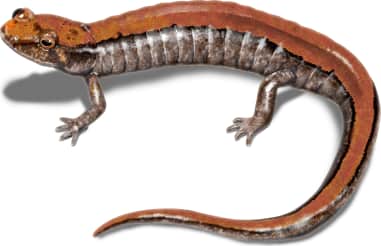
Small species reaching 2.5 - 4.5 inches in length. Coloration is variable in shades of brown with or without a lighter stripe down the back and tail. A faint light colore…
How to identify
Small species reaching 2.5 - 4.5 inches in length. Coloration is variable in shades of brown with or without a lighter stripe down the back and tail. A faint light colored line is always present from the eye to the corner of the mouth.
Range
Small range in the Appalachian Mountains of western North Carolina and northeastern Tennessee.
Habitat
Lives in rocky areas of temperate forests near rivers or springs.
Variations
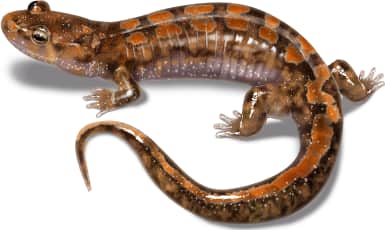
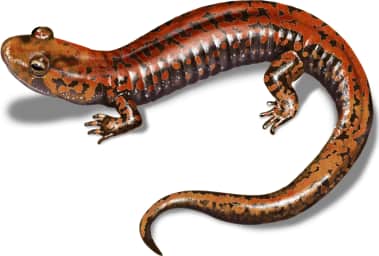
Variations in size based on location. Those in higher elevations or woodland habitats grow slightly larger than their counterparts living in lower elevations or on wet rock faces. Colors are also highly variable. Light stripe down back can be yellow, orange, red, or brown, and it can be solid or blotchy. Some have little to no distinguishing pattern, while others have red legs or cheeks.
Similar species
Most likely to be confused with the Blue Ridge dusky salamander (*Desmognathus orestes*) or the Ocoee salamander (*Desmognathus ocoee*), both of which can be found in the same region.
Name and etymology
Genus
Desmognathus
Greek for jaw (gnathos) ligament (desmos).
Origin
Sources
- Baird, 1850. Journ. Acad. Nat. Sci. Philadelphia, Ser. 2, Vol. 1, p. 282 and p. 285 ↗
Desmognathus. Baird, 1850 - Journ. Acad. Nat. Sci. Philadelphia, Ser. 2, Vol. 1, p. 282 and p. 285
Species epithet
carolinensis
Of Carolina.
Sources
- (Dunn, 1916). Proc. Biol. Soc. Wash., 29:74
Desmognathus carolinensis. (Dunn, 1916) - Proc. Biol. Soc. Wash., 29:74
Explore more names in the etymology index.
At a glance
Range
Small range in the Appalachian Mountains of western North Carolina and northeastern Tennessee.
Habitat
Lives in rocky areas of temperate forests near rivers or springs.
Guide
Reptiles and Amphibians of North America
Range map
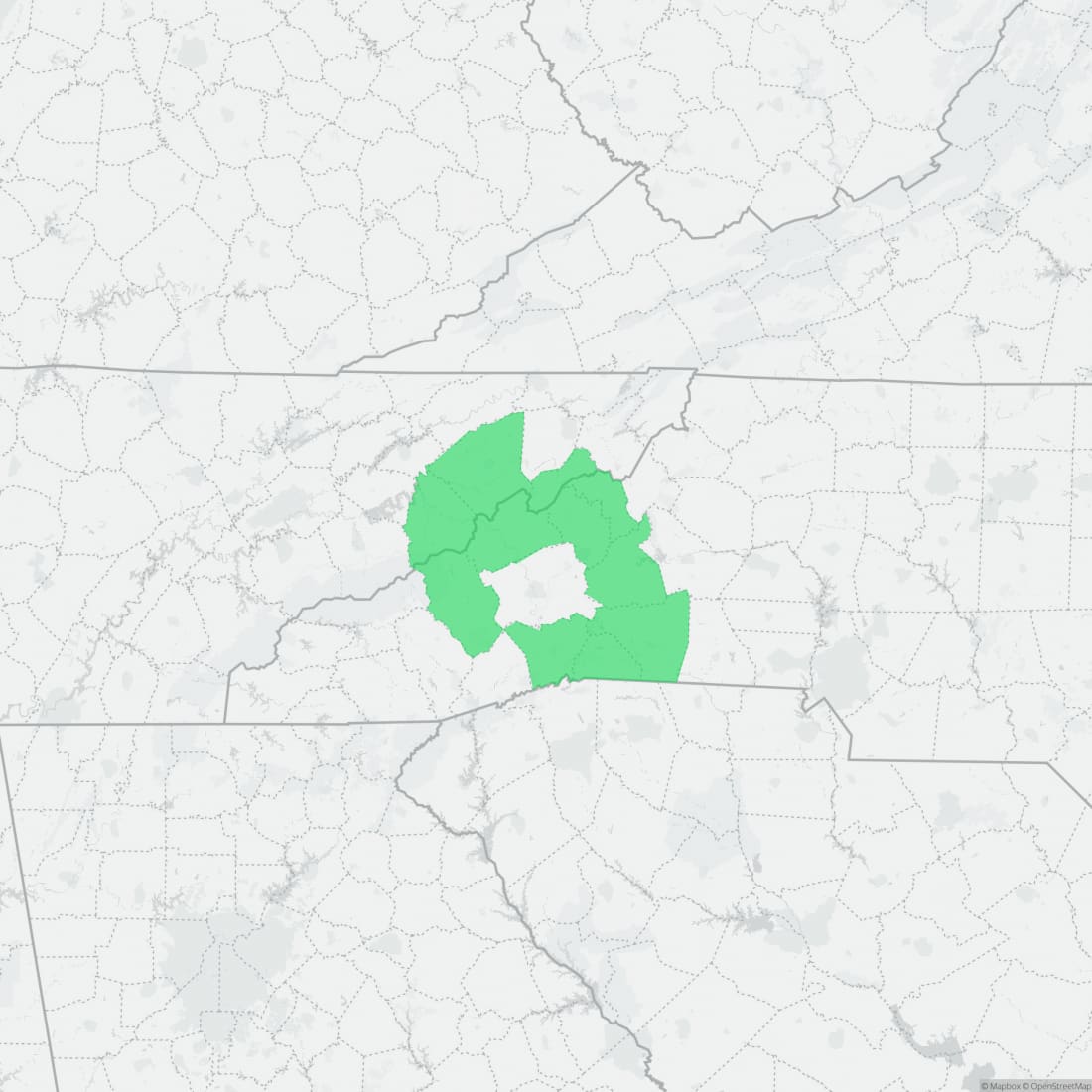
Approximate range. © Mapbox © OpenStreetMap