Cope's Giant Salamander
Dicamptodon copei
This neotenic species rarely metamorphosizes into adult form. It grows to nearly 20 cm in length and retains external gills and a flattened fin-like tail. It has a wide,…
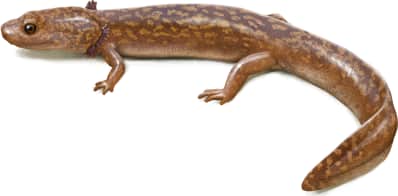
How to identify
This neotenic species rarely metamorphosizes into adult form. It grows to nearly 20 cm in length and retains external gills and a flattened fin-like tail. It has a wide, shovel-like face and it's primarily medium-brown with areas of golden speckling. Its eyes are somewhat large.
Range
Coastal Washington and northwestern Oregon.
Habitat
Lives a mostly aquatic life in freshwater mountain pools and streams.
Variations
Very rarely it will develop into adult form.
Similar species
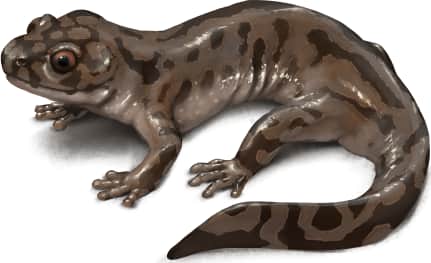
Somewhat similar to the Coastal giant salamander (*Dicamptodon tenebrosus*) which is not neotenic and has a more distinct spotty pattern of dark spots on a lighter background.
Name and etymology
Genus
Dicamptodon
Greek for two (di) curved (kamptos) teeth (odon).
Origin
Sources
- Strauch, 1870. Mem. Acad. Sci. St. Petersburg, Ser. 7, Vol. 16, No. 4, p. 68
Dicamptodon. Strauch, 1870 - Mem. Acad. Sci. St. Petersburg, Ser. 7, Vol. 16, No. 4, p. 68
Species epithet
copei
Honoring Edward Drinker Cope.
Origin
Honors
Sources
- Nussbaum, 1970. Copeia, p. 506 ↗
Dicamptodon copei. Nussbaum, 1970 - Copeia, p. 506
Explore more names in the etymology index.
More illustrations
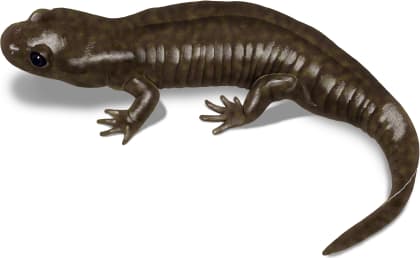
Terrestrial form
At a glance
Range
Coastal Washington and northwestern Oregon.
Habitat
Lives a mostly aquatic life in freshwater mountain pools and streams.
Guide
Reptiles and Amphibians of North America
Range map
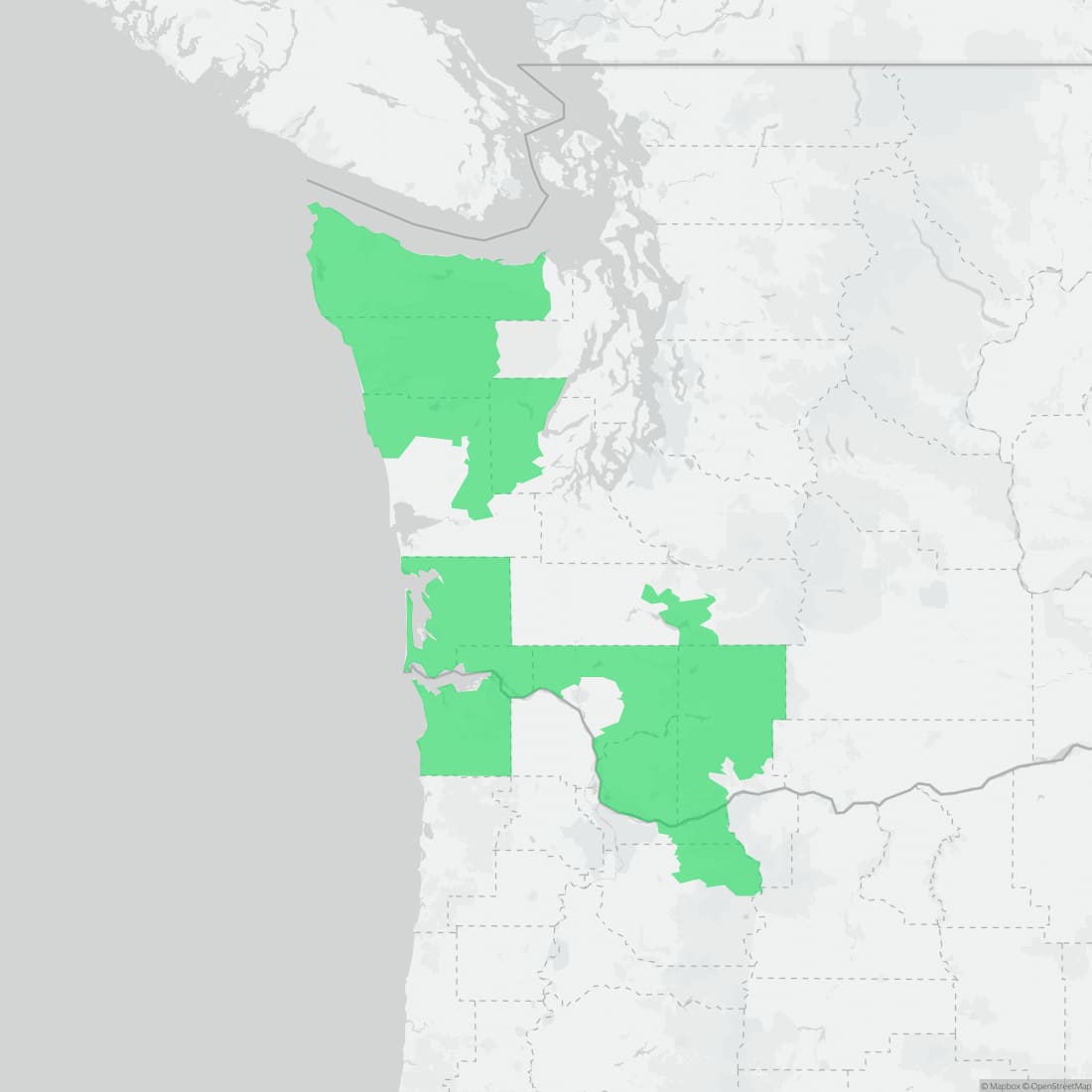
Approximate range. © Mapbox © OpenStreetMap