Fern Bank Salamander
Eurycea pterophila
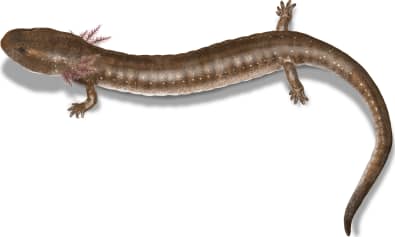
This salamander is completely aquatic, retaining its external gills and tail fins throughout adulthood. It reaches 3-4 cm in snout to vent length, and is mostly grey with…
How to identify
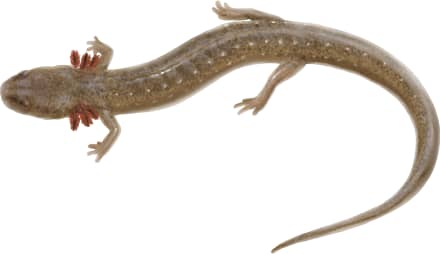
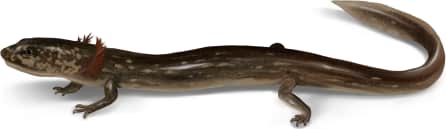
This salamander is completely aquatic, retaining its external gills and tail fins throughout adulthood. It reaches 3-4 cm in snout to vent length, and is mostly grey with dark speckles all over and a row of small yellow spots on each dorsolateral line. It also has 2 indistinct dark lines on its face, running from each eye to the tip of the snout.
Range
Only found in central Texas living in springs and caves of the Blanco River watershed.
Habitat
Strictly aquatic species that lives at the bottom of natural spring-fed water bodies, hiding among rocks and other substrate.
Variations
No significant variations in appearance are known.
Similar species
The Texas salamander (*Eurycea neotenes*) and Valdina Farms salamander (*Eurycea troglodytes*) are quite similar.
Name and etymology
Genus
Eurycea
Probably honoring Eurydice the wife of Orpheus in Greek mythology. Although Rafinesque, who named the genus, only wrote "mythological"
Origin
Honors
Sources
- Rafinesque, 1822. Kentucky Gazette, Lexington, N. S., Vol. 1, No. 9, Feb. 28, p. 3, column 6
Eurycea. Rafinesque, 1822 - Kentucky Gazette, Lexington, N. S., Vol. 1, No. 9, Feb. 28, p. 3, column 6
Species epithet
pterophila
Greek for fern (ptero) lover (philos)
Origin
Sources
- Burger, Smith and Potter 1950. Proc. Biol. Soc. Wash. 63:51
Eurycea pterophila. Burger, Smith and Potter 1950. Proc. Biol. Soc. Wash. 63:51
Explore more names in the etymology index.
At a glance
Range
Only found in central Texas living in springs and caves of the Blanco River watershed.
Habitat
Strictly aquatic species that lives at the bottom of natural spring-fed water bodies, hiding among rocks and other substrate.…
Guide
Reptiles and Amphibians of North America
Range map
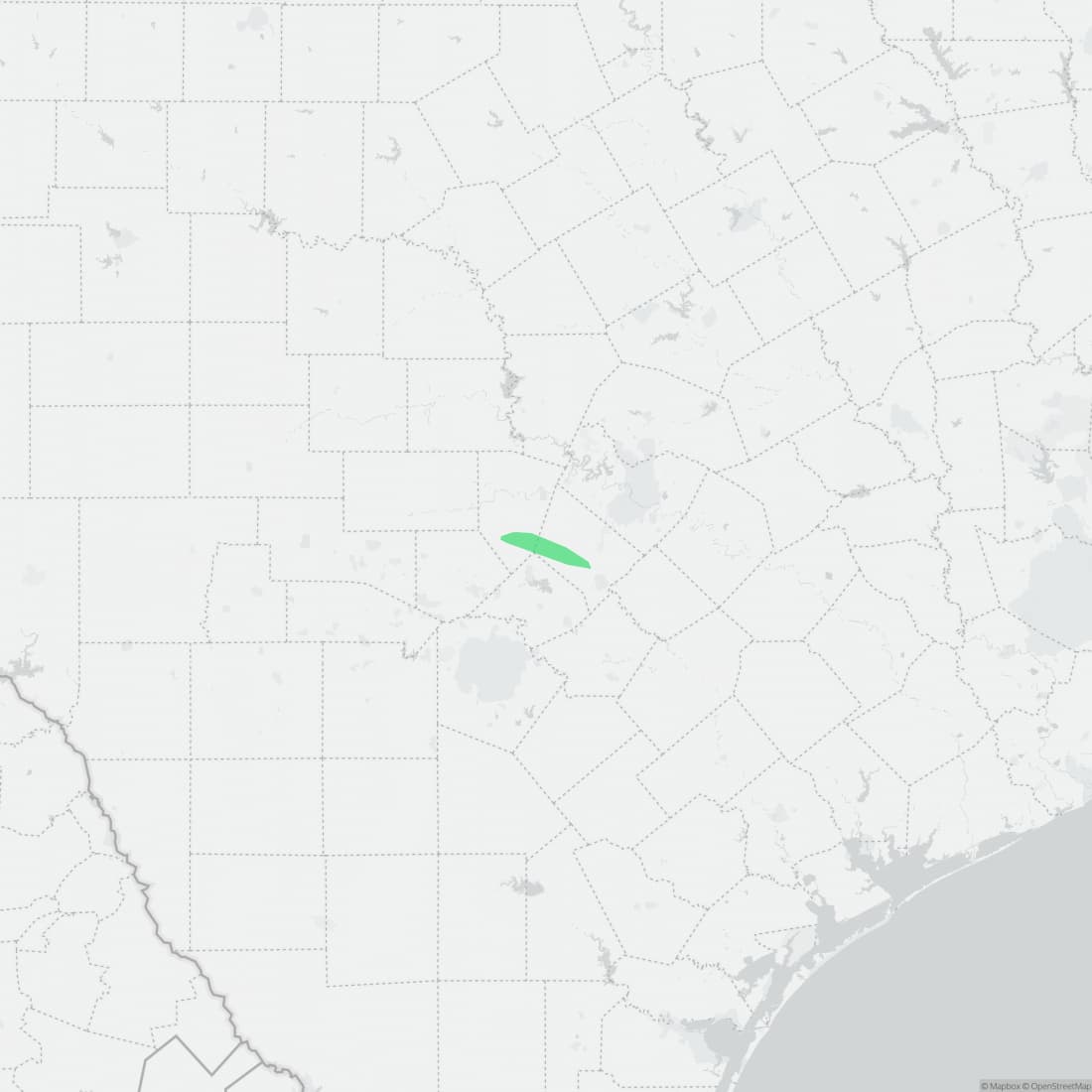
Approximate range. © Mapbox © OpenStreetMap