Barbour's Map Turtle
Graptemys barbouri
Adult length variable depending on sex: Male carapace length averages 4.7 inches whereas female carapace length may be upwards of 12 inches. Carapace color typically gree…
How to identify
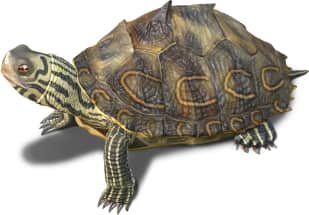
Adult length variable depending on sex: Male carapace length averages 4.7 inches whereas female carapace length may be upwards of 12 inches. Carapace color typically greenish or olive brown. Skin color ranges from dark olive to black with yellow or green markings. Plastron yellow with dark lines along seams. Curved cross-shaped marking under the chin.
Range
Small rage in southeastern United States. Found within the Apalachicola and Choctawhatchee River systems of southeastern Alabama, southwestern Georgia, and the Florida panhandle.
Habitat
Semi-aquatic. Found in rivers with fresh, clear flowing water and limestone rock and cobble bottoms.
Variations
Females: Much larger than males, darker head, patterning differs from males or juveniles. Juveniles: Lighter colored carapace with pointed scutes along midline of carapace.
Name and etymology
Genus
Graptemys
Greek for written (graptos) turtle (emys).
Origin
Sources
- Agassiz, 1857. Contr. Nat. Hist. U. S., Vol. 1, p. 436 ↗
Graptemys. Agassiz, 1857 - Contr. Nat. Hist. U. S., Vol. 1, p. 436
Species epithet
barbouri
Honoring Thomas Barbour.
Origin
Honors
Sources
- Carr and Marchand, 1942. Proc. New England Zool. Club, Vol. 20, p. 98, pls. 14 and 15
Graptemys barbouri. Carr and Marchand, 1942 - Proc. New England Zool. Club, Vol. 20, p. 98, pls. 14 and 15
- Kraus and Petranka, 1989. Copeia, p. 95 ↗
Ambystoma barbouri. Kraus and Petranka, 1989 - Copeia, p. 95
Explore more names in the etymology index.
At a glance
Size
4 to 33 cm
Range
Small rage in southeastern United States. Found within the Apalachicola and Choctawhatchee River systems of southeastern Alab…
Habitat
Semi-aquatic. Found in rivers with fresh, clear flowing water and limestone rock and cobble bottoms.
Range map
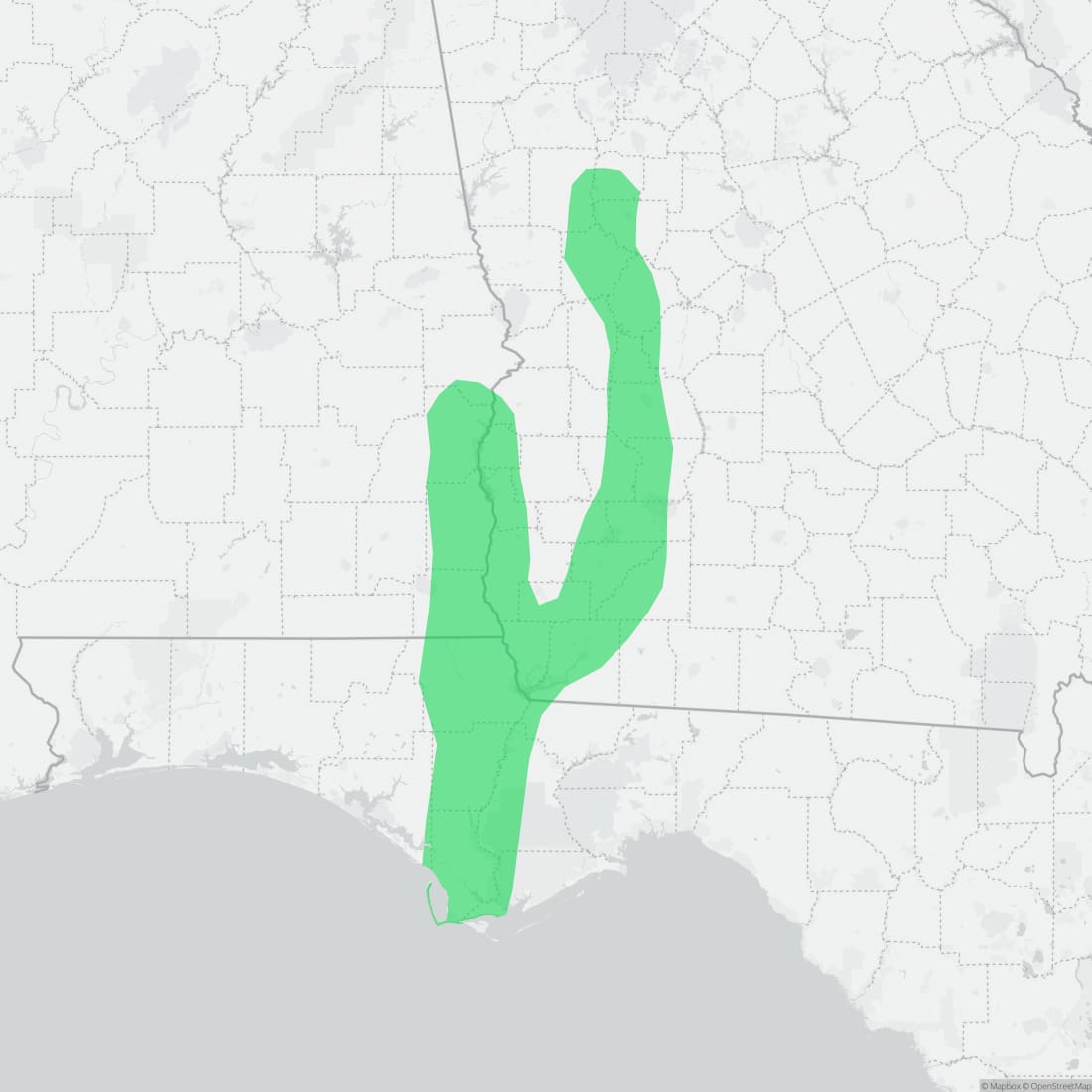
Approximate range. © Mapbox © OpenStreetMap