Larch Mountain Salamander
Plethodon larselli
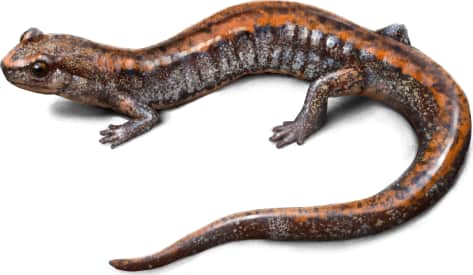
This salamander reaches 3.5-5.5 cm in snout to vent length. It has a defined neck, long slender legs, and 15 costal grooves. It typically has a dorsal stripe that extends…
How to identify
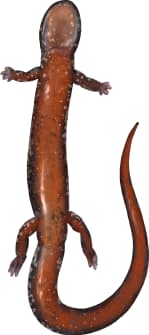
This salamander reaches 3.5-5.5 cm in snout to vent length. It has a defined neck, long slender legs, and 15 costal grooves. It typically has a dorsal stripe that extends to the tail tip, and a salmon to reddish ventrum with black speckles. Its background coloration is grey-brown with light speckling. The outer toe on each hind foot is greatly reduced in size.
Range
Small patches of range stretching from central Washington to north central Oregon.
Habitat
Found in rocky areas of humid mixed forest habitats, such as talus and gravel slopes.
Variations
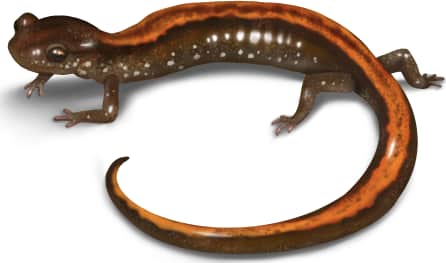
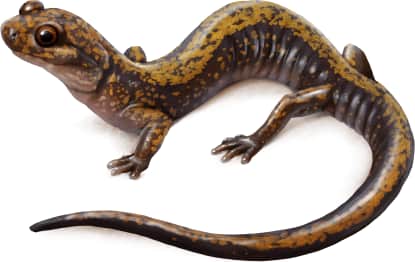
Dorsal stripe ranges from yellow to orange to light brown, and is often blotchy.
Similar species
This species could be confused with the western red-backed salamander (*Plethodon vehiculum*) or Dunn's salamander (*Plethodon dunni*).
Name and etymology
Genus
Plethodon
Greek for full of (plethore) teeth (odon).
Origin
Sources
- Tschudi, "1838" 1839. reprinted in Classif. Batr., Mem. Soc. Sci. Nat. Neuchatel, p. 92 ↗
Plethodon. Tschudi, "1838" 1839 - reprinted in Classif. Batr., Mem. Soc. Sci. Nat. Neuchatel, p. 92
Species epithet
larselli
Honoring Olaf Larsell
Origin
Honors
Sources
- Burns, 1954. Herpetologica, Vol. 10, p. 83
Plethodon larselli. Burns, 1954 - Herpetologica, Vol. 10, p. 83
Explore more names in the etymology index.
More illustrations
At a glance
Range
Small patches of range stretching from central Washington to north central Oregon.
Habitat
Found in rocky areas of humid mixed forest habitats, such as talus and gravel slopes.
Guide
Reptiles and Amphibians of North America
Range map
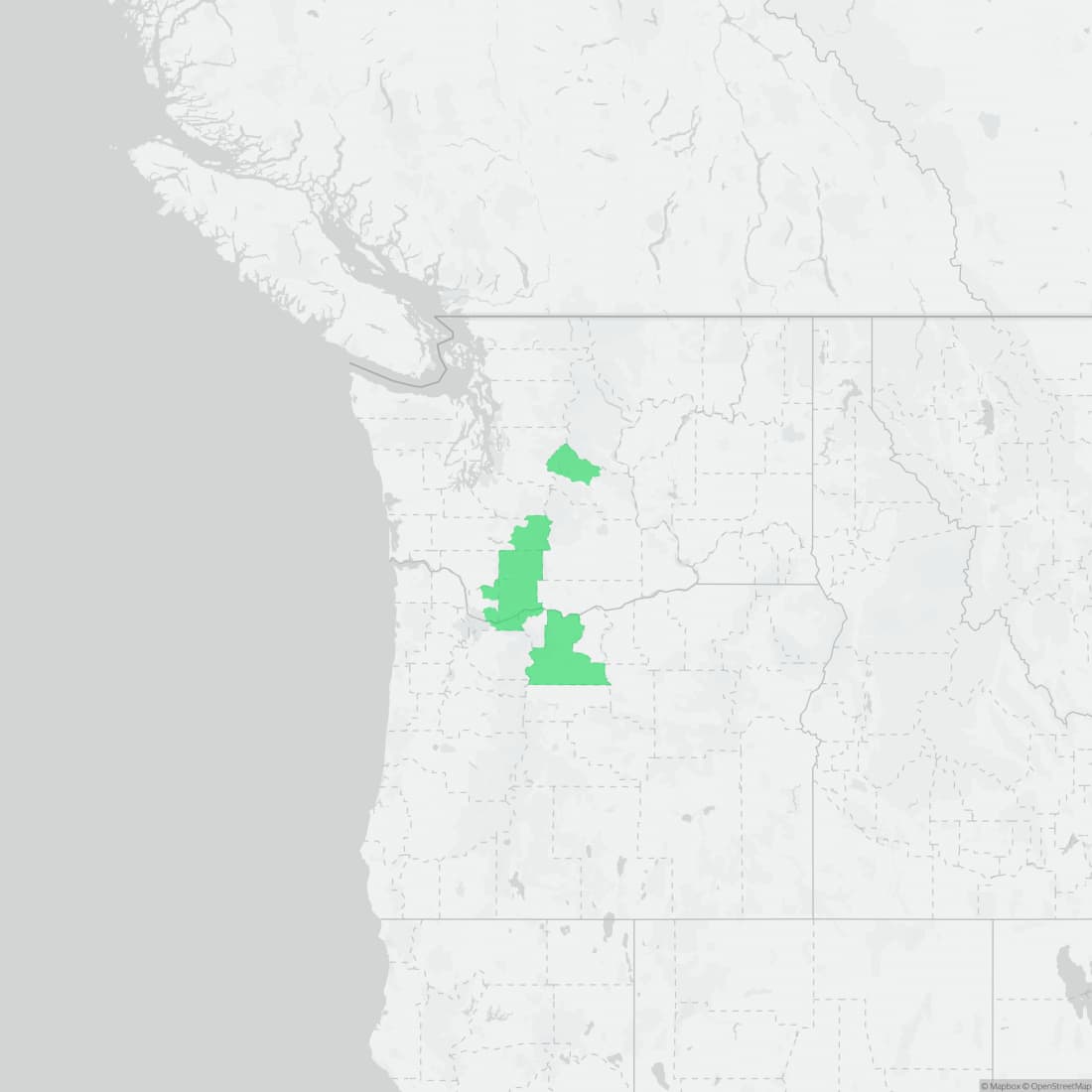
Approximate range. © Mapbox © OpenStreetMap