Dunes Sagebrush Lizard
Sceloporus arenicolus
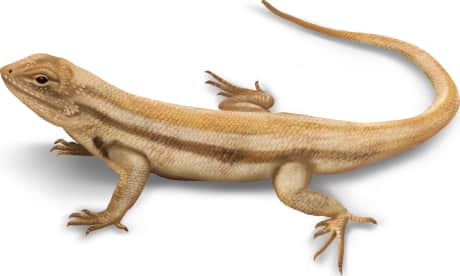
A small, relatively dull sandy tan colored lizard with rough scales. It has a solid tan back, faded grey dorsolateral stripes, and pale sides. Typically has black toenail…
How to identify
A small, relatively dull sandy tan colored lizard with rough scales. It has a solid tan back, faded grey dorsolateral stripes, and pale sides. Typically has black toenails, and adults have a small black patch in front of each shoulder. They reach a total length of 4.5-6 inches.
Range
A somewhat small, winding range through southeastern New Mexico and west Texas.
Habitat
Strictly found in the shinnery oak sand dune areas within its range.
Variations
Breeding females can have orange streaks on their sides, cheeks, and around the eyes. Breeding males have dark bluish-grey patches on the sides of the ventrum.
Similar species
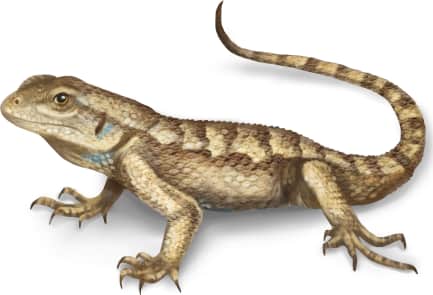
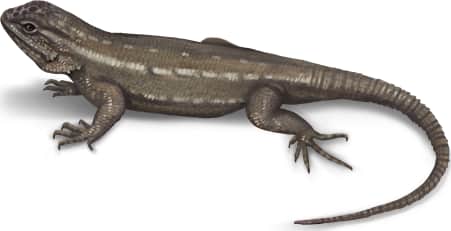
Somewhat similar to the southwestern fence lizard (*Sceloporus cowlesi*) or the prairie lizard (*Sceloporus consobrinus*).
Name and etymology
Genus
Sceloporus
Greek for leg (skelos) pores (porus), referencing femoral pores on back legs.
Origin
Sources
- Wiegmann, 1828. Isis von Oken, Vol. 21, p. 369 ↗
Sceloporus. Wiegmann, 1828 - Isis von Oken, Vol. 21, p. 369
Species epithet
arenicolus
Latin for sand (arena) dweller ().
Origin
Sources
- Degenhardt and Jones, 1972. Herpetologica, Vol. 28, p. 213
Sceloporus arenicolus. Degenhardt and Jones, 1972 - Herpetologica, Vol. 28, p. 213
Explore more names in the etymology index.
At a glance
Range
A somewhat small, winding range through southeastern New Mexico and west Texas.
Habitat
Strictly found in the shinnery oak sand dune areas within its range.
Guide
Reptiles and Amphibians of North America
Range map
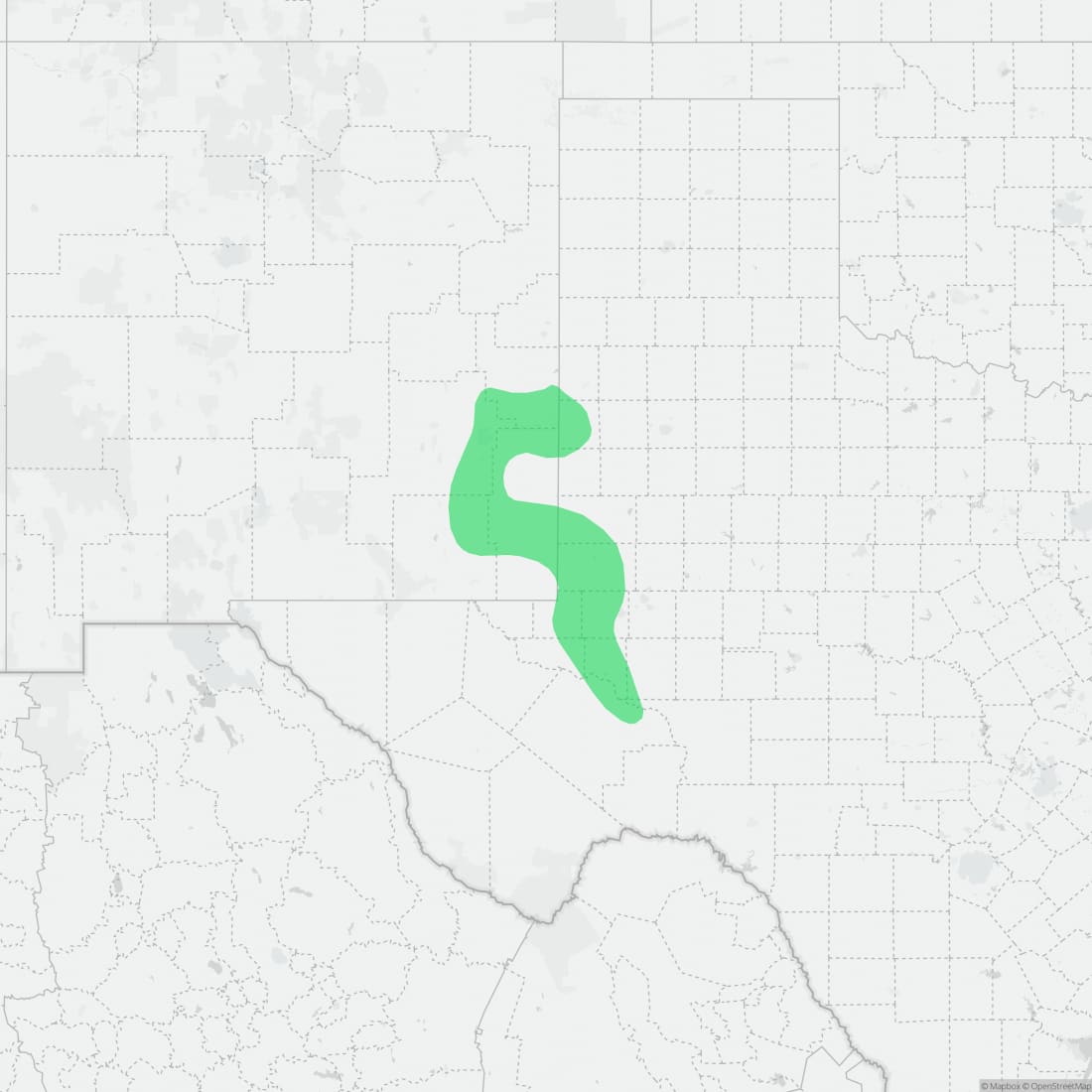
Approximate range. © Mapbox © OpenStreetMap